A species
Wandering albatross
Diomedea exulans
The largest wingspan of any living bird, built to ride the wind.
You and the wandering albatross meet in the Amniotes branch, shown at about 320 million years ago (on 4 December, in a calendar from life's shared ancestor to today).
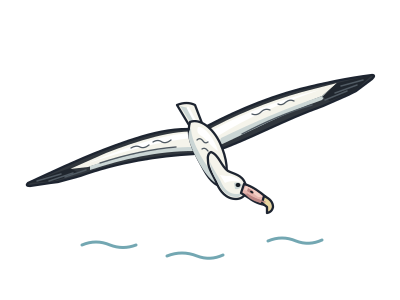
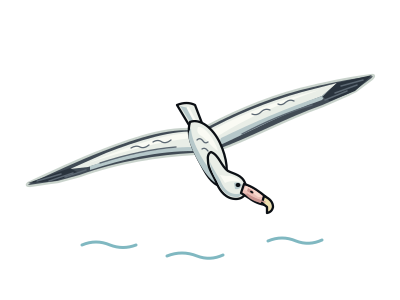
The wandering albatross has the largest wingspan of any living bird. From tip to tip, its wings can reach about 3.5 metres—roughly the length of a small car. These long wings let it glide for hours, using the wind rather than constantly beating its wings.
Its flight has a clever pattern. It gathers energy by repeatedly swooping between layers of faster and slower air above the sea. This is called dynamic soaring. A locking mechanism at its shoulders also helps hold those enormous wings outstretched with little muscular effort. Gliding is not effortless, but these features help reduce the work.
Surprisingly, penguins are relatives of albatrosses and petrels. Their wings and ways of travelling look very different, yet they share a place in the wider waterbird family tree. Family resemblance is not always obvious from how a bird moves.
Food near the surface
Squid and fish are important foods, picked from the surface or taken within the sea’s upper few metres.
Changing colours
Young birds are chocolate brown with white faces. Their feathers become whiter as they age.
A noisy gathering
Usually quiet at sea, they make trumpeting calls, groans and rattles at their breeding grounds.