A species
Turmeric
Curcuma longa
A ginger relative whose bright orange underground stem colours curries and robes.
You and the turmeric meet in the Eukaryotes branch, shown at about 1.8 billion years ago (on 28 July, in a calendar from life's shared ancestor to today).
Turmeric is a close relative of the ginger in your kitchen. Both belong to the ginger family, and their knobbly underground parts look alike. But cut turmeric open and it is a blazing orange. That colour tints curries. In Hindu and Buddhist traditions across Asia, it has long been used to dye the robes of monks and priests.
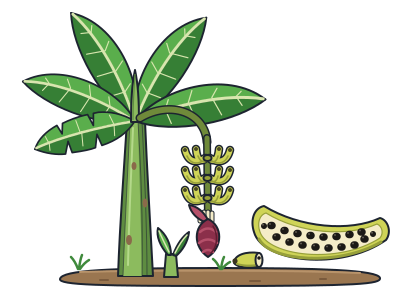
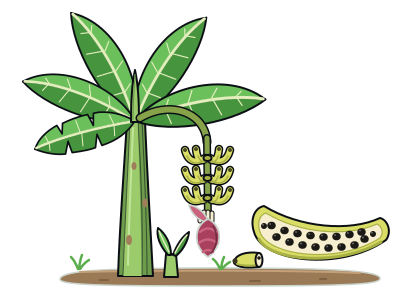
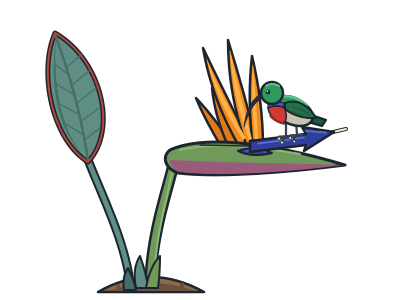
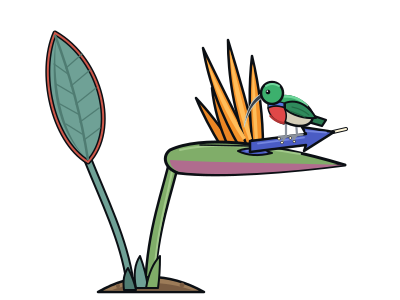
Further out on the family tree, turmeric is also related to bananas and bird of paradise flowers. They all belong to one bigger group of plants. Plants in the ginger family, turmeric included, have flowers with only one working stamen, the part that makes pollen. Bananas and bird of paradise flowers usually have five.
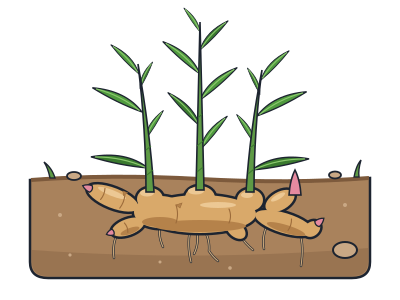
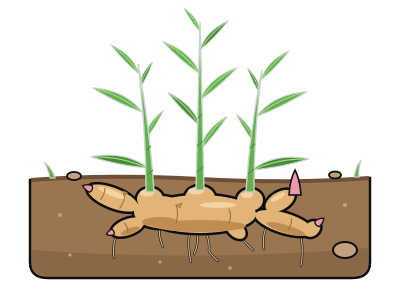
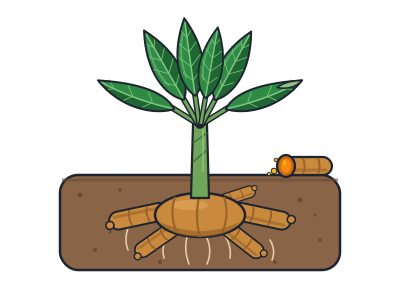
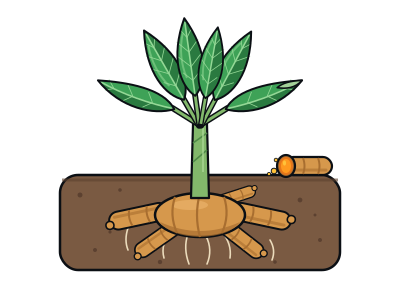
The part we use is often called a root, but it is really a rhizome, a stem that grows sideways underground. It has a rounded middle with side branches called 'fingers'. When you cut it, a yellow sap leaks out and stains. The colour comes from natural pigments, mainly one called curcumin.
Turmeric probably began as a cross between wild relatives. Most turmeric has three sets of chromosomes instead of the usual two. Because of this, it rarely flowers and almost never makes fruit or seeds. Farmers nearly always grow new plants from pieces of rhizome. People keep it going, and it is not known as a truly wild plant.
A quarter of the mix
Curry powder is a blend of spices, and up to about a quarter of it can be turmeric.
India's spice
India grows most of the world's turmeric, and it keeps most of its own harvest for use at home rather than selling it overseas.
'Worthy earth'
The English word 'turmeric' may come from an old French term meaning 'worthy earth', perhaps because the powder looks like ochre, a coloured earth used as paint.