A species
Ginger
Zingiber officinale
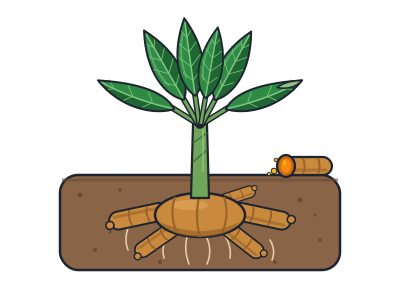
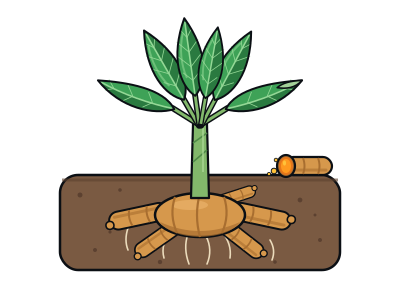
The spice we call "ginger root" is really an underground stem.
You and the ginger meet in the Eukaryotes branch, shown at about 1.8 billion years ago (on 28 July, in a calendar from life's shared ancestor to today).
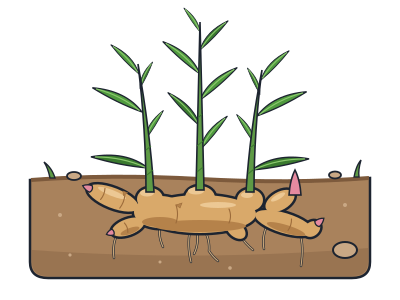
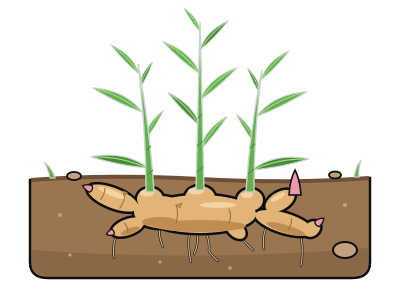
That knobbly lump sold as "ginger root" is not a root at all. It is an underground stem, called a rhizome. It creeps sideways just under the soil and stores food for the plant. The clue is in its buds, known as "eyes". Buds like these are a sign of a stem, and ginger's roots do not have them. That is why a piece of supermarket ginger with a couple of eyes can sprout into a whole new plant. The thin, stringy bits hanging off it are the real roots.
Above ground, ginger looks like a clump of reed-like green shoots about 1 metre tall, roughly waist to chest height on an adult. Surprisingly, these are not true stems either. Each one is a "false stem" made of leaf bases rolled tightly together. It carries long, narrow leaves about as long as a pencil.
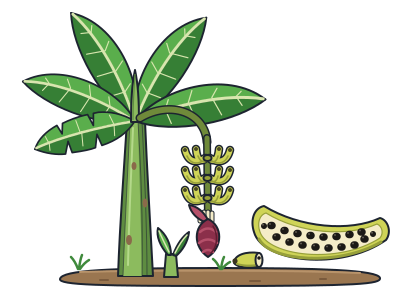
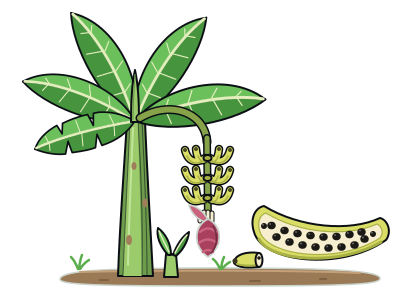
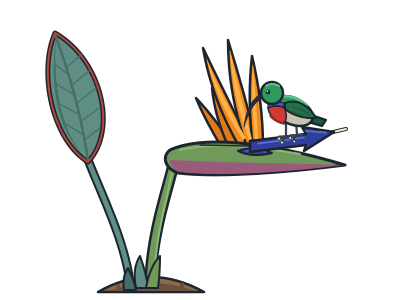
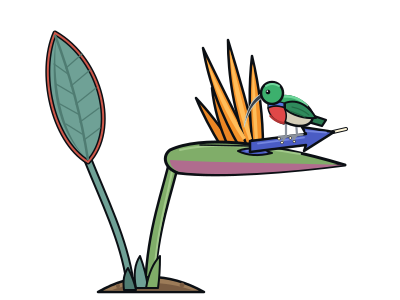
Ginger's own family includes turmeric, cardamom and galangal, so several kitchen spices are close relatives. Bananas are more distant relatives. They belong to the same larger group of plants, along with cannas and bird-of-paradise flowers.
The ginger we cook with is not known to grow in the wild. It is known only as a crop. It probably first came from Maritime Southeast Asia, where its wild relatives grow in damp, partly shaded tropical forests.
Where the heat comes from
Ginger's hot bite comes mainly from a substance called gingerol.
A rarely seen flower
Ginger flowers grow from green, cone-like spikes. They are cream to yellowish-green, and each has a mauve or deep purple lip. Cooking ginger rarely sets seed, and a clump has to be at least two years old before it flowers.
India leads the world
In 2023 the world grew about 4.9 million tonnes of ginger. India grew nearly half of it, followed by Nigeria and China.