A species
Banana
Musa acuminata
A giant herb pretending to be a tree, with wild fruit full of hard seeds
You and the banana meet in the Eukaryotes branch, shown at about 1.8 billion years ago (on 28 July, in a calendar from life's shared ancestor to today).
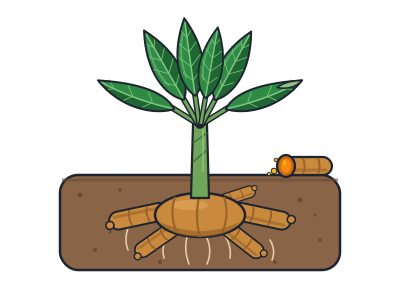
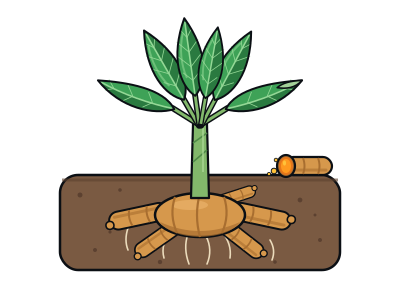
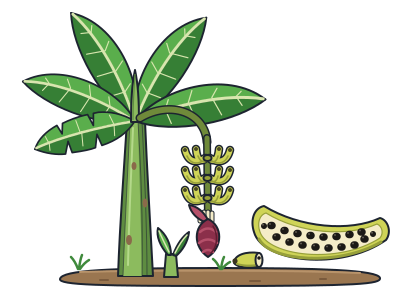
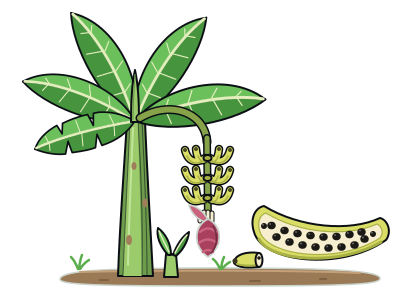
A banana plant looks like a tree, but it is really a giant herb. It has no wood at all. What looks like a trunk is a false stem made of leaf bases wrapped tightly around each other, a bit like a rolled-up newspaper. Wild plants still grow about 3 to 6 metres tall, so the biggest are as tall as a two-storey house.
Wild bananas are nothing like the ones in the shops. Each fruit is short and slim, about as long as your finger. Inside, it is crammed with hard black seeds about the size of peppercorns. One fruit can hold anywhere from about 15 to 60 of them, with only a thin layer of pulp in between.
This wild species is the main ancestor of most bananas people eat. At least about 7,000 years ago, early farmers in New Guinea were already growing bananas. Over time, people kept plants that could make fruit without being pollinated, and plants with fewer seeds. Many of today's bananas have three sets of chromosomes instead of two, so they can hardly make seeds at all. The tiny dark specks in a shop banana are just leftovers that never became proper seeds.
On the tree of life, bananas share a big branch with palms, grasses, pineapples and ginger. So your breakfast banana is a closer relative of a coconut palm or a blade of grass than of an apple tree.
Secretly a berry
To a botanist, a banana counts as a berry. The bananas we eat are clones. They are usually grown from young shoots that sprout at the base of the plant, not from seed.
Wild in Australia
A wild form of this very species grows naturally in north Queensland, from Cape York south to near Townsville. It grows in rainforest clearings and along creeks.
The banana that had to be replaced
Gros Michel used to be the main banana sold around the world. Then a fungus disease called Panama disease spread through its plantations, and growers switched to the Cavendish. Now the same disease threatens the Cavendish, the banana in most shops today.