An extinct group
Armoured dinosaurs †
Thyreophora
Plates, spikes and bony shields
This branch is shown at about 200 million years ago; its age is a rough estimate.
Lived about 200–66 million years ago.
You and armoured dinosaurs meet in the Amniotes branch, shown at about 320 million years ago (on 4 December, in a calendar from life's shared ancestor to today).
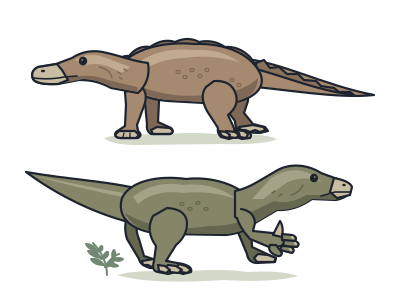
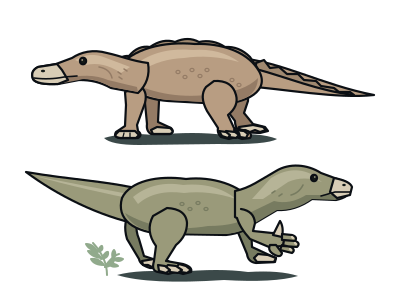
Plates, spikes and bony shields made these dinosaurs the armoured tanks of their world. Stegosaurus and Ankylosaurus belonged to the same branch of bird-hipped dinosaurs, despite their very different shapes. Members of this group lived at different times from about 200 to 66 million years ago.
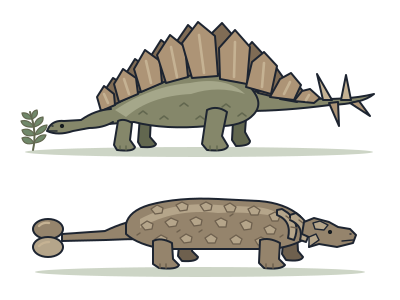
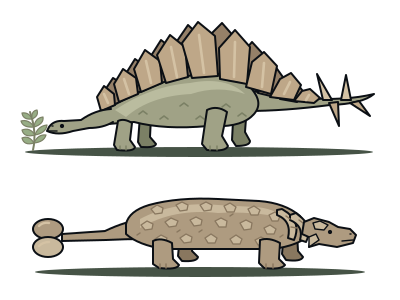
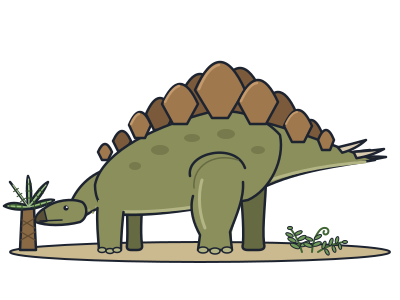
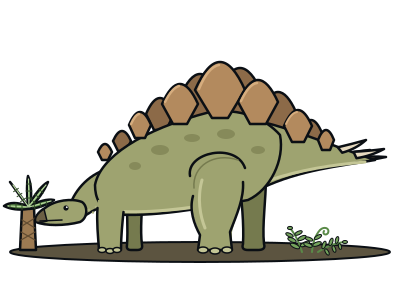
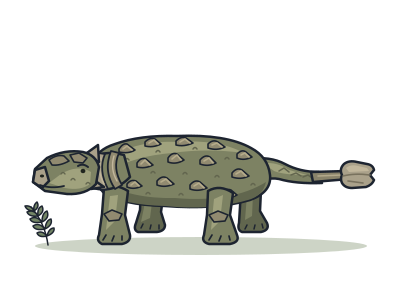
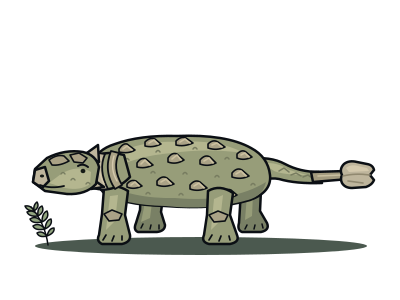
Their armour was bone that grew within the skin. Fossils showed plates, spikes and smaller shields. Stegosaurus had upright plates along its back and spikes on its tail. Ankylosaurus had a low, broad body with an armoured back and a heavy tail club. Both ate plants, despite their fierce-looking equipment.
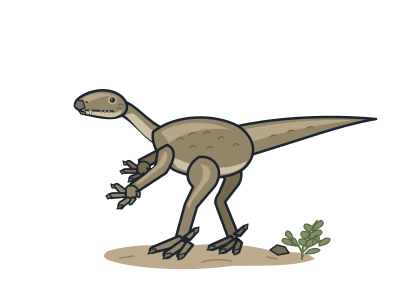
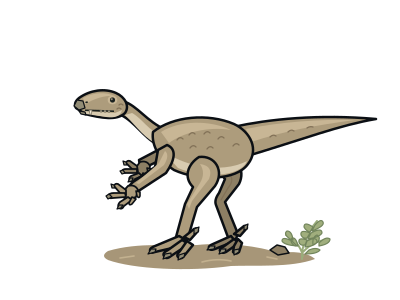
Yet not every armoured relative was a giant on four legs. Early Scutellosaurus was small and mainly walked on its hind legs. Nor did every ankylosaur have a tail club: some relatives of Ankylosaurus had no club at all.
A worldwide family
Their fossils have been found on every continent, including Antarctica.
Beak before teeth
Ankylosaurus had a beak at the front of its mouth, with teeth behind it.
One brain, not two
Stegosaurus did not have a second brain in its hips, despite a once-popular story.
Inside armoured dinosaurs
- StegosaurusTall back plates and a spiked tail, with a brain about the size of a lemon.
- AnkylosaurusA living tank with bony armour and a club on its tail.
- ScelidosaurusAn early armoured dinosaur with rows of bony studs, from England's Jurassic Coast.
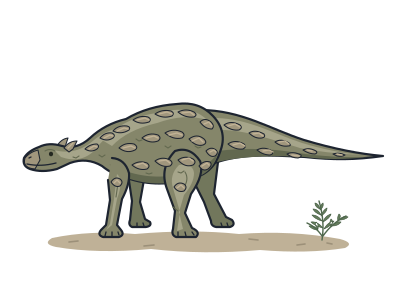
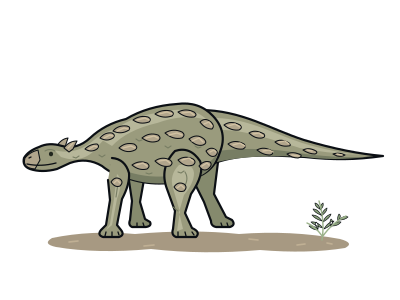
- KentrosaurusA stegosaur with plates in front and long spikes all along its back half.
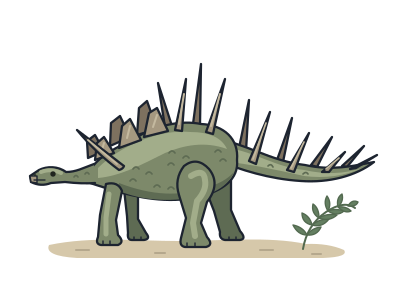
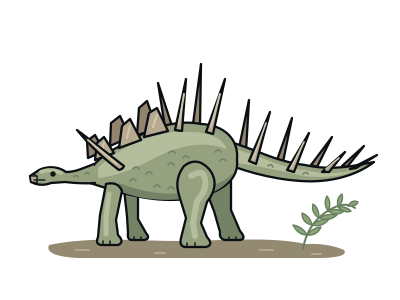
- BorealopeltaA fossil armoured dinosaur with skin and armour preserved in three dimensions; its living colours remain debated.
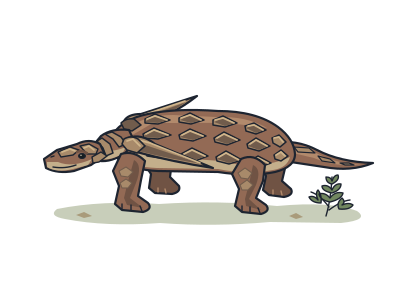
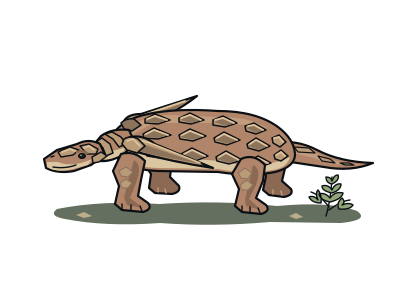
- EuoplocephalusEven its eyelids were armoured, and a heavy club swung from the tip of its tail.