An extinct species
Borealopelta †
Borealopelta markmitchelli
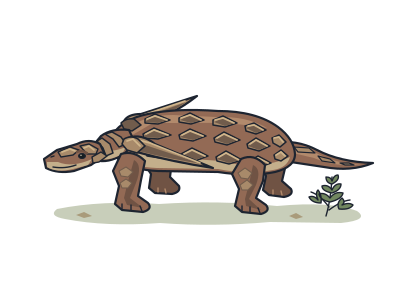
An armoured dinosaur preserved like a sleeping statue.
Lived about 112–110 million years ago.
You and the borealopelta meet in the Amniotes branch, shown at about 320 million years ago (on 4 December, in a calendar from life's shared ancestor to today).
With its armour still wrapped around its body, this dinosaur’s fossil looked like a sleeping statue. It belonged to the armoured dinosaur group that also included Ankylosaurus. What made this relative remarkable was its preservation: its armour stayed in place in three dimensions, rather than becoming a flattened outline.
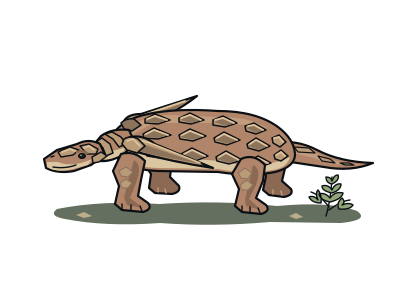
It lived about 112 to 110 million years ago. Its body was broad and low, with short, sturdy legs. Rows of armour crossed its neck and back, and a large spike on each shoulder pointed outwards and backwards. Its estimated full length was about 5.5 metres — roughly as long as a large car.
The exceptional fossil extended from its snout to its hips, not along the whole animal. The missing rear body and tail had to be reconstructed. Its preserved skin and armour gave researchers unusually detailed evidence of how this dinosaur’s outer covering had fitted together.
A miner’s discovery
Mining-machine operator Shawn Funk discovered the fossil in an Alberta mine in March 2011.
Thousands of hours
Technician Mark Mitchell spent more than 7,000 hours uncovering the fossil. The species was named in his honour.
Bones hidden beneath skin
So much fossilised skin survived that most of the skeleton underneath could not be seen.
Next to it on the tree
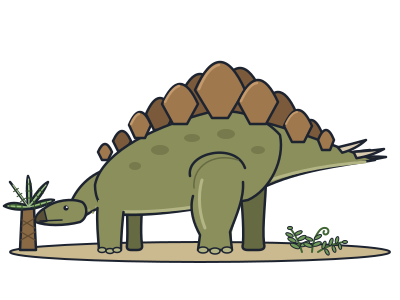
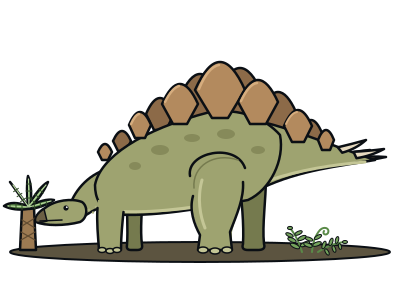
- StegosaurusTall back plates and a spiked tail, with a brain about the size of a lemon.
- AnkylosaurusA living tank with bony armour and a club on its tail.
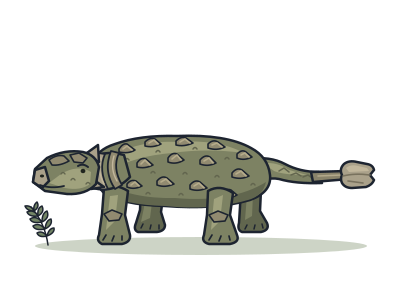
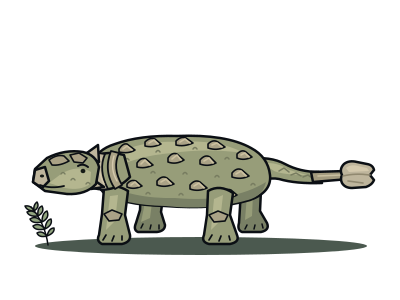
- ScelidosaurusAn early armoured dinosaur with rows of bony studs, from England's Jurassic Coast.
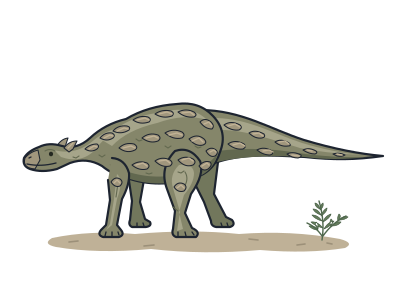
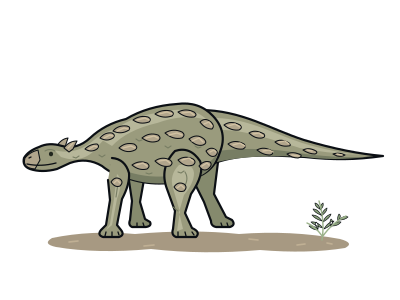
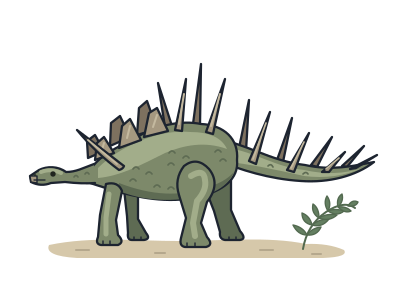
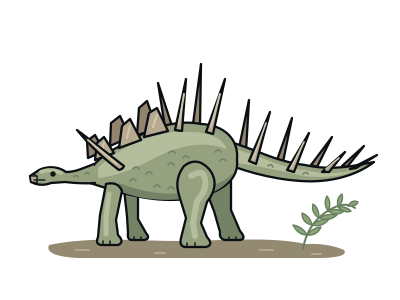
- KentrosaurusA stegosaur with plates in front and long spikes all along its back half.
- EuoplocephalusEven its eyelids were armoured, and a heavy club swung from the tip of its tail.