An extinct species
Kentrosaurus †
Kentrosaurus aethiopicus
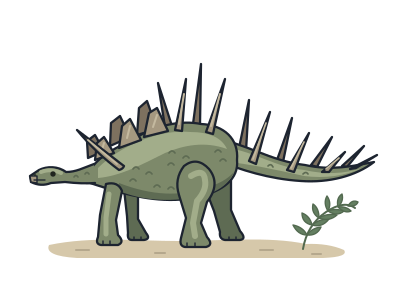
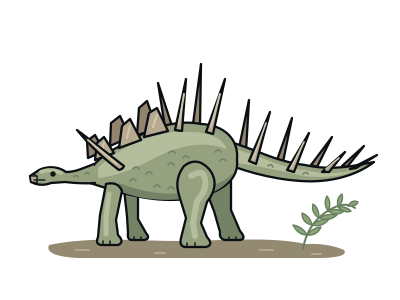
Plates in front, long spikes behind
Lived about 155–150 million years ago.
You and the kentrosaurus meet in the Amniotes branch, shown at about 320 million years ago (on 4 December, in a calendar from life's shared ancestor to today).
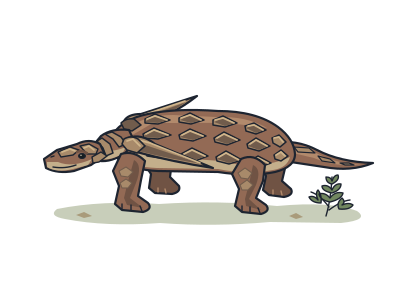
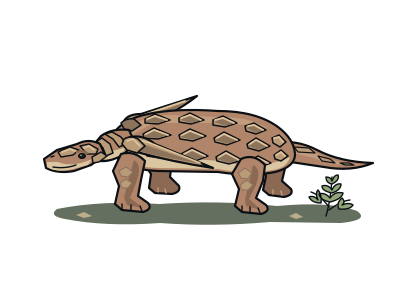
A relative of Stegosaurus, this dinosaur had small plates towards the front and long spikes along its back half. It belonged to the same stegosaur group, but it was not simply a smaller Stegosaurus. Its armour gave it a different outline: plates at the front changed to paired spikes over the rear body and tail.
It lived about 155 to 150 million years ago. Despite those impressive spikes, it was a plant-eater. It walked on four legs and grew to an estimated length of about 5 metres, roughly as long as a large car.
The fossil evidence included bony plates, spikes and much of the skeleton, but it did not reveal every detail of the living animal. The mounted skeleton in Berlin combined bones from several animals with reconstructed parts. Much of its skull was a reconstruction, not a complete fossil skull.
A fitting name
Its name meant ‘spiky lizard’.
An African discovery
Its fossils were found at Tendaguru in present-day Tanzania, eastern Africa.
Named in 1915
Hennig formally named the species in 1915.
Next to it on the tree
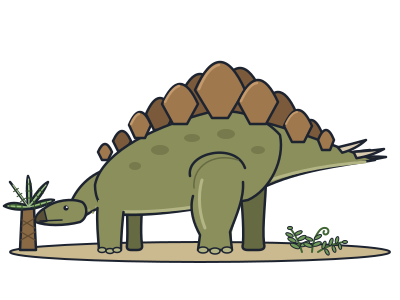
- StegosaurusTall back plates and a spiked tail, with a brain about the size of a lemon.
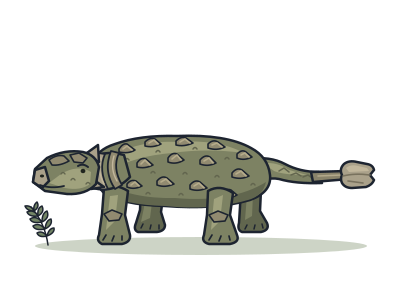
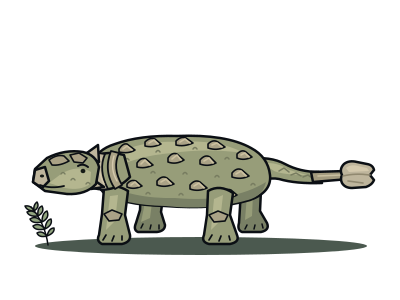
- AnkylosaurusA living tank with bony armour and a club on its tail.
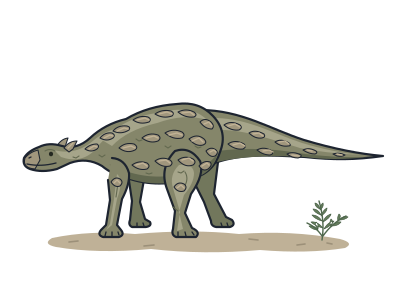
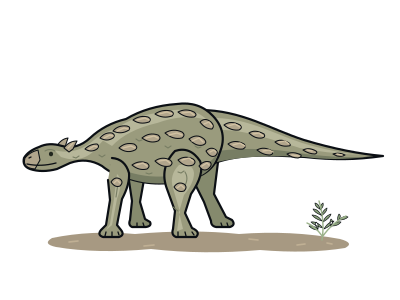
- ScelidosaurusAn early armoured dinosaur with rows of bony studs, from England's Jurassic Coast.
- BorealopeltaA fossil armoured dinosaur with skin and armour preserved in three dimensions; its living colours remain debated.
- EuoplocephalusEven its eyelids were armoured, and a heavy club swung from the tip of its tail.