An extinct species
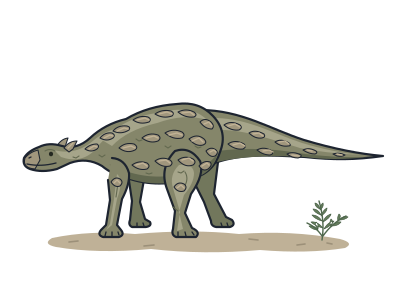
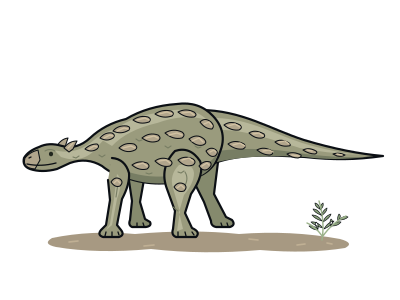
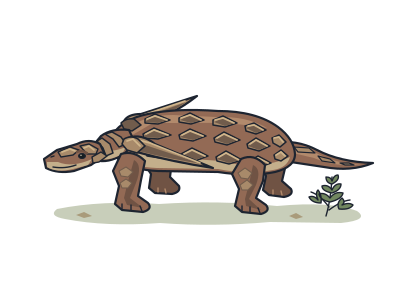
Scelidosaurus †
Scelidosaurus harrisonii
An early armoured relative from England’s Jurassic Coast
Lived about 196–183 million years ago.
You and the scelidosaurus meet in the Amniotes branch, shown at about 320 million years ago (on 4 December, in a calendar from life's shared ancestor to today).
This early armoured dinosaur from England’s Jurassic Coast wore rows of bony studs embedded in its skin. It belonged to the wider armoured-dinosaur family that also included Stegosaurus and Ankylosaurus. Its armour looked different from the enormous upright plates of Stegosaurus: the larger pieces had oval bases and raised ridges.
It lived in the Early Jurassic, within the span of about 196 to 183 million years ago. Its leg bones suggested it walked on four legs. It lived on land near ancient shores in what is now Dorset. Its teeth were suited to cutting plant material, supporting the conclusion that it ate plants.
Skeletons were found in the coastal cliffs around Charmouth and Lyme Regis. One exceptionally preserved specimen included patches of skin as well as bones and armour. Although its remains were buried in mud on the sea floor, that burial place did not make it a sea-dwelling dinosaur.
Four rows around the tail
Four lengthwise rows of large, ridged armour pieces surrounded its tail.
Bony head ornaments
Its skull carried two horn-shaped bony structures at the back.
An eleven-year puzzle
David Sole found the first pieces of one exceptionally preserved skeleton in December 2000. Collectors recovered its last known piece 11 years later.
Next to it on the tree
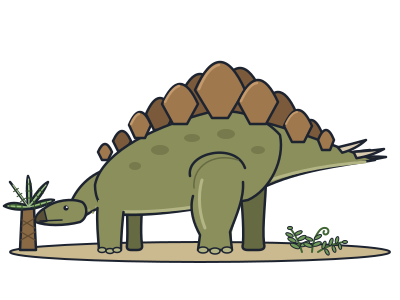
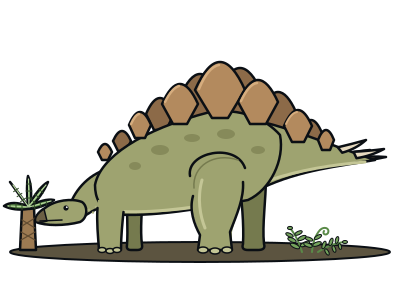
- StegosaurusTall back plates and a spiked tail, with a brain about the size of a lemon.
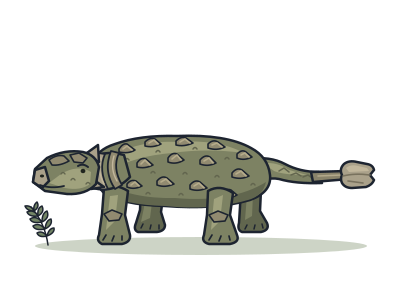
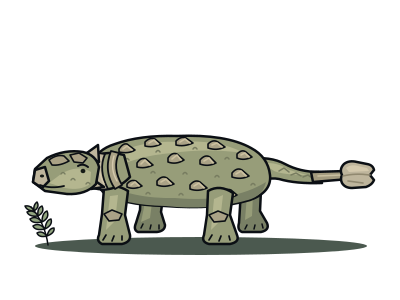
- AnkylosaurusA living tank with bony armour and a club on its tail.
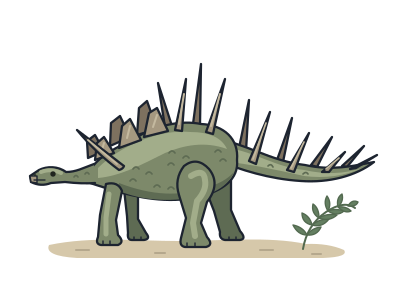
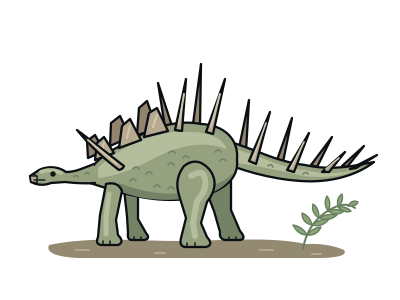
- KentrosaurusA stegosaur with plates in front and long spikes all along its back half.
- BorealopeltaA fossil armoured dinosaur with skin and armour preserved in three dimensions; its living colours remain debated.
- EuoplocephalusEven its eyelids were armoured, and a heavy club swung from the tip of its tail.