An extinct species
Ankylosaurus †
Ankylosaurus magniventris
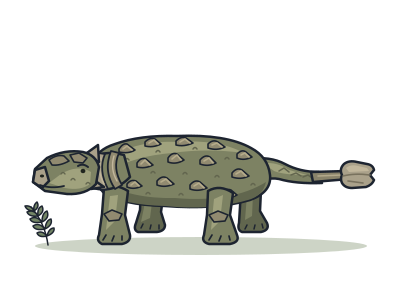
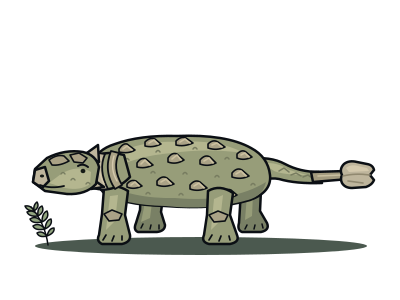
A living tank with a clubbed tail
Lived about 68–66 million years ago.
You and the ankylosaurus meet in the Amniotes branch, shown at about 320 million years ago (on 4 December, in a calendar from life's shared ancestor to today).
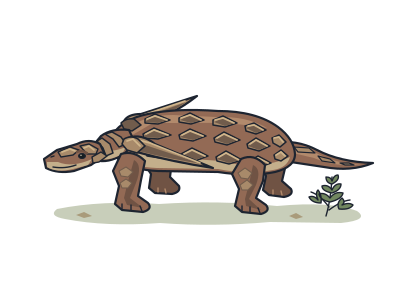
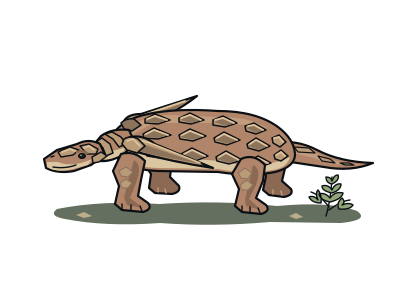
With bony armour and a heavy tail club, this dinosaur was a living tank—and a relative of the plate-backed Stegosaurus. Both belonged to the wider armoured-dinosaur family. It lived about 68 to 66 million years ago in western North America, in places that later became parts of the USA and Canada.
Its broad, low body rested on four sturdy legs. Behind its broad skull and short neck, a long tail ended in a flattened bony knob, rather than a round ball. Despite this fearsome-looking equipment, it ate plants. Some of its armoured relatives had no tail club at all.
Fossils preserved skulls, teeth, ribs, limb bones and armour plates, but no complete skeleton was known. Scientists used these incomplete remains to reconstruct its shape and estimate its size. One museum estimate put its length at about 8 metres—roughly as long as a small bus.
An early discovery
Barnum Brown’s team found the first recognised remains in Montana in 1906.
The club came later
The first recognised tail club was discovered in 1910, after the dinosaur had already been named.
Sideways nostrils
Its nostril openings faced sideways and downwards, rather than straight forwards.
Next to it on the tree
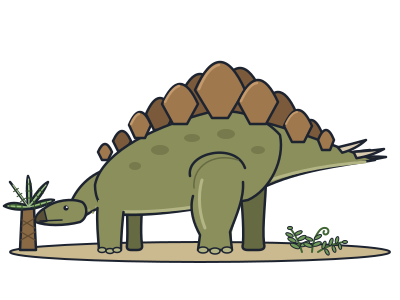
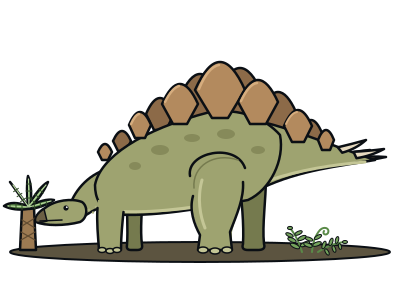
- StegosaurusTall back plates and a spiked tail, with a brain about the size of a lemon.
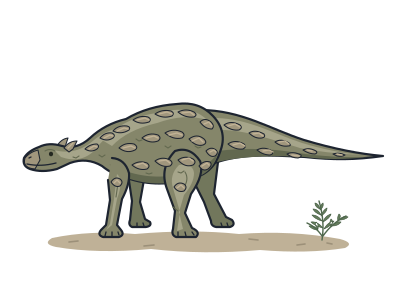
- ScelidosaurusAn early armoured dinosaur with rows of bony studs, from England's Jurassic Coast.
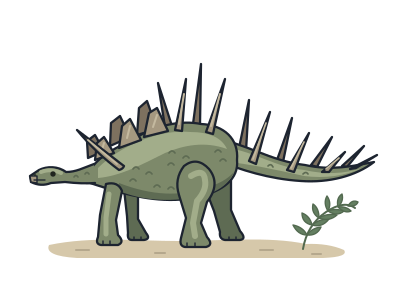
- KentrosaurusA stegosaur with plates in front and long spikes all along its back half.
- BorealopeltaA fossil armoured dinosaur with skin and armour preserved in three dimensions; its living colours remain debated.
- EuoplocephalusEven its eyelids were armoured, and a heavy club swung from the tip of its tail.