An extinct species
Heterodontosaurus †
Heterodontosaurus tucki
A small plant-eater with an unexpected set of teeth.
Lived about 200–190 million years ago.
You and the heterodontosaurus meet in the Amniotes branch, shown at about 320 million years ago (on 4 December, in a calendar from life's shared ancestor to today).
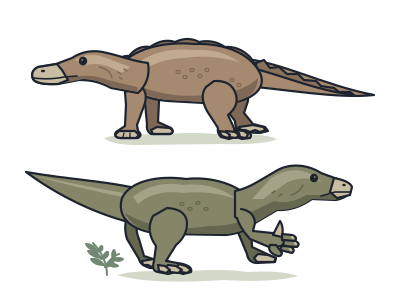
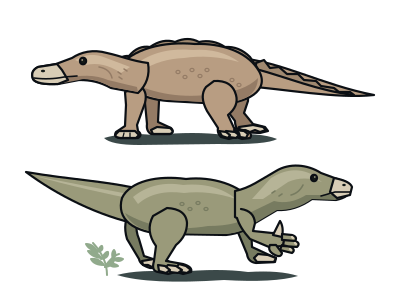
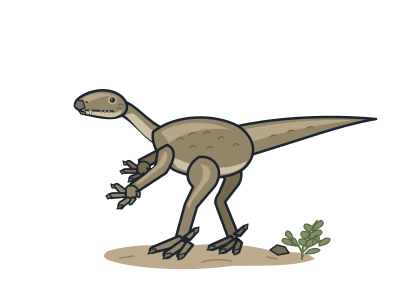
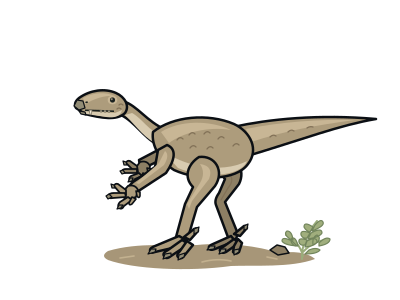
A small plant-eater with fangs, chewing teeth and grasping hands, this dinosaur belonged to the bird-hipped dinosaurs, alongside Stegosaurus and Triceratops. Its pointed teeth might look surprising in that company, but fangs alone did not make it a meat-eater. It lived about 200 to 190 million years ago.
Fossil jaws preserved three kinds of teeth, suited to different jobs in biting and processing food. Worn surfaces showed that opposing cheek teeth met and sliced against each other as it fed. Its hand bones suggested hands adapted for grasping, rather than regularly supporting its weight. That did not reveal exactly how it used them.
It had a compact body, slender hind legs and a long tail. At about 1.2 metres long, including that tail, it was roughly the length of a large guitar.
A name about teeth
Its name meant ‘different-teeth lizard’, referring to the different tooth shapes in its jaws.
One toe stayed raised
Each foot had four toes, but the small inner toe was held clear of the ground.
An unusually complete find
A discovery in 1966 included a complete skull and an almost complete skeleton.