An extinct group
Horned and dome-headed dinosaurs †
Marginocephalia
Two very different heads, one family connection.
This branch is shown at about 165 million years ago; its age is a rough estimate.
Lived about 165–66 million years ago.
You and horned and dome-headed dinosaurs meet in the Amniotes branch, shown at about 320 million years ago (on 4 December, in a calendar from life's shared ancestor to today).
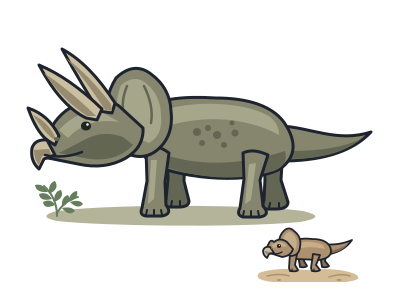
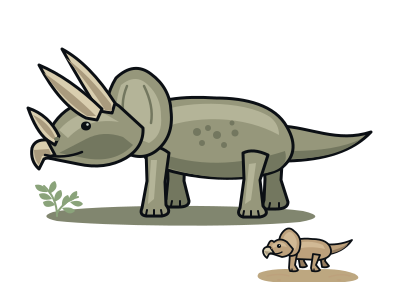
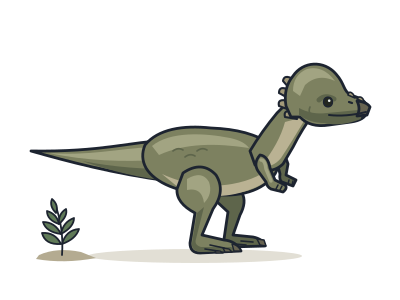
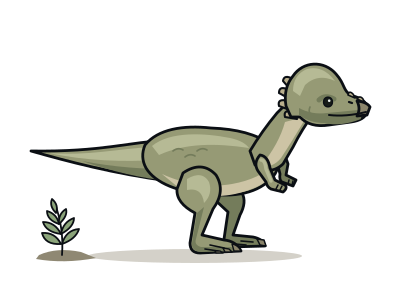
A bony shelf at the back of the skull linked two very different-looking dinosaur branches: horned dinosaurs and dome-headed dinosaurs. Fossil skulls revealed this family connection. In horned dinosaurs such as Triceratops, the shelf expanded into a broad frill behind the head. Dome-headed dinosaurs kept a smaller rear ridge. Many also had a skull roof thickened into a dome, though some had flatter heads. The dome was not simply the shelf pushed upwards.
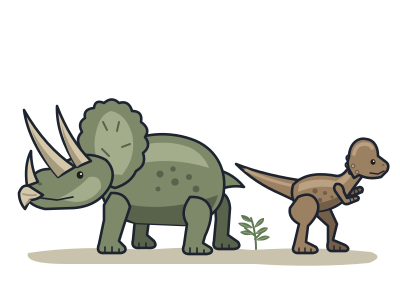
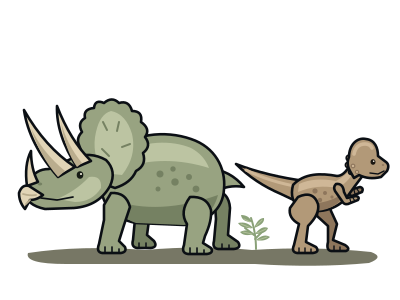
These dinosaurs lived about 165 to 66 million years ago. Picture Triceratops beside Pachycephalosaurus: one stood on four sturdy legs beneath a huge, horned head; the other walked on two legs beneath a rounded dome edged with bumps and spikes. Dome-heads and duck-billed dinosaurs could both walk on two legs. Yet dome-heads were more closely related to horned dinosaurs than to duck-bills.
Not every horned relative looked like Triceratops. Early members were smaller and less elaborately equipped, and some walked on two legs. Across the wider family, different members lived in places ranging from deserts to swamps and lake shores.
Plant-cutting tools
Triceratops clipped plants with a sharp beak and sliced tough vegetation with closely packed cheek teeth.
More than bone
Triceratops horn fossils preserved bony cores. Scientists inferred an outer covering of the material in fingernails, which would have made the living horns longer.
Skin left its mark
Triceratops skin impressions preserved a covering of pebbled scales.