An extinct group
Horned dinosaurs †
Ceratopsia
Beaked plant-eaters with spectacular headgear.
This branch is shown at about 160 million years ago; its age is a rough estimate.
Lived about 160–66 million years ago.
You and horned dinosaurs meet in the Amniotes branch, shown at about 320 million years ago (on 4 December, in a calendar from life's shared ancestor to today).
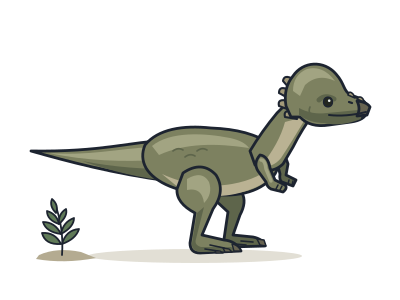
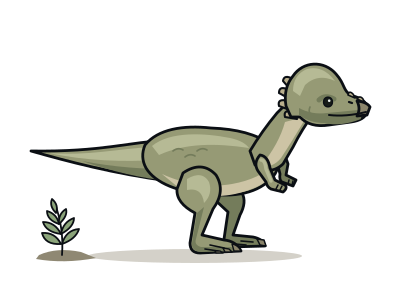
Many of these beaked plant-eaters grew bony frills and horns. Their close relatives included the dome-headed dinosaurs, such as Pachycephalosaurus: very different-looking heads on neighbouring branches of the dinosaur family tree. Fossils showed that horned dinosaurs lived about 160 to 66 million years ago.
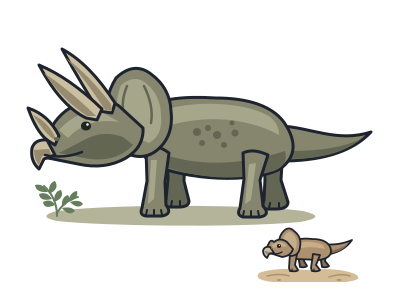
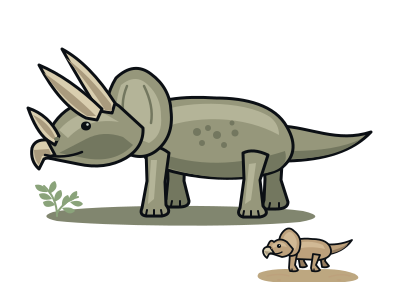
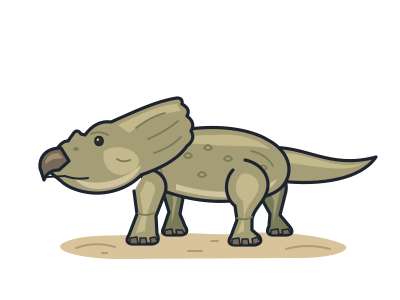
Picture a large Triceratops beside a little Protoceratops. Triceratops reached about 8–9 metres long, roughly the length of a small bus. Protoceratops was about 2 metres long. Both had a bony frill behind the head, but Protoceratops had a nose bump rather than the long horns of its larger relative. They were different branches of the family, not a demonstrated ancestor and descendant.
Their shared feeding tool was a parrot-like beak. A special bone at the tip of the upper jaw helped identify members of this group. Large later members also had powerful jaws that sliced plant food. Their imposing headgear did not make them meat-eaters.
Pebbled skin
Triceratops skin impressions preserved a covering of pebble-like scales.
More than bone
Triceratops horns had outer coverings made from the material found in fingernails. The complete horns extended beyond the bones inside them.
Growing up
Protoceratops fossils included infants and adults, allowing scientists to compare how its head changed as it grew.
Inside horned dinosaurs
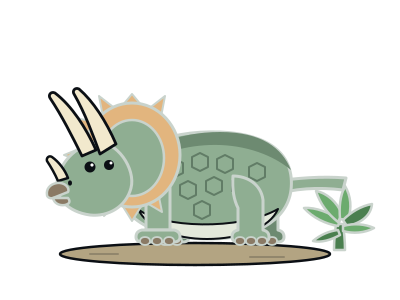
- TriceratopsA three-horned plant-eater with a giant frill, alive right up to the asteroid.
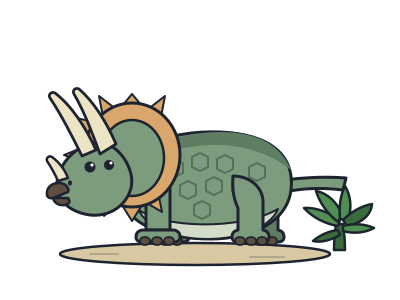
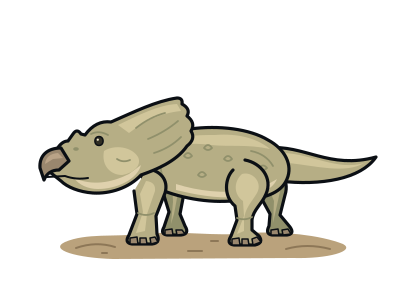
- ProtoceratopsA sheep-sized horned dinosaur, once fossilised locked in combat with a Velociraptor.
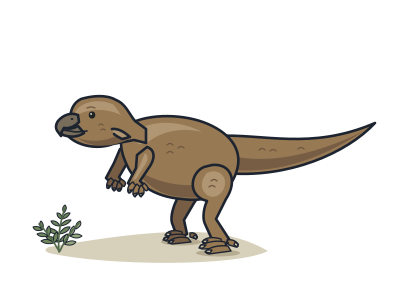
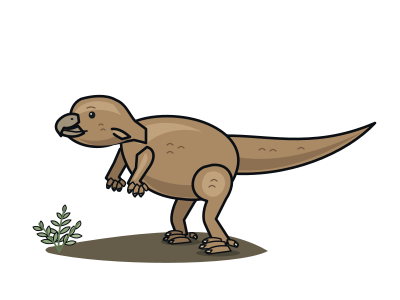
- PsittacosaurusA parrot-beaked early horned dinosaur; a fossil in its genus preserves colour-pattern evidence.
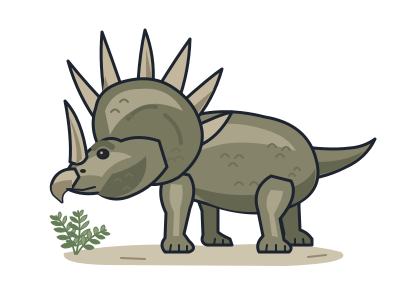
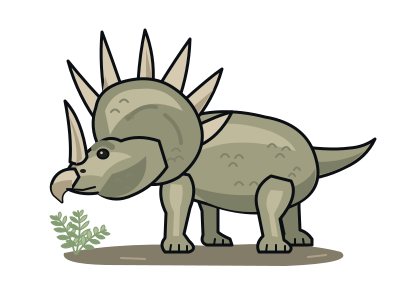
- StyracosaurusA horned dinosaur with a crown of long spikes around its frill.
- PachyrhinosaurusA horned dinosaur with a thick, bumpy pad of bone on its nose instead of a horn.