An extinct species
Protoceratops †
Protoceratops andrewsi
A sheep-sized relative of Triceratops, preserved in a remarkable struggle.
Lived about 75–71 million years ago.
You and the protoceratops meet in the Amniotes branch, shown at about 320 million years ago (on 4 December, in a calendar from life's shared ancestor to today).
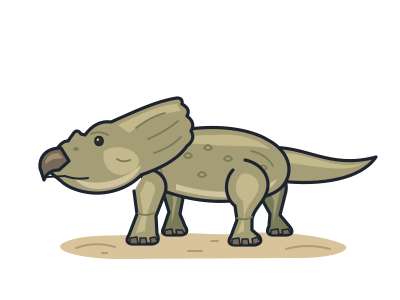
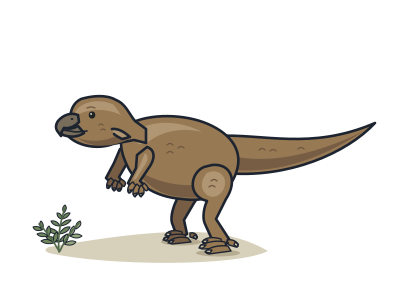
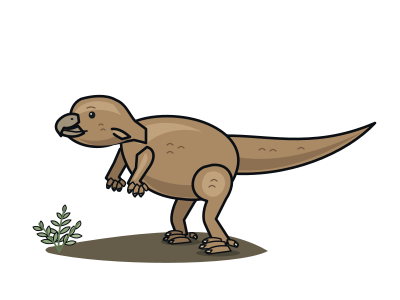
This sheep-sized relative of Triceratops became famous for a fossil that preserved it locked in combat with a Velociraptor. It belonged to the horned-dinosaur group, but had no long horns. Instead, it had a low bump above its nostrils and thickened bone above its eyes. It lived about 75 to 71 million years ago.
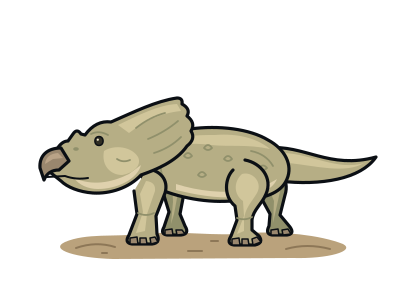
Adults were about 1.8 metres long, with sturdy bodies carried on four legs. A parrot-like beak curved down at the front of the face. Behind the head, a broad bony frill formed a collar. Fossil skulls and skeletons preserved these features; they did not establish the animal’s colours.
The fighting fossil preserved the two animals intertwined, with the plant-eater’s jaws holding the predator’s arm. Their positions strongly supported a struggle, rather than simply showing two animals buried together. The opponents were similar in length, but the plant-eater was much more heavily built. The fossil did not reveal who started the encounter or who was winning.
Low to the ground
An adult’s hips stood about 75 centimetres above the ground.
Teeth behind the beak
Behind its beak were teeth suited to cutting and grinding plants.
A name, not a family-tree claim
Its name meant ‘first horned face’. Named in 1923, it was not necessarily the first horned dinosaur to evolve.
Next to it on the tree
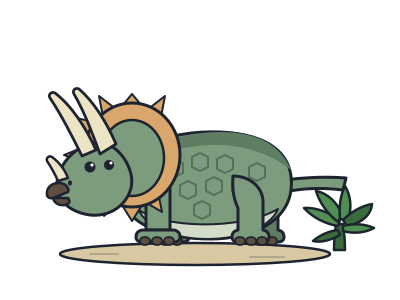
- TriceratopsA three-horned plant-eater with a giant frill, alive right up to the asteroid.
- PsittacosaurusA parrot-beaked early horned dinosaur; a fossil in its genus preserves colour-pattern evidence.
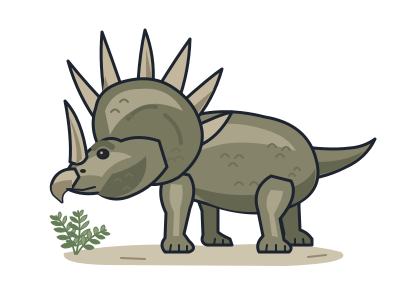
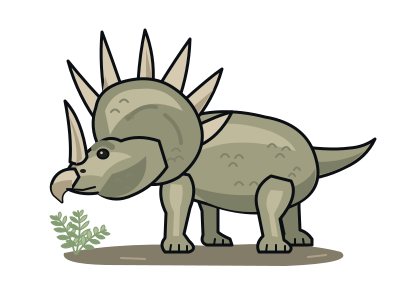
- StyracosaurusA horned dinosaur with a crown of long spikes around its frill.
- PachyrhinosaurusA horned dinosaur with a thick, bumpy pad of bone on its nose instead of a horn.