An extinct species
Psittacosaurus †
Psittacosaurus mongoliensis
A parrot beak in the horned-dinosaur family.
Lived about 125–100 million years ago.
You and the psittacosaurus meet in the Amniotes branch, shown at about 320 million years ago (on 4 December, in a calendar from life's shared ancestor to today).
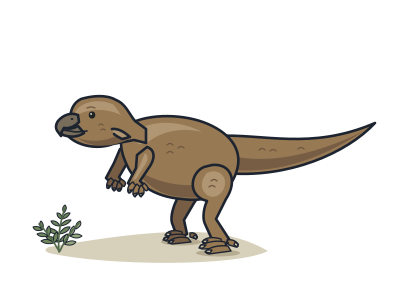
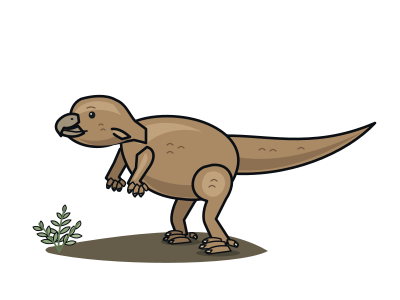
This parrot-beaked dinosaur belonged to the same broad group as Triceratops, despite lacking its relative’s huge facial horns. It was an early horned dinosaur, with a rounded skull, a hooked beak and a long tail. It lived about 125 to 100 million years ago, on land in Asia.
Instead of walking on four legs like many later horned dinosaurs, it walked on its two longer hind legs. Its arms were much shorter. Its strong beak cropped tough plant food. Fossil skulls and skeletons from many individuals helped researchers piece together its body, rather than relying on a single broken bone.
One remarkable fossil from the same genus preserved more than a skeleton: it also held flattened skin, tail bristles and pigment traces. Those traces indicated a darker upper body and a lighter belly and tail underside. However, researchers could not securely identify that fossil’s species. Its colour pattern was evidence about one animal, not proof that the species on this page looked exactly the same.
A name with a beak
Its name meant ‘parrot lizard’, referring to its parrot-like beak.
No broad neck shield
Unlike Protoceratops and Triceratops, it lacked a large bony neck frill.
An expedition discovery
The first described specimens were incomplete skeletons collected in Mongolia during the 1922 Central Asiatic Expedition.
Next to it on the tree
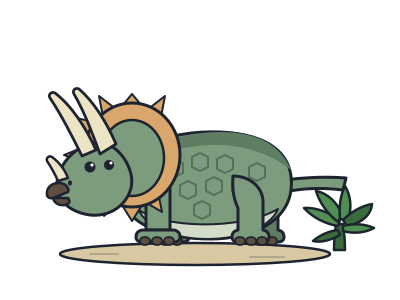
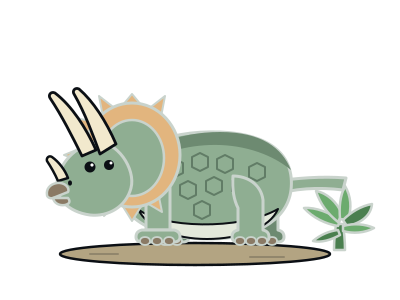
- TriceratopsA three-horned plant-eater with a giant frill, alive right up to the asteroid.
- ProtoceratopsA sheep-sized horned dinosaur, once fossilised locked in combat with a Velociraptor.
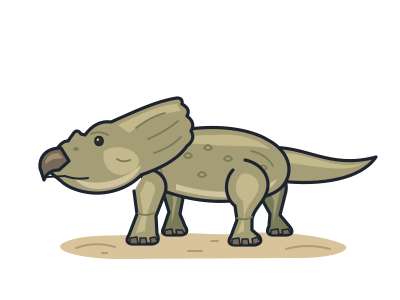
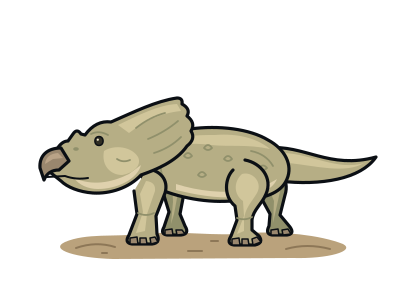
- StyracosaurusA horned dinosaur with a crown of long spikes around its frill.
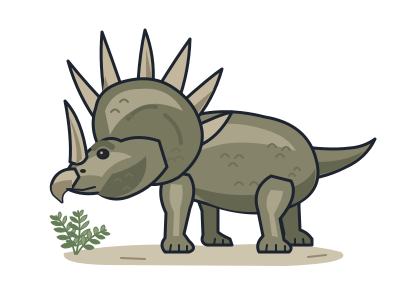
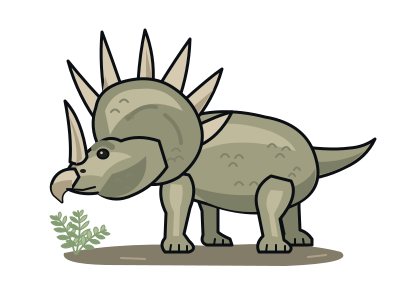
- PachyrhinosaurusA horned dinosaur with a thick, bumpy pad of bone on its nose instead of a horn.