An extinct species
Triceratops †
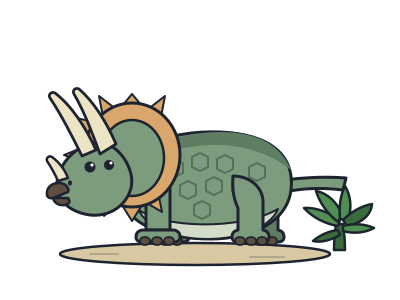
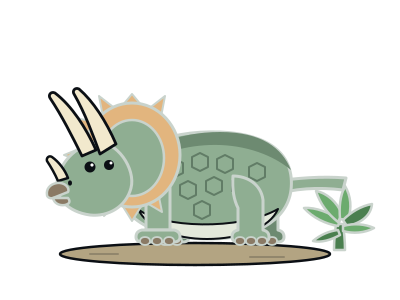
Triceratops horridus
A three-horned plant-eater with a giant neck shield.
Lived about 68–66 million years ago.
You and the triceratops meet in the Amniotes branch, shown at about 320 million years ago (on 4 December, in a calendar from life's shared ancestor to today).
Meet Triceratops, a giant plant-eater with three horns and a huge frill, a bony shield over its neck. It was alive about 68 to 66 million years ago, right up to when an asteroid struck about 66 million years ago. Like Tyrannosaurus rex beside it on the tree, it was a dinosaur, and birds are its living dinosaur relatives.
It was as long as a bus, about 9 metres from nose to short tail, and as heavy as a truck. Its body was bulky like a rhinoceros, carried on four stout legs. It walked through warm forests, swamps and river plains in what is now western North America.
It cropped plants with a narrow beak like a parrot, then sliced tough plants with rows of cheek teeth hidden inside its mouth. It lived alongside Tyrannosaurus rex, which left bite marks on some horns and neck shields.
Babies looked different
Youngsters had tiny straight brow horns only a few centimetres long. Their neck shields had scalloped edges that became wavy with age.
A common fossil find
It is the most common dinosaur found in the Hell Creek rocks. More than 50 skulls have been collected from about one to two million years of rock.
A skull one-third of its body
Its skull could reach about 3 metres long, about a quarter to a third of its whole length.
Next to it on the tree
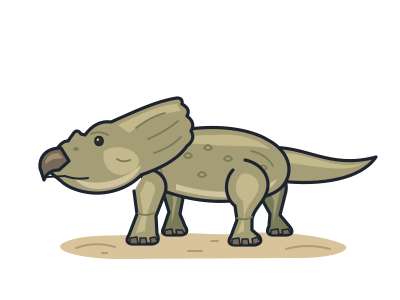
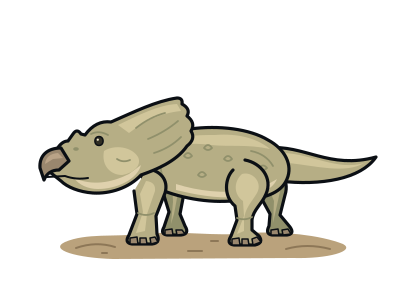
- ProtoceratopsA sheep-sized horned dinosaur, once fossilised locked in combat with a Velociraptor.
- PsittacosaurusA parrot-beaked early horned dinosaur; a fossil in its genus preserves colour-pattern evidence.
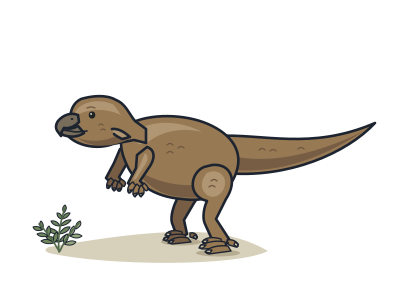
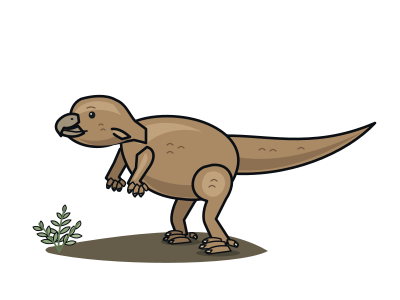
- StyracosaurusA horned dinosaur with a crown of long spikes around its frill.
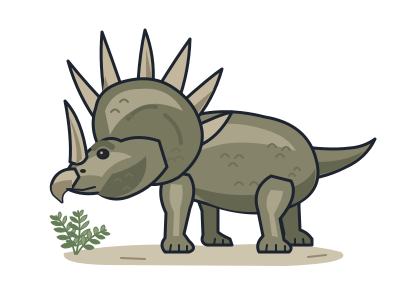
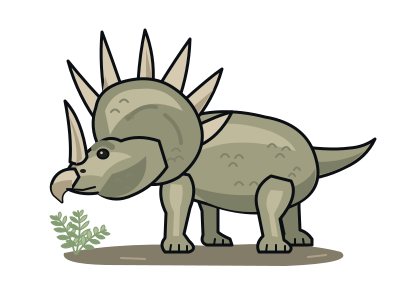
- PachyrhinosaurusA horned dinosaur with a thick, bumpy pad of bone on its nose instead of a horn.