An extinct species
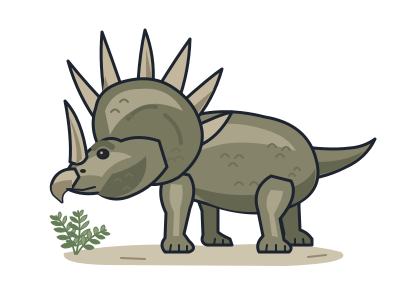
Styracosaurus †
Styracosaurus albertensis
A plant-eater with a crown of spikes
Lived about 76–75 million years ago.
You and the styracosaurus meet in the Amniotes branch, shown at about 320 million years ago (on 4 December, in a calendar from life's shared ancestor to today).
A crown of long spikes spread out around the bony frill behind its head. This was a relative of Triceratops, not a kind of Triceratops. The two belonged to different branches of the horned-dinosaur family. Unlike its famous relative, this dinosaur carried its main facial horn on its nose, rather than above its eyes.
It lived about 76 to 75 million years ago, on coastal plains in what is now Alberta, Canada. An inland sea separated this western part of North America from the eastern landmass. Duck-billed dinosaurs, armoured dinosaurs and other large plant-eaters also lived in these surroundings.
Despite its striking headgear, it ate plants. Its powerful beak and cutting teeth helped it tackle its food. The downward-facing mouth suggested that it mainly fed on low-growing plants. Fossil bones revealed the shape of its headgear, but did not show exactly how it used those horns and spikes.
A fitting name
Its name meant ‘spiked lizard’.
Fresh teeth
Its teeth were continually replaced as they wore down.
An Alberta discovery
Its first fossils were found in 1913 in what is now Dinosaur Provincial Park.
Next to it on the tree
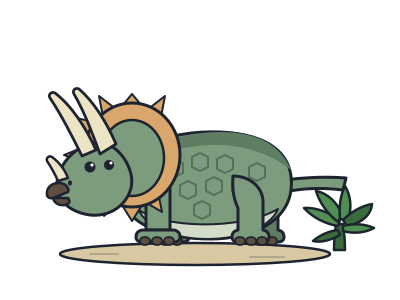
- TriceratopsA three-horned plant-eater with a giant frill, alive right up to the asteroid.
- ProtoceratopsA sheep-sized horned dinosaur, once fossilised locked in combat with a Velociraptor.
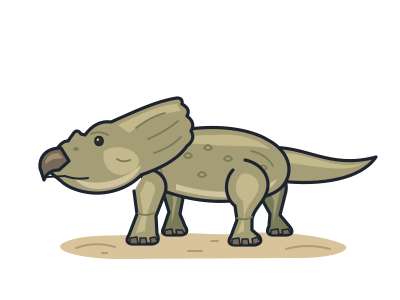
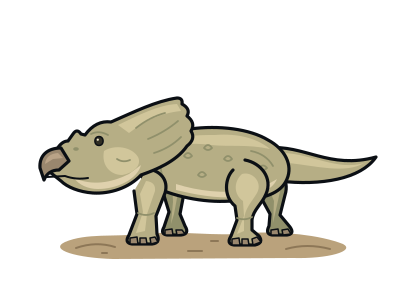
- PsittacosaurusA parrot-beaked early horned dinosaur; a fossil in its genus preserves colour-pattern evidence.
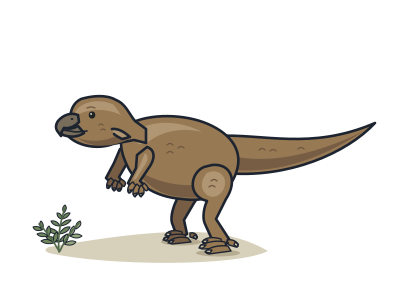
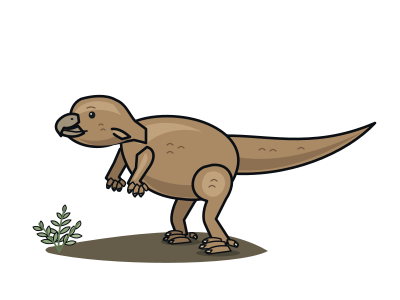
- PachyrhinosaurusA horned dinosaur with a thick, bumpy pad of bone on its nose instead of a horn.