A species
Superb lyrebird
Menura novaehollandiae
A forest songbird with a remarkable borrowed soundtrack.
You and the superb lyrebird meet in the Amniotes branch, shown at about 320 million years ago (on 4 December, in a calendar from life's shared ancestor to today).
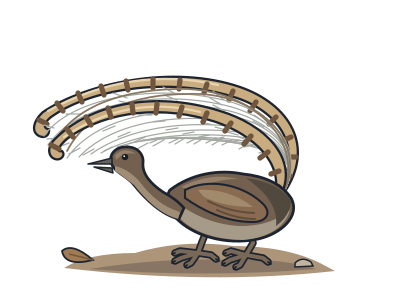
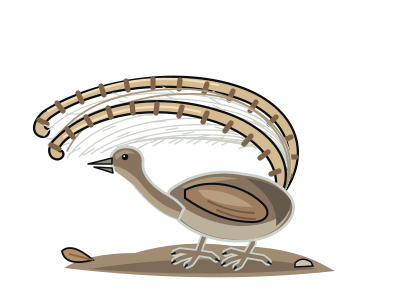
A superb lyrebird can copy a chainsaw or a camera shutter—but the famous filmed examples involved captive birds. In the wild, its copied sounds are mainly other birds’ calls. Despite its large, pheasant-like shape, this is a songbird: it belongs among the perching birds, alongside sparrows and ravens on the tree.
In the moist forests of south-eastern Australia, it spends much of its time on the ground. Strong feet scratch through fallen leaves to uncover insects, spiders and worms. At night, it sleeps in trees. Its body is covered in brown feathers. Adult males have long, elaborate tails; females and young males have plainer tails.
When a male displays to a female, a mound of earth becomes his stage. He sings and dances, flipping his tail forward over his back and head. The fine, lacy feathers spread above him—not upright behind him like a peacock’s fan.
A family of two
There are just two living lyrebird species: the superb lyrebird and Albert’s lyrebird.
One parent does the work
The female builds the nest, keeps the egg warm and raises the chick without help from the male.
Newcomers to Tasmania
People introduced superb lyrebirds to Tasmania. The island is outside their original natural range.
Next to it on the tree
- Satin bowerbirdMales build a stick avenue and decorate it with blue objects, from flowers to bottle tops.
- Superb fairywrenTeaches its unhatched chicks a secret 'password' call they must use to be fed.
- Crows, shrikes and birds-of-paradiseA big branch of songbirds that spread out of Australia and reached the whole world.
- PasseridesThe largest branch of songbirds, from tits and warblers to thrushes, sparrows and finches.