A group of living things
Sea cows
Sirenia
Underwater grazers with elephant relatives.
This branch is shown at about 30 million years ago; its age is a rough estimate.
You and sea cows meet in the Placental mammals branch, shown at about 95 million years ago (on 23 December, in a calendar from life's shared ancestor to today).
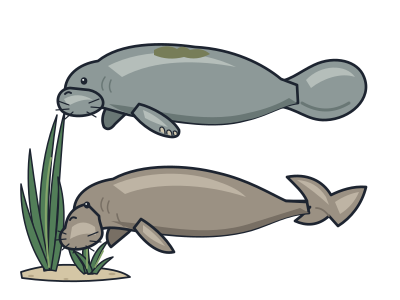
Sea cows are the only living group of sea mammals specialised for eating water plants. Grazing seagrass makes them look like underwater cows, but their family connections tell a different story. Their closest living relatives outside their own group are elephants and hyraxes—not seals or dolphins.
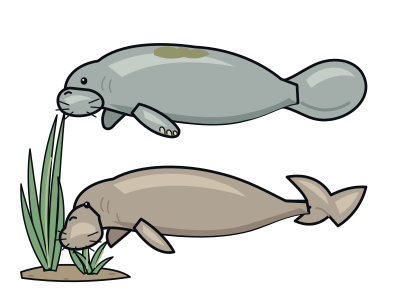
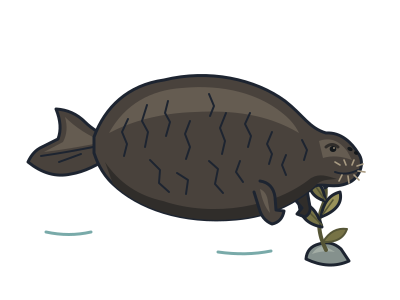
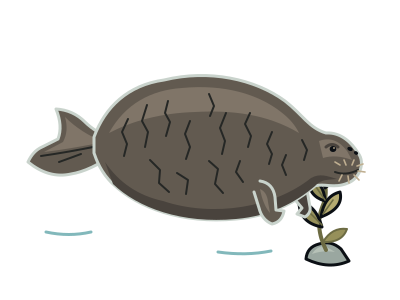
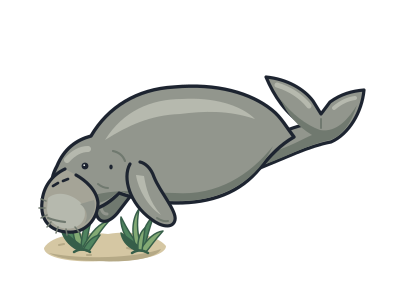
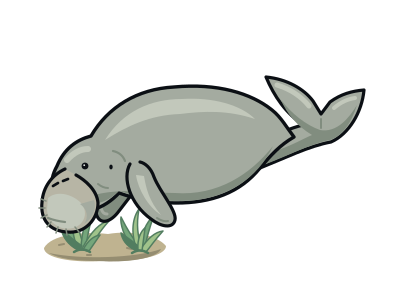
There are four living species: three manatees and one dugong. A quick way to tell these animals apart is to look at their tails. Manatees have a broad, rounded paddle. A dugong has a tail with two lobes, rather like a whale’s. Its broad mouth points downwards towards its food on the seabed.
Despite their name, not all sea cows live in seawater. Manatees use different habitats depending on the species, including rivers and coastal waters. Dugongs live entirely in the sea. Living sea cows spend their whole lives in water, unlike seals. They still breathe air and feed their young with milk.
Teeth on the move
Manatees continually replace their grinding teeth. New teeth appear at the back and move forwards as worn teeth fall out.
Fingers inside flippers
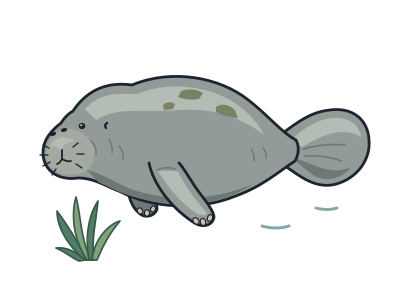
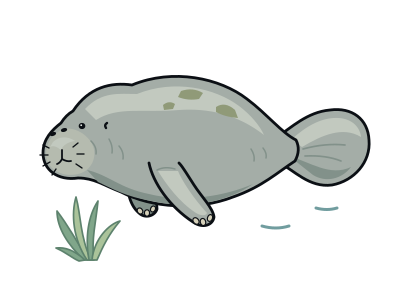
A Florida manatee’s flipper contains jointed, finger-like bones and has three or four small nails.
A gripping lip
Florida manatees grasp plants with muscular upper lips, rather like an elephant picking things up with its trunk.
Inside sea cows
Next to it on the tree
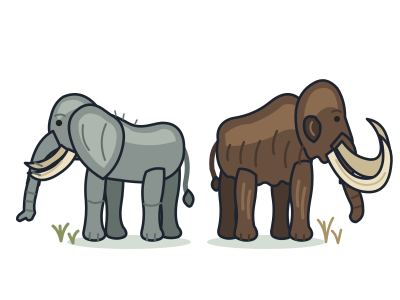
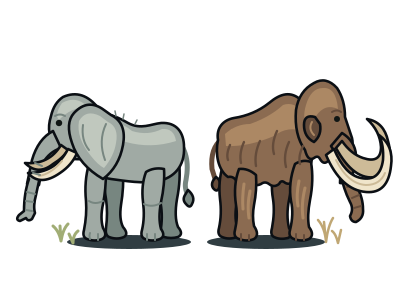
- Elephants and mammothsMammoths were closer to Asian elephants than to African ones.
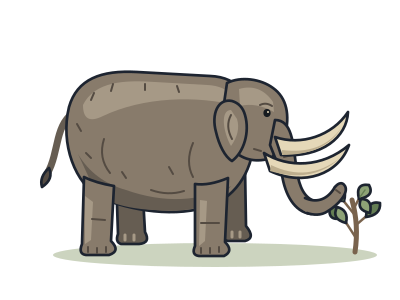
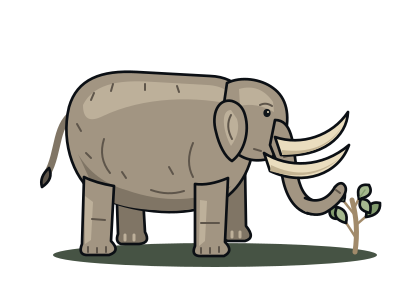
- American mastodonA distant elephant relative whose teeth and stomach contents reveal a taste for woody plants.
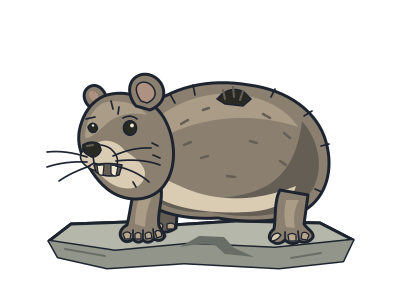
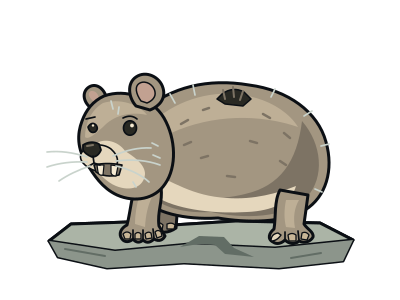
- Rock hyraxLooks like a big guinea pig, but its toes and teeth link it to elephants.
- DeinotheriumA giant elephant relative with tusks that curved down from its lower jaw.
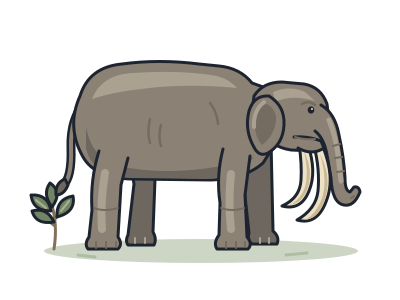
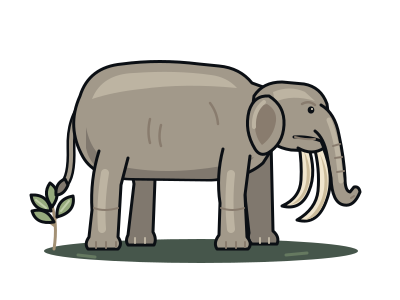
- PlatybelodonAn elephant relative with flat, shovel-like lower tusks used to strip and cut plants.