A species
Dugong
Dugong dugon
A seagrass grazer with a whale-like tail—and a possible link to mermaid tales.
You and the dugong meet in the Placental mammals branch, shown at about 95 million years ago (on 23 December, in a calendar from life's shared ancestor to today).
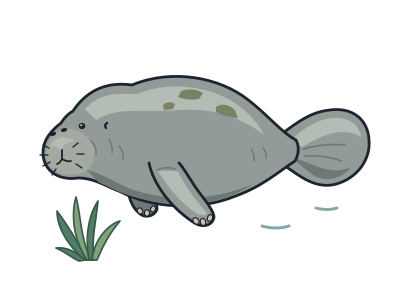
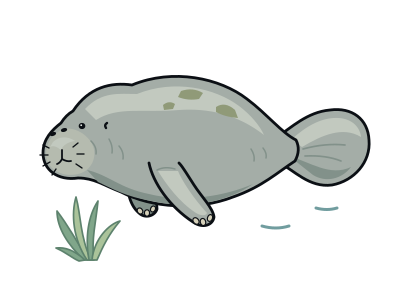
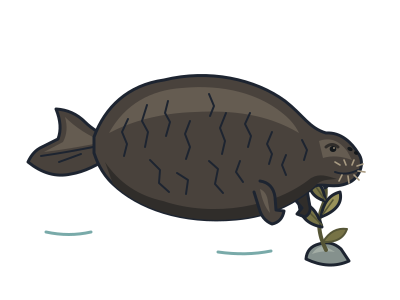
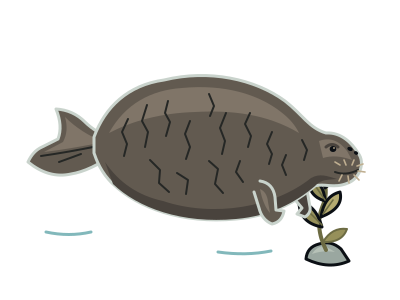
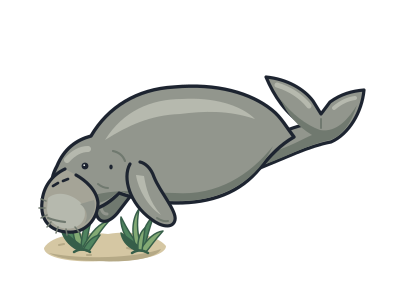
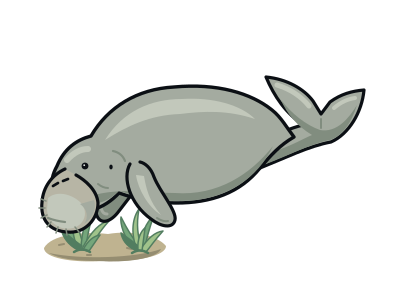
A dugong grazes on underwater seagrass meadows, swimming with a tail shaped much like a whale’s. But it belongs to a different branch of mammals: the sea cows. Manatees are its fellow living sea cows. Outside that group, its closest living relatives are elephants and hyraxes—a surprising family connection for an ocean grazer.
Its broad snout points down towards the seabed. Sensitive bristles on its fleshy upper lip help it find and grasp seagrass. As it feeds, it can pull up whole plants, leaving visible trails across the meadow. Its bulky, grey-brown body has paddle-shaped front flippers but no back fin.
Dugongs live in warm coastal waters from East Africa to Australia, which holds the largest remaining population. They breathe air, coming to the surface between dives that generally last a few minutes. Often alone or in pairs, they sometimes gather in herds of about a hundred.
Small tusks
Small tusks can show in adult males and some older females.
A long life
Dugongs can live for about 70 years, though this is not their average lifespan.
Years between calves
A female usually has one calf at a time, with about three to seven years between births.