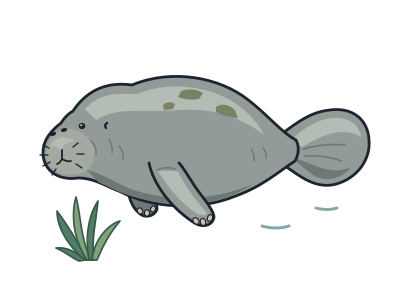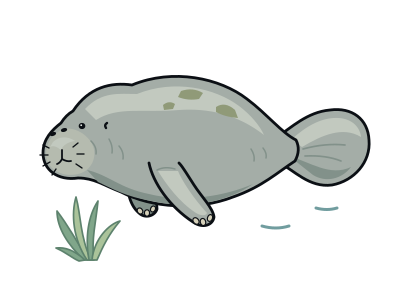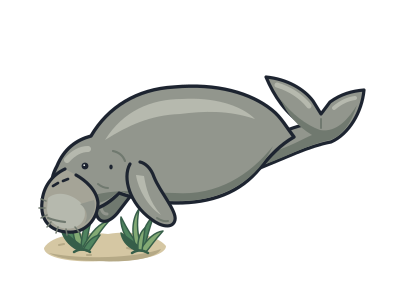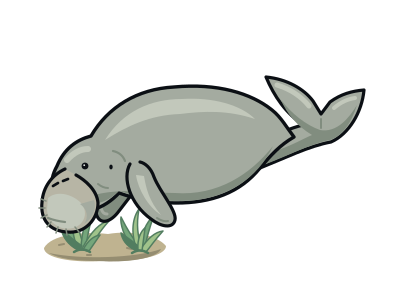
An extinct species
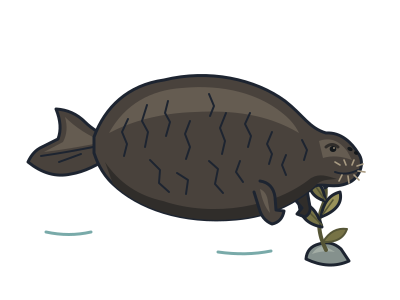
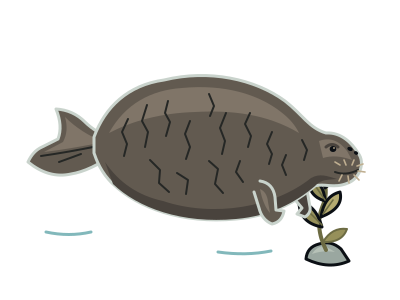
Steller's sea cow †
Hydrodamalis gigas
About eight metres long, lost in just 27 years
Steller observed it in 1741; it was extinct by 1768. Fossils show an earlier history.
You and the steller's sea cow meet in the Placental mammals branch, shown at about 95 million years ago (on 23 December, in a calendar from life's shared ancestor to today).
About eight metres long, Steller’s sea cow was hunted to extinction by 1768, just 27 years after its scientific discovery. Its closest living relative was the dugong, rather than the West Indian manatee. It was also more closely related to elephants and hyraxes than to whales or seals.
A fossil rib from Japan showed that its history stretched back long before the 1700s. Unlike living sea cows, it inhabited cold, shallow coastal waters. Its enormous body and a thick layer of fat helped it retain heat. It fed mainly on kelp and other seaweeds, rather than hunting animals.
Evidence included bones and descriptions made while the animals were alive—not fossils alone. Steller observed them after his expedition was shipwrecked on Bering Island in 1741. Later, fur traders hunted sea cows for food to supply their voyages. The sea cows were not themselves the main target of the fur trade.
No teeth needed
Adults had tough pads in their mouths instead of teeth to handle seaweed.
Underwater eye protection
A transparent third eyelid protected each eye underwater.
Built-in weights
Its unusually dense bones helped stop its body floating too easily.