A species
West Indian manatee
Trichechus manatus
A gentle water grazer with elephants in the family
You and the west indian manatee meet in the Placental mammals branch, shown at about 95 million years ago (on 23 December, in a calendar from life's shared ancestor to today).
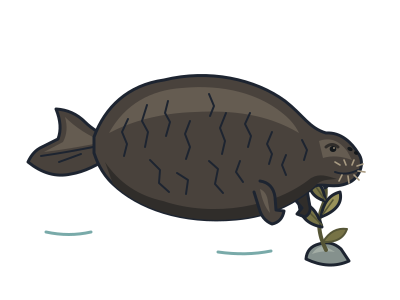
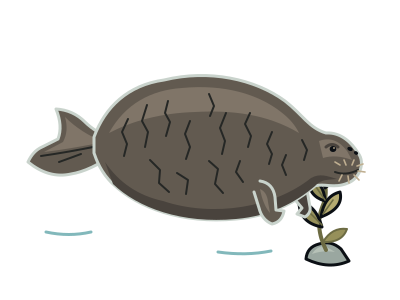
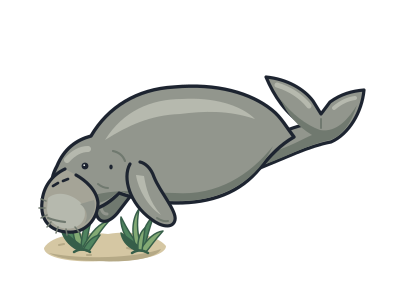
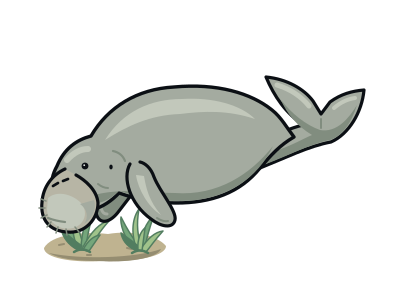
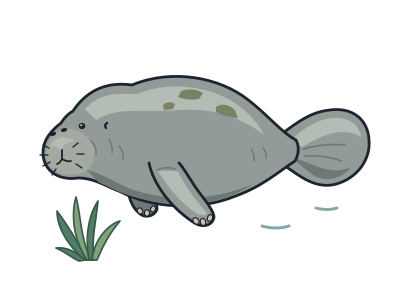
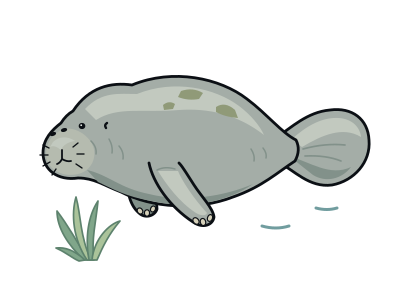
This gentle “sea cow” is an unexpected relative of elephants, not a close relative of cattle. Elephants are among its closest living relatives on land. In the water, it belongs to the sea cow group alongside dugongs. Look at the tail to tell them apart: a manatee has a broad, rounded paddle, while a dugong’s tail divides into two pointed tips.
West Indian manatees graze on seagrasses and other water plants, sometimes spending about eight hours a day feeding. Each half of the flexible upper lip can move separately to grasp food. They live in warm, shallow rivers and coastal waters, moving between fresh water, seawater and the partly salty water where rivers meet the sea.
They usually surface to breathe every three to five minutes. Despite their bulk, they cannot tolerate water below about 20°C for long. Florida manatees seek warm springs and other warm-water shelters in winter. Boat collisions, fishing gear and the loss of feeding grounds and warm-water shelters threaten their survival.
Conveyor-belt teeth
New grinding teeth grow at the back of the mouth and move forwards, replacing older teeth as they wear out and fall out.
A long childhood
A calf can depend on its mother for about two years. Mothers and calves use squeals to keep in contact underwater.
Surprisingly nimble
Manatees can roll, turn somersaults and swim upside down.