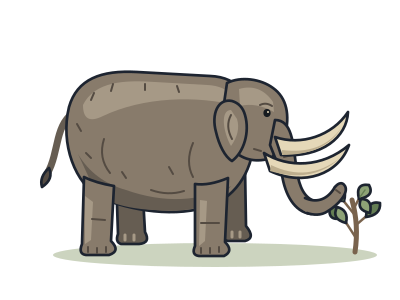
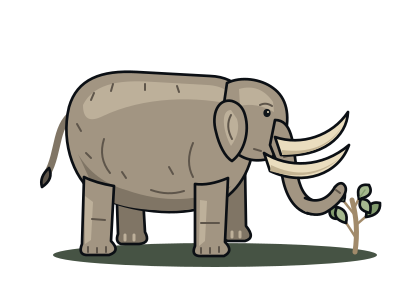
An extinct species
American mastodon †
Mammut americanum
A mammoth lookalike that fed in forests.
Lived about 3.5–0.011 million years ago.
You and the american mastodon meet in the Placental mammals branch, shown at about 95 million years ago (on 23 December, in a calendar from life's shared ancestor to today).
The American mastodon looked like a mammoth, but it was only a distant cousin of mammoths and living elephants. It browsed forest leaves and twigs rather than specialising in grass. Mastodons and mammoths even lived alongside each other in many places: one was not simply an earlier version of the other.
It lived from about 3.5 million to 11,000 years ago, in forests, woodlands and wetland landscapes. Compared with mammoths, it generally had a shorter, stockier body and less tightly curved tusks. Its bulky frame looked elephant-like, but its back teeth offered a clear way to tell it apart from a mammoth.
Those teeth had paired rows of rounded, cone-like points that helped break and chew woody branches. Mammoth back teeth were much flatter. Fossil teeth were not the only clues to its meals: preserved digestive remains found with the Warren skeleton included branches and twigs. These remains gave direct evidence of what that individual had eaten.
Tusks for both sexes
Both males and females had tusks, although males had larger ones.
A wide-ranging relative
Its reported range stretched from Alaska south into Central America, as far as Honduras.
Age written in tusks
Researchers used growth rings in the Warren individual's tusks to estimate that it died at about 30 years old.
Next to it on the tree
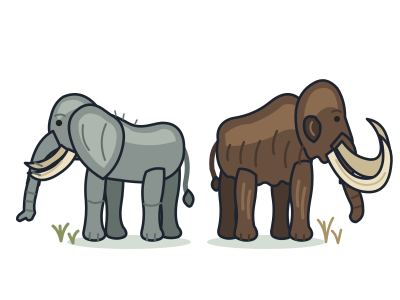
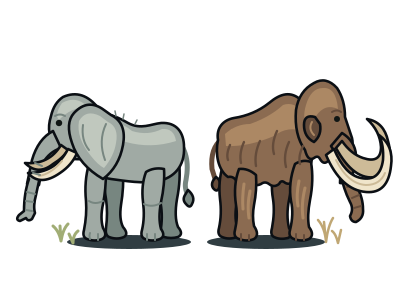
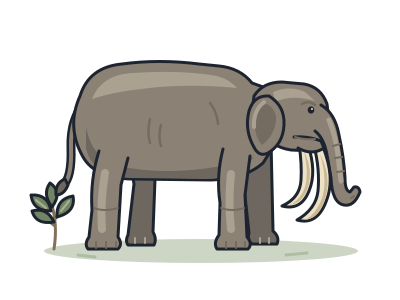
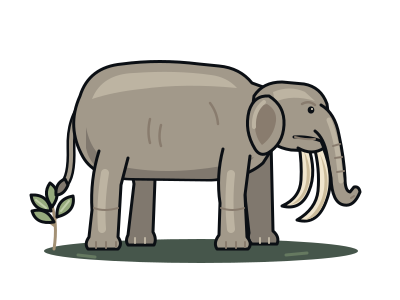
- Elephants and mammothsMammoths were closer to Asian elephants than to African ones.
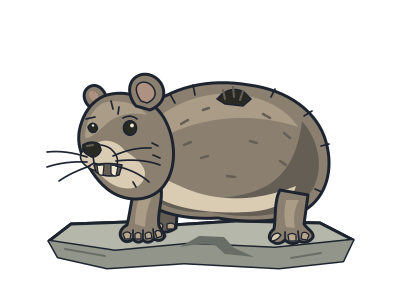
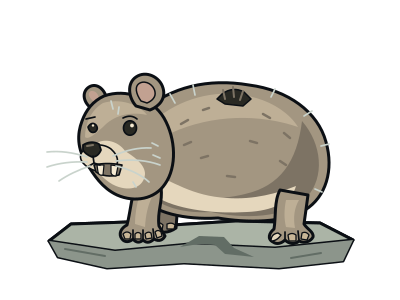
- Rock hyraxLooks like a big guinea pig, but its toes and teeth link it to elephants.
- DeinotheriumA giant elephant relative with tusks that curved down from its lower jaw.
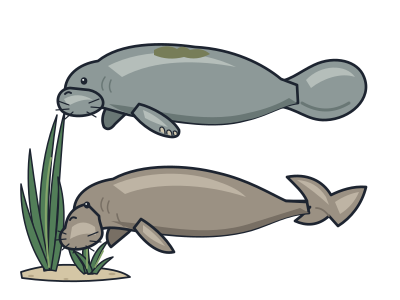
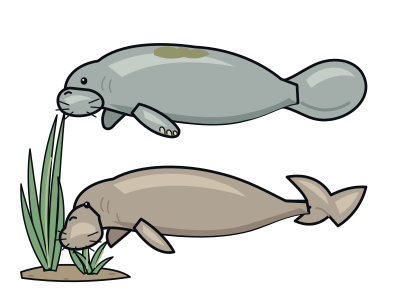
- Sea cowsAquatic mammals specialised for grazing plants; manatees and dugongs have very different tails.
- PlatybelodonAn elephant relative with flat, shovel-like lower tusks used to strip and cut plants.