An extinct species
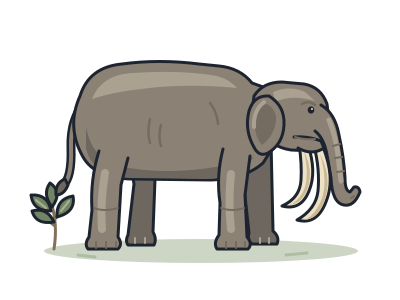
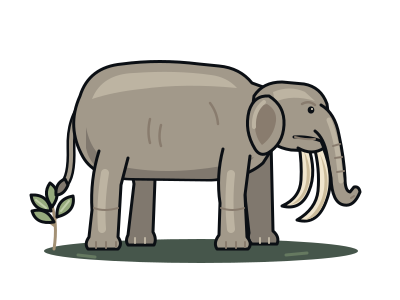
Deinotherium †
Deinotherium giganteum
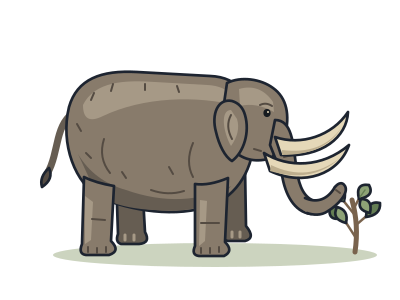
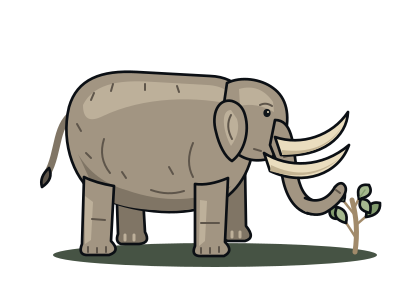
A giant elephant relative with downward-curving tusks.
Known from about 10 million years ago.
You and the deinotherium meet in the Placental mammals branch, shown at about 95 million years ago (on 23 December, in a calendar from life's shared ancestor to today).
This giant elephant relative had tusks that curved down from its lower jaw. They were not upside-down versions of an elephant’s upper tusks: they grew from a different part of the mouth. It belonged to a separate family from elephants and mammoths, within the wider group of elephant relatives.
It lived about 10 million years ago in wooded European landscapes. Around the ancient Rhine, riverside forests stood beside more open woodland. Despite its striking tusks, the evidence pointed to a plant-eater. Its fossil bones showed a fairly level back, a relatively long neck and a flatter skull than those of living elephants.
Fossils also helped researchers reconstruct parts that had not survived. Muscle attachment areas on the skull supported the idea that it had a trunk, but did not reveal its exact length. Early researchers even assembled fragmentary remains with the tusks pointing upwards. An intact lower jaw later showed which way they really curved.
A misleading name
Its name meant roughly ‘giant terror beast’.
A riverside discovery
In 1968, a fisherman found a tusk tip beside Bavaria’s River Inn. Later discoveries included the second tusk, jaw material and cheek teeth.
Mistaken for a human giant
Bones found in France in 1613 were once presented as a legendary human giant’s remains. A surviving arm-bone fragment was later identified as belonging to an elephant relative.
Next to it on the tree
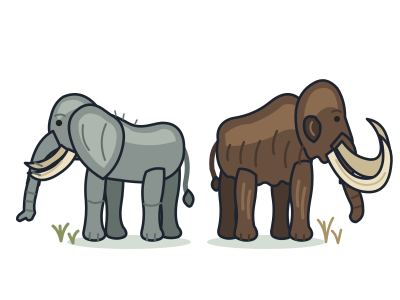
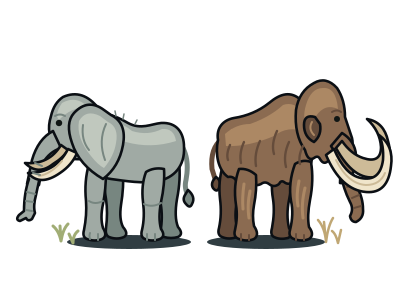
- Elephants and mammothsMammoths were closer to Asian elephants than to African ones.
- American mastodonA distant elephant relative whose teeth and stomach contents reveal a taste for woody plants.
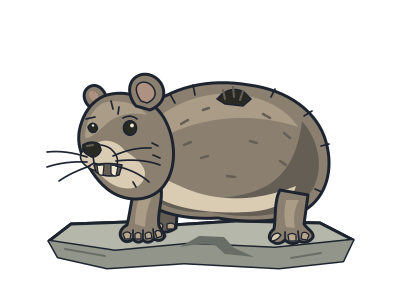
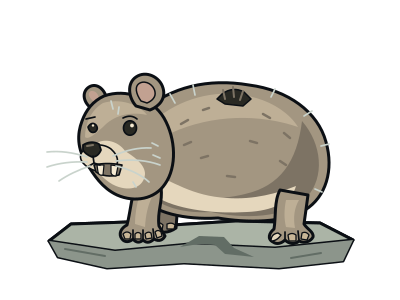
- Rock hyraxLooks like a big guinea pig, but its toes and teeth link it to elephants.
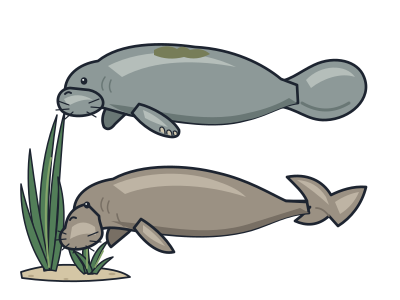
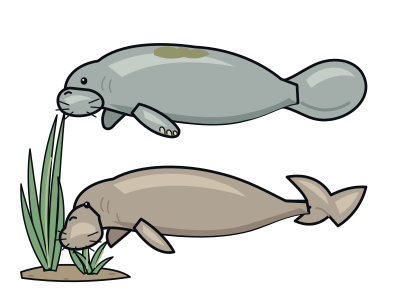
- Sea cowsAquatic mammals specialised for grazing plants; manatees and dugongs have very different tails.
- PlatybelodonAn elephant relative with flat, shovel-like lower tusks used to strip and cut plants.