A species
Grey heron
Ardea cinerea
A patient fisher with a lightning-fast strike
You and the grey heron meet in the Amniotes branch, shown at about 320 million years ago (on 4 December, in a calendar from life's shared ancestor to today).
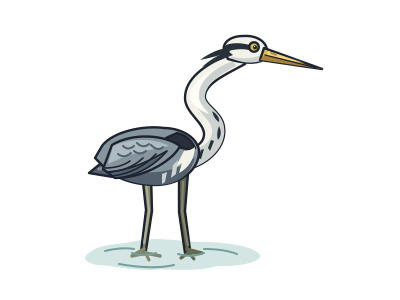
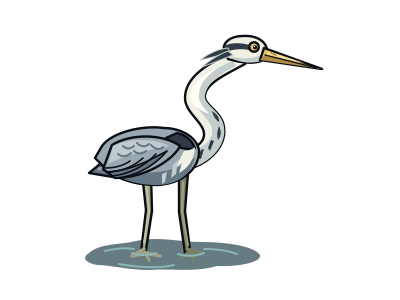
A grey heron often stands motionless in shallow water, waiting for a fish to come within reach. Then its long neck and pointed bill shoot forwards in a rapid strike. The bill catches the fish rather than always piercing it like a skewer. The heron generally swallows its catch whole.
Its family connections may surprise you. Despite its stork-like shape, the grey heron belongs to the same wider bird group as pelicans. Storks belong to a separate group. Those long legs alone are not a reliable guide to which birds belong together.
Grey herons live across Europe, Asia and Africa. They feed in shallow water, both fresh and salty, around rivers, lakes, marshes and sheltered coastal waters. Waiting still is not their only hunting method: they also walk slowly while searching for prey.
A field can be a hunting ground
Grey herons sometimes hunt rodents in fields after harvesting. One far from water is not necessarily lost.
Similar, but separate
The grey heron, North America's great blue heron and South America's cocoi heron are three distinct species.
Some travel, some stay
Some populations migrate, while others stay near their breeding areas.
Next to it on the tree
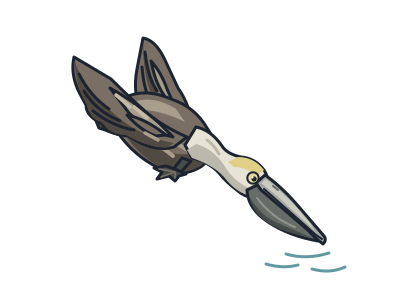
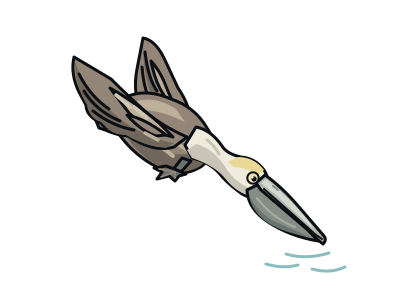
- Brown pelicanPlunges head-first from the air and scoops fish into its stretchy throat pouch.
- ShoebillA tall, grey African swamp bird with a giant clog-shaped beak and a slow, steady stare.
- HamerkopA small brown wader that builds a huge domed nest strong enough to bear a person's weight.
- Scarlet ibisGlows bright red from the crabs and shrimps it eats; flocks roost like fruit in the trees.