A species
Brown pelican
Pelecanus occidentalis
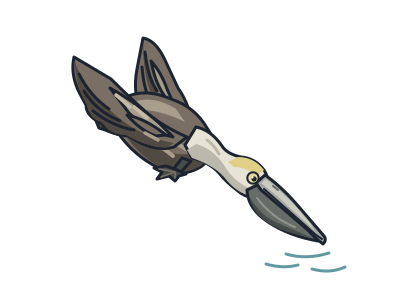
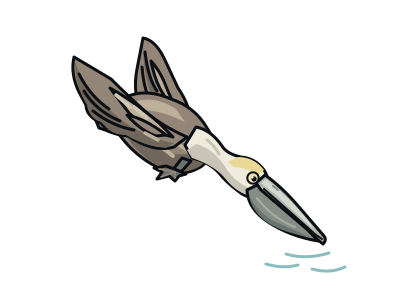
A head-first dive and a stretchy fishing scoop
You and the brown pelican meet in the Amniotes branch, shown at about 320 million years ago (on 4 December, in a calendar from life's shared ancestor to today).
The brown pelican plunges head-first from the air and scoops fish into its stretchy throat pouch. Before swallowing its catch whole, it lets the water drain away. This fishing style is unusual even among its own family: its close relative, the Peruvian pelican, is the only other pelican species that feeds this way.
Air sacs beneath its skin help cushion the splashdown and help it return to the surface. Its main food is small fish swimming together near the surface, including anchovies and herring. Diving is not its only option. It sometimes catches fish while floating, especially where the water is too shallow or muddy for a dive.
Look for it around shallow coastal seas, sheltered bays and river mouths along both sides of the Americas. Groups often fly in lines low over the sea. They glide on air rising along the waves, then add powerful wingbeats to keep moving.
Warm feet
Parents warm their eggs with the skin of their feet rather than a bare patch on their belly.
An unwelcome passenger
Gulls sometimes perch on a pelican’s head and try to steal fish while it drains its pouch.
More than a scoop
The throat pouch also helps the bird cool down in hot weather.
Next to it on the tree
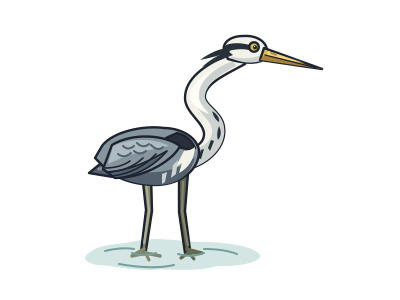
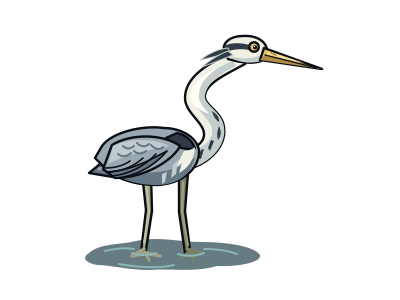
- Grey heronStands motionless in shallow water before spearing fish.
- ShoebillA tall, grey African swamp bird with a giant clog-shaped beak and a slow, steady stare.
- HamerkopA small brown wader that builds a huge domed nest strong enough to bear a person's weight.
- Scarlet ibisGlows bright red from the crabs and shrimps it eats; flocks roost like fruit in the trees.