A group of living things
Deer
Cervidae
Bone that grows back
This branch is shown at about 13 million years ago; its age is a rough estimate.
You and deer meet in the Placental mammals branch, shown at about 95 million years ago (on 23 December, in a calendar from life's shared ancestor to today).
Deer antlers are bone that grows from the skull, usually falls off and regrows each year. Antlers hold the record for the fastest-growing tissue in mammals. While growing, they wear a covering called velvet: furry skin with a blood supply that supports growth. Once growth finishes, the velvet dries, and deer rub it off against trees and other plants.
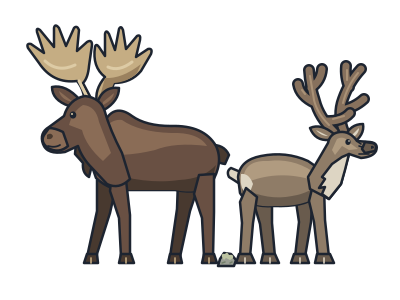
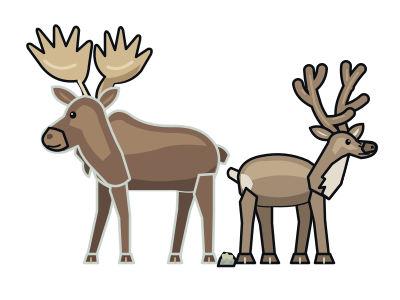
Moose and reindeer are both deer, alongside red deer and the extinct Irish elk. Giraffes, okapi, pronghorn, cattle, sheep and goats are relatives, but belong outside the deer family. These animals share a way of processing plant food: they bring partly digested food back to their mouths and chew it again. This is called chewing the cud.
Antlers do not belong on every deer. In most species, only males normally grow them. Reindeer are unusual because females commonly grow antlers too. Water deer have none at all; males instead have long, pointed upper teeth.
Not birthday candles
Counting antler points does not reliably tell you a deer's age. Food, inherited traits and age all affect antler growth.
Often alone
Moose usually live alone rather than in herds, although mothers stay closely associated with their calves.
Water-loving diners
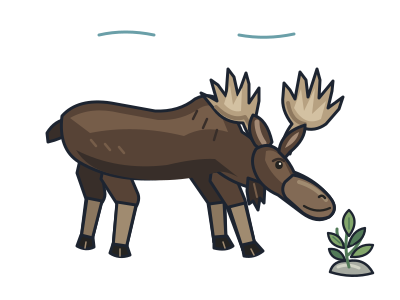
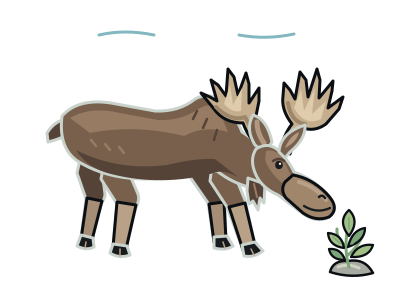
Moose eat water plants as well as leaves, twigs, buds and bark. They are capable swimmers.
Inside deer
- MooseThe largest living deer can submerge completely to reach water plants; precise diving limits are uncertain.
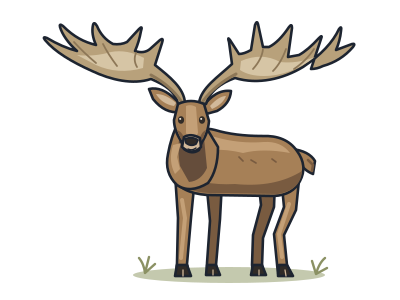
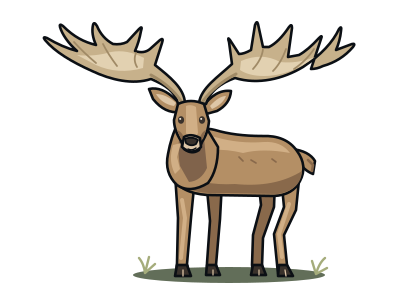
- Irish elkA giant deer whose exceptional antlers spanned about 3.6 metres, the largest known among deer.
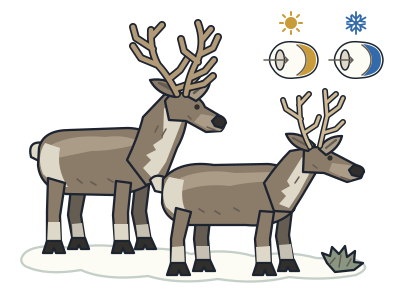
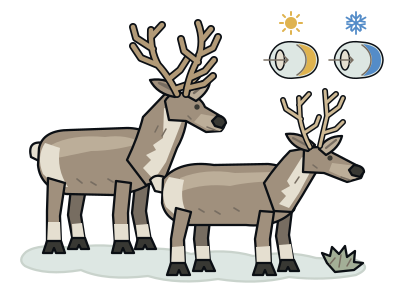
- ReindeerFemales can grow antlers too; an internal reflective eye layer changes from gold in summer to blue in winter.
- Red deerStags roar and lock antlers in autumn contests.
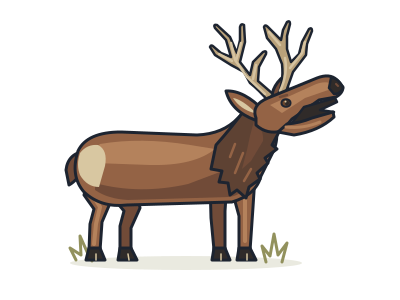
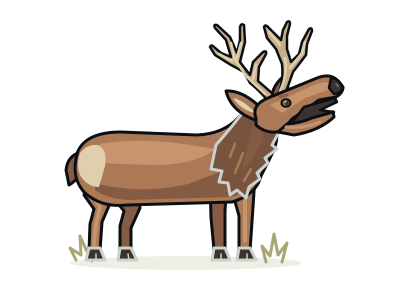
- White-tailed deerNorth America’s most common deer, which flashes its white tail as an alarm signal.
- Roe deerA small European deer that can delay its pregnancy so fawns are born in spring.
- Reeves’s muntjacA small barking deer with short antlers and tusks, now common in English woods.
- Chinese water deerA deer with no antlers but long tusk-like fangs, nicknamed the vampire deer.
Next to it on the tree
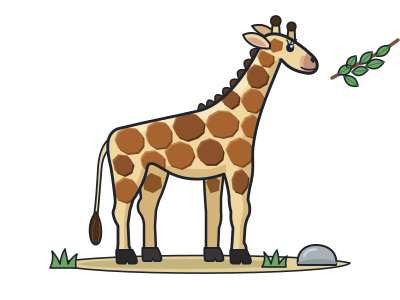
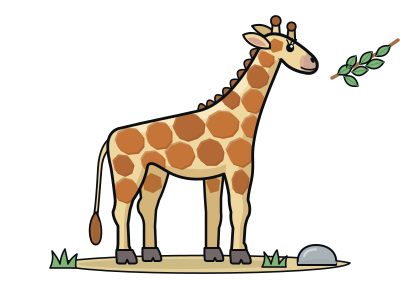
- GiraffeSame number of neck bones as you (seven), each one enormous.
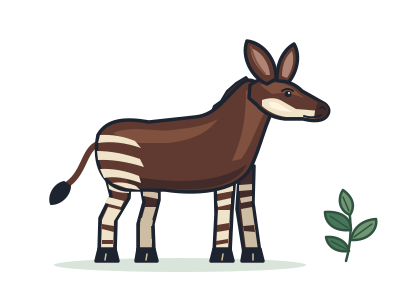
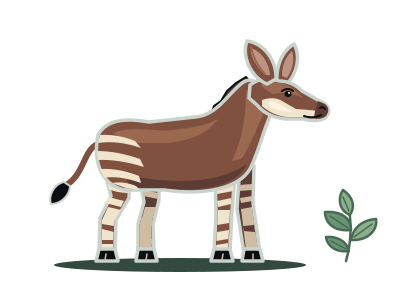
- OkapiA forest giraffe relative with striped legs, recognised by Western science in 1901 but long known locally.
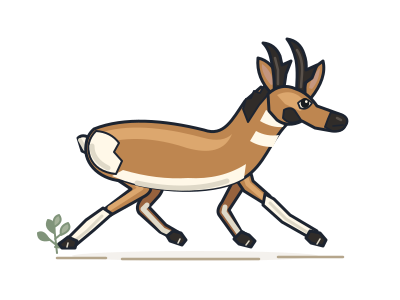
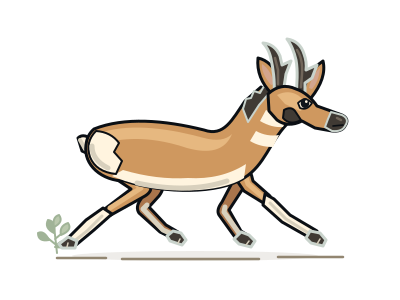
- PronghornNorth America’s fastest living land animal; why its ancestors evolved for running remains debated.
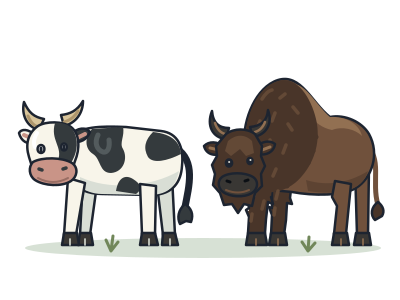
- Cattle, antelopes, sheep and goatsA family known for unbranched horns with a bony core; they are not normally shed each year.
- Lesser mouse-deerOne of the smallest hoofed mammals, no bigger than a rabbit, with tiny fangs instead of antlers.