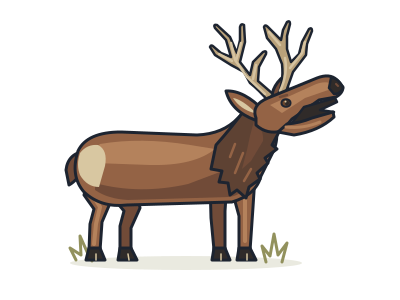
A species
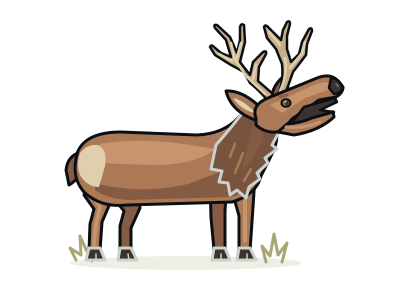
Red deer
Cervus elaphus
Autumn rivals with roaring voices and branching antlers
You and the red deer meet in the Placental mammals branch, shown at about 95 million years ago (on 23 December, in a calendar from life's shared ancestor to today).
In autumn, male red deer, called stags, roar and may lock antlers in contests for females. They belong to the same deer family as moose and reindeer. But an autumn encounter is not always a fight. Closely matched rivals may first walk side by side, sizing each other up.
If neither stag backs away, they can lower their heads, lock antlers and push against one another. This breeding season is called the rut. In Britain, it runs roughly from September to early November. A stag guarding a group of females spends much of his time keeping rivals away and the females together, leaving little time to eat or sleep.
Those branching antlers are bone, not permanent horns. Stags shed them and grow a new set each year. While growing, antlers have a soft skin covering called velvet, which contains blood vessels. By the autumn contests in Britain, the velvet is gone and the antlers are hard.
More than grass
Red deer eat grasses, heather and woody plants, rather than grass alone.
Separate groups
Males and females usually live in separate groups outside the breeding season.
Usually one calf
A female usually gives birth to one calf. In Britain, calves are born in late spring or early summer.
Next to it on the tree
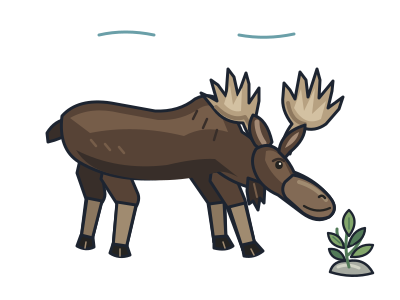
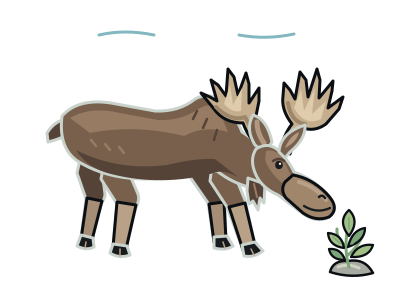
- MooseThe largest living deer can submerge completely to reach water plants; precise diving limits are uncertain.
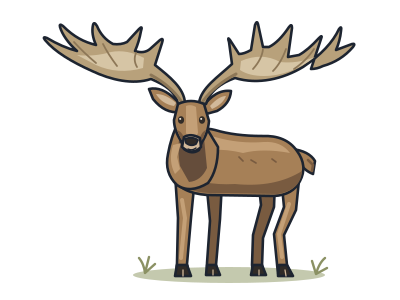
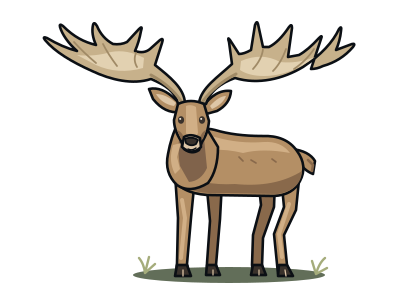
- Irish elkA giant deer whose exceptional antlers spanned about 3.6 metres, the largest known among deer.
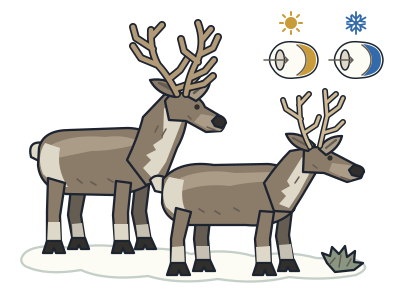
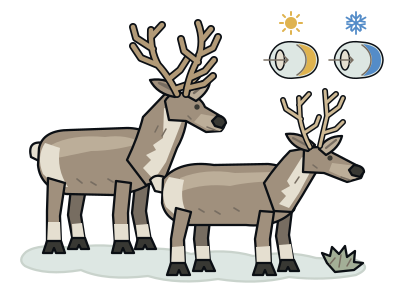
- ReindeerFemales can grow antlers too; an internal reflective eye layer changes from gold in summer to blue in winter.
- White-tailed deerNorth America’s most common deer, which flashes its white tail as an alarm signal.
- Roe deerA small European deer that can delay its pregnancy so fawns are born in spring.
- Reeves’s muntjacA small barking deer with short antlers and tusks, now common in English woods.
- Chinese water deerA deer with no antlers but long tusk-like fangs, nicknamed the vampire deer.