A species
Reindeer
Rangifer tarandus
Antlers for both sexes, and a winter change inside the eyes.
You and the reindeer meet in the Placental mammals branch, shown at about 95 million years ago (on 23 December, in a calendar from life's shared ancestor to today).
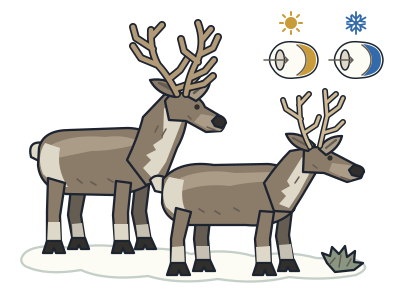
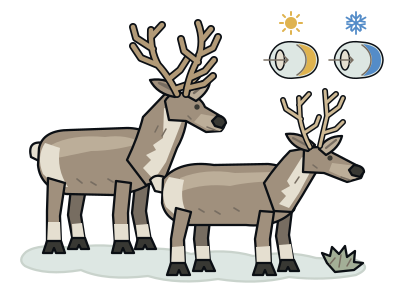
Both male and female reindeer can grow antlers—and Arctic reindeer have an eye layer that turns blue in winter. These relatives of moose and red deer break the usual deer pattern: females can wear antlers too, although some have none. Their antlers are branching bone, not permanent horns. They shed them and grow new ones.
The eye change happens inside, not in the coloured part you normally see. A reflective layer changes from gold in summer to deep blue in winter. It sends light back through the eye’s light-sensitive surface, giving faint light another chance to be detected. This helps them see in dim conditions.
Reindeer and caribou are treated here as the same species. Wild North American animals are usually called caribou; reindeer is the usual name in Eurasia and for domesticated animals. Their broad hooves spread on snow and soft ground, act as paddles when swimming, and help dig through snow for winter food.
Clicking feet
Their feet click as they walk because tendons move past bones.
No baby spots
Newborn calves are brown, without the white spots seen on many other deer calves.
A double coat
Long outer hairs cover a woolly undercoat.
Next to it on the tree
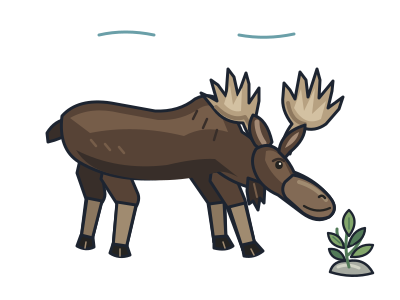
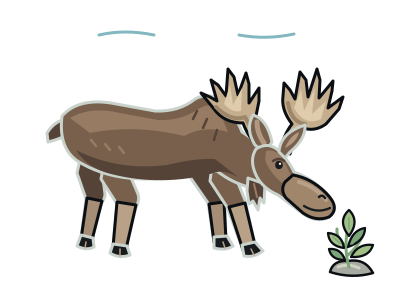
- MooseThe largest living deer can submerge completely to reach water plants; precise diving limits are uncertain.
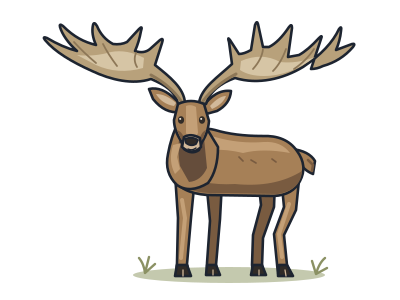
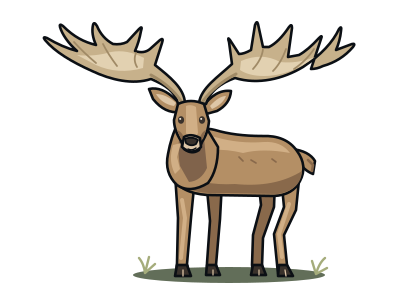
- Irish elkA giant deer whose exceptional antlers spanned about 3.6 metres, the largest known among deer.
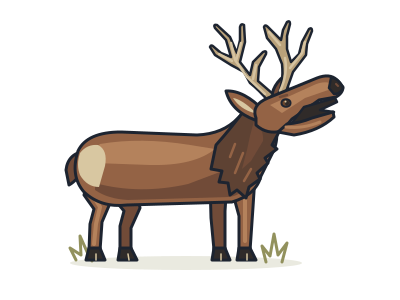
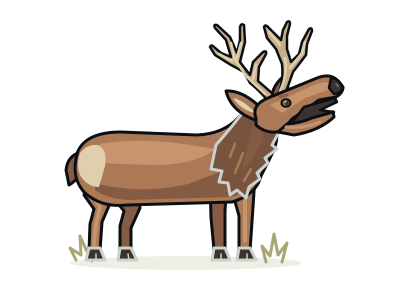
- Red deerStags roar and lock antlers in autumn contests.
- White-tailed deerNorth America’s most common deer, which flashes its white tail as an alarm signal.
- Roe deerA small European deer that can delay its pregnancy so fawns are born in spring.
- Reeves’s muntjacA small barking deer with short antlers and tusks, now common in English woods.
- Chinese water deerA deer with no antlers but long tusk-like fangs, nicknamed the vampire deer.