An extinct species
Irish elk †
Megaloceros giganteus
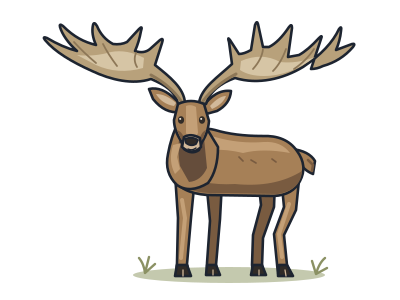
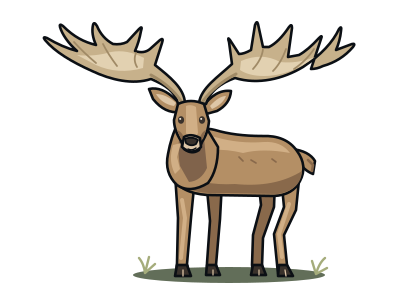
A giant deer with record-breaking antlers
Lived about 400,000–7,700 years ago.
You and the irish elk meet in the Placental mammals branch, shown at about 95 million years ago (on 23 December, in a calendar from life's shared ancestor to today).
A male Irish elk could carry antlers spanning about 3.6 metres—the largest of any known deer, living or extinct. That was an exceptional spread, not the size every male reached. Despite its name, this giant’s closest living relatives were fallow deer, not moose. DNA and skeletons supported that surprising family connection.
Fossils recorded its life from about 400,000 to 7,700 years ago. It was not just Irish: its range stretched from Ireland across northern Europe and Asia to Siberia. It favoured a mixture of grassland and open woodland rather than dense forest. Wear on fossil teeth indicated that it ate both grass and tree leaves.
Adults stood about 2 metres tall at the shoulders, roughly the height of a doorway. Fossil skulls had thick roofs, and strong neck bones helped support the enormous antlers. These remains revealed the sturdy framework beneath the animal’s remarkable headgear.
A fresh pair each year
Males shed their antlers each year and grew another pair before the autumn breeding season.
Females went without
Females lacked antlers and were estimated to have been about 10–15 per cent shorter than males.
Painted by people
People depicted giant deer in prehistoric cave paintings, including at Lascaux in France.
Next to it on the tree
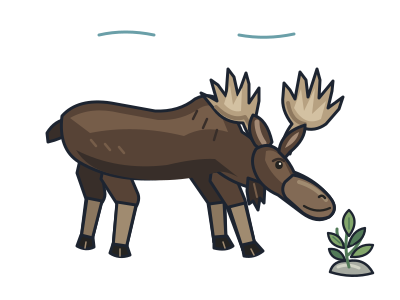
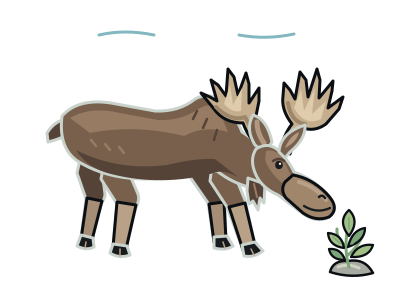
- MooseThe largest living deer can submerge completely to reach water plants; precise diving limits are uncertain.
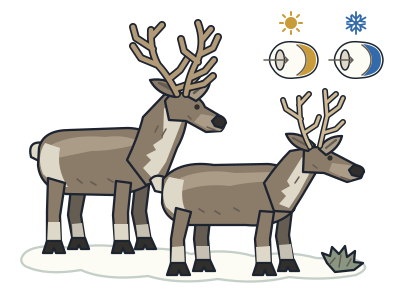
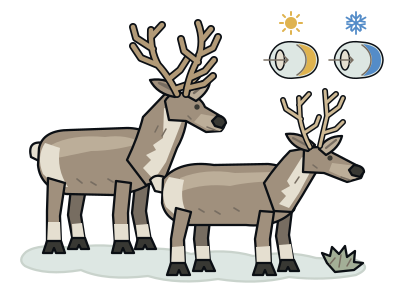
- ReindeerFemales can grow antlers too; an internal reflective eye layer changes from gold in summer to blue in winter.
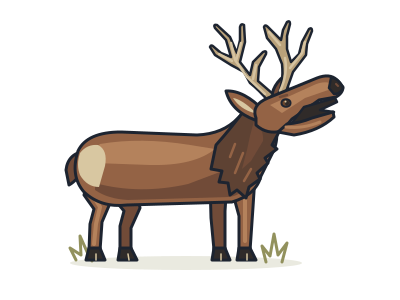
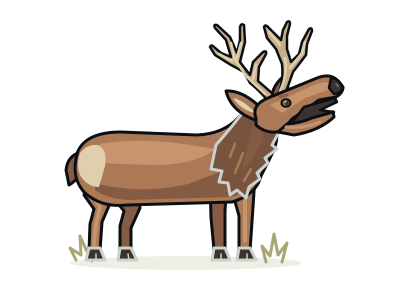
- Red deerStags roar and lock antlers in autumn contests.
- White-tailed deerNorth America’s most common deer, which flashes its white tail as an alarm signal.
- Roe deerA small European deer that can delay its pregnancy so fawns are born in spring.
- Reeves’s muntjacA small barking deer with short antlers and tusks, now common in English woods.
- Chinese water deerA deer with no antlers but long tusk-like fangs, nicknamed the vampire deer.