A species
Moose
Alces alces
The largest living deer can find meals underwater.
You and the moose meet in the Placental mammals branch, shown at about 95 million years ago (on 23 December, in a calendar from life's shared ancestor to today).
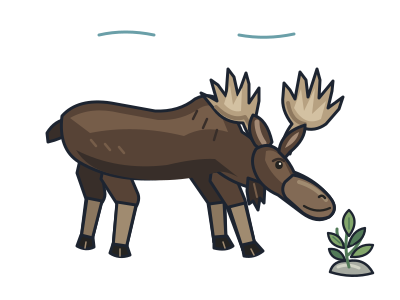
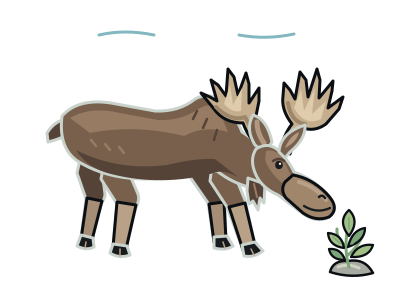
The largest living member of the deer family is also an underwater plant-eater. Moose belong to the same family as reindeer, but some take their search for food beneath the water’s surface. They can submerge their whole bodies to reach plants, rather than just dipping their heads underwater.
Water plants provide protein and important minerals. But not every moose eats this way: where suitable water plants are missing, moose can feed mainly on woody plants. Their menu also changes with the seasons. Summer meals include leaves, while winter brings plenty of willow, birch and aspen twigs.
These long-legged deer live in cold northern forests, shrublands and wetlands, often near lakes, rivers and marshes. They usually live alone or in small family groups rather than large herds.
No baby spots
Newborn moose have reddish-brown coats without the white spots seen on many other young deer.
A year with mum
Calves generally stay with their mother for about a year. Mothers are strongly protective, so never approach them.
An autumn pushing contest
During the autumn mating season, males may compete by locking their antlers together and pushing.
Next to it on the tree
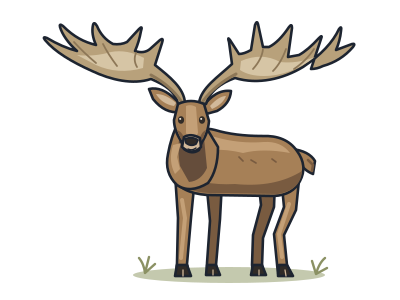
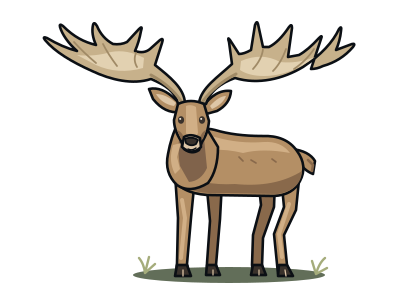
- Irish elkA giant deer whose exceptional antlers spanned about 3.6 metres, the largest known among deer.
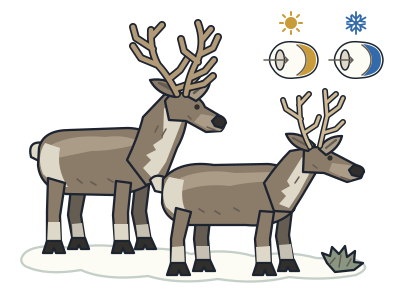
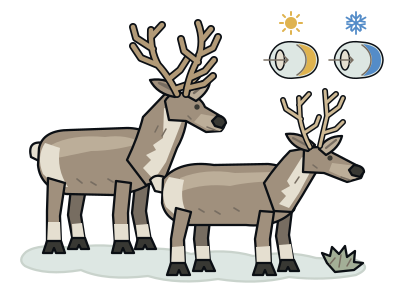
- ReindeerFemales can grow antlers too; an internal reflective eye layer changes from gold in summer to blue in winter.
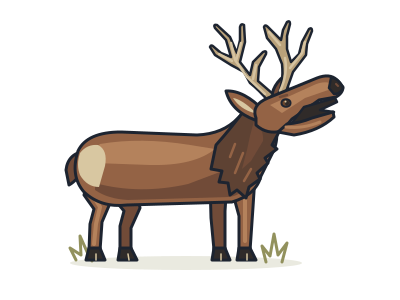
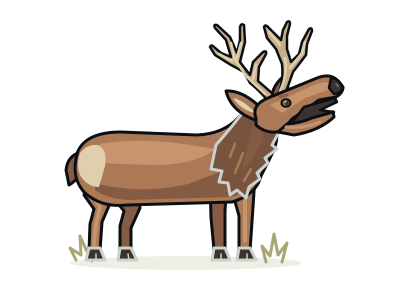
- Red deerStags roar and lock antlers in autumn contests.
- White-tailed deerNorth America’s most common deer, which flashes its white tail as an alarm signal.
- Roe deerA small European deer that can delay its pregnancy so fawns are born in spring.
- Reeves’s muntjacA small barking deer with short antlers and tusks, now common in English woods.
- Chinese water deerA deer with no antlers but long tusk-like fangs, nicknamed the vampire deer.