A species
Clove
Syzygium aromaticum
The spice in your kitchen is a flower bud that never got to bloom.
You and the clove meet in the Eukaryotes branch, shown at about 1.8 billion years ago (on 28 July, in a calendar from life's shared ancestor to today).
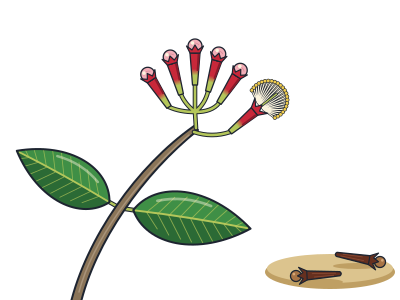
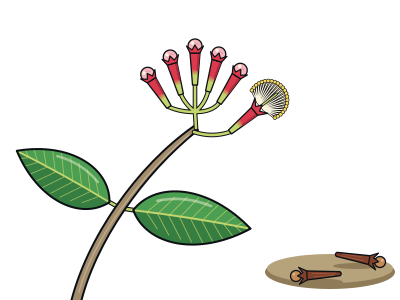
Every clove in the spice rack is a dried flower bud, picked before it could open. On the tree, the buds grow in small bunches at the tips of the twigs. Pickers take each bunch just before its first buds open, when the buds are biggest and hold the most oil. Then the buds are spread out to dry in the sun for several days, becoming the brown spice we know.
Look closely and you can still see a complete tiny flower in each clove. The 'stalk' is really the flower's tube-shaped base. The four little points are sepals. The round knob on top is four petals stuck together in a ball, with many stamens folded up inside.
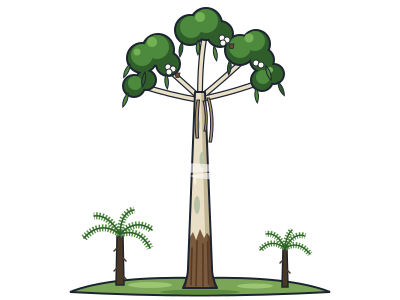
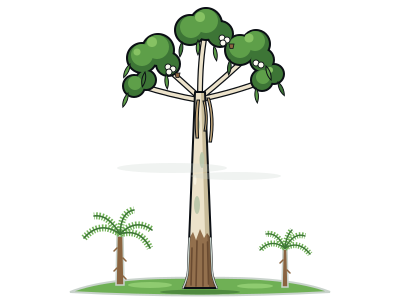
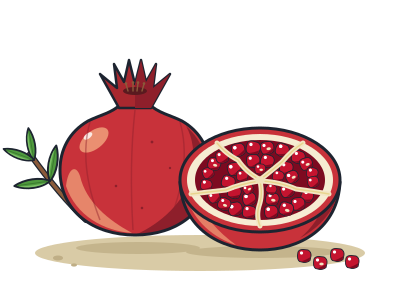
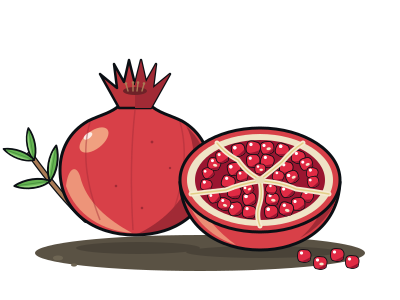
The clove tree is an evergreen that grows wild in the Moluccas, Indonesia's famous 'Spice Islands'. It belongs to the myrtle family, along with guava, bottlebrushes and eucalypts. So the tree behind this little spice shares a family with the mountain ash, one of the world's tallest flowering plants. Australia's lilly pillies are even closer relatives: they belong to the same genus as clove. Pomegranates and fuchsias belong to other families, so they are more distant relatives.
Mother of cloves
Buds left on the tree open into flowers. About three months later the fruit is ripe. It is an oval, dark red berry about 2 to 2.5 cm long, roughly the size of an olive, called 'mother of cloves'. It usually holds a single seed.
Named for a nail
The word 'clove' comes from the Old French word for 'nail', because each bud is shaped like a little nail. English has used it for about 800 years. A 'clove' of garlic is a different word with its own history.
A long sea journey
Ancient cloves are very rare finds. One was found at an ancient port in Sri Lanka, in a layer of soil dated to about 1,000 years ago. Cloves come from the Moluccas, about 7,000 km away by sea. This one was probably traded from port to port rather than carried there directly.