A group of living things
Toothed whales
Odontoceti
Dolphins and giants, hunting by echo.
This branch is shown at about 33 million years ago; its age is a rough estimate.
You and toothed whales meet in the Placental mammals branch, shown at about 95 million years ago (on 23 December, in a calendar from life's shared ancestor to today).
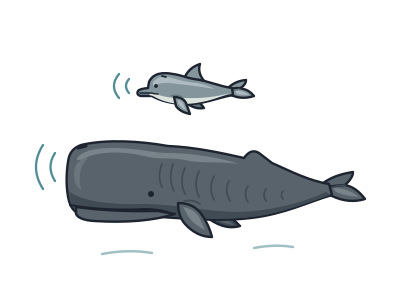
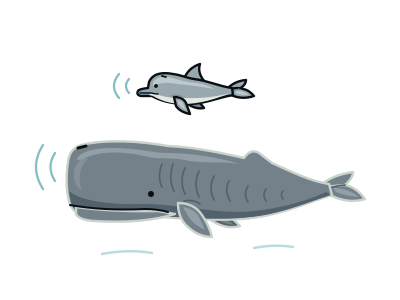
Dolphins, orcas and sperm whales hunt with sound—and all belong to the toothed-whale branch. A dolphin is a whale, not a separate kind of animal. These relatives send out sounds and listen for echoes bouncing back from prey. This is called echolocation, and it helps them find food even in dark water.
Sound starts inside passages in the nose. Fatty structures in the forehead help direct it out into the water. Hunting does not look the same across the group: different members suck food into their mouths, grab it or bite it. Fish and squid are important meals for many species.
They may look fish-like, but they are mammals: they breathe air and mothers feed their young milk. Their front limbs became flippers for steering. Their flat tails move up and down to push them forwards, rather than side to side like those of most fish.
Deep dinner trips
Sperm whales routinely hunt about 600 metres underwater, with dives that can last about 45 minutes.
A tooth, not a horn
A narwhal’s long, unicorn-like tusk is a modified tooth.
Not just ocean animals
This group also includes river dolphins that live in freshwater.
Inside toothed whales
- Bottlenose dolphinUses distinctive signature whistles to address companions, rather like names; this does not establish human-like language.
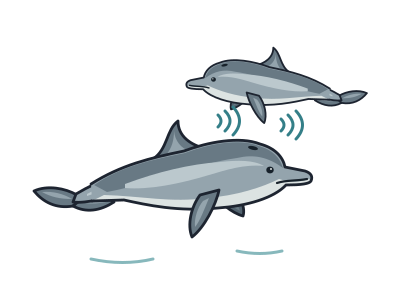
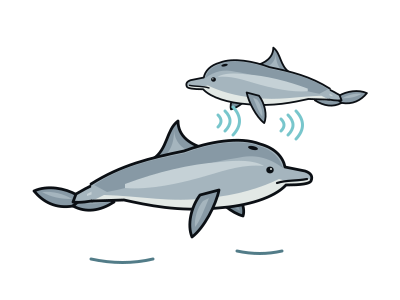
- OrcaThe largest dolphin, with family pods that keep their own hunting traditions.
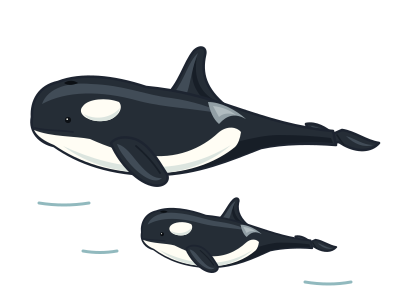
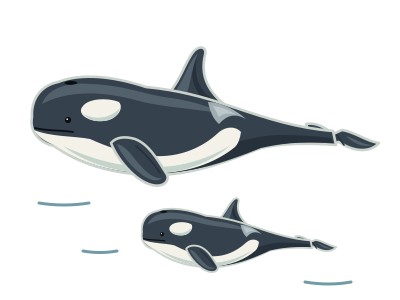
- Sperm whaleHas the largest brain of any living animal and dives over a kilometre for squid.
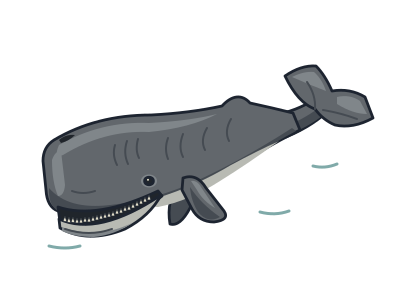
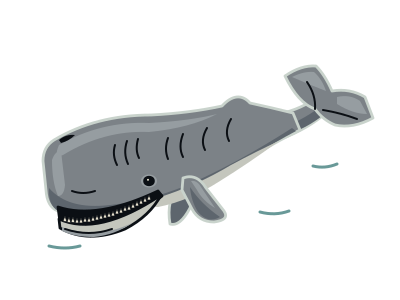
- NarwhalIts "unicorn horn" is a single tooth that can grow three metres long.
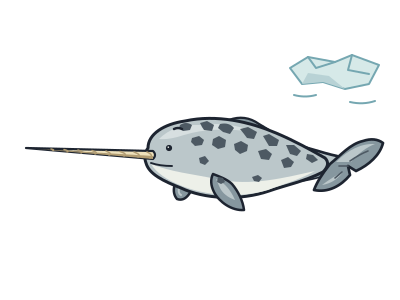
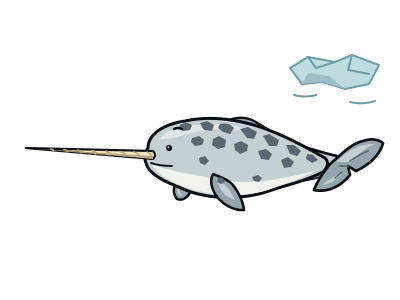
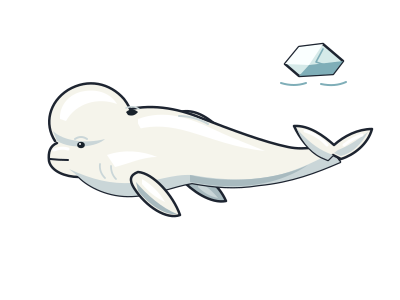
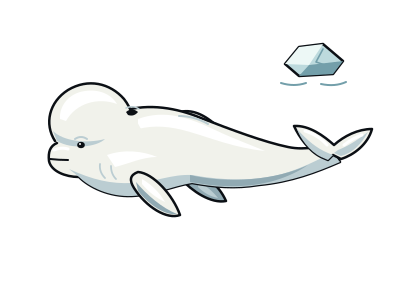
- BelugaThe white "sea canary" that can change the shape of its forehead.
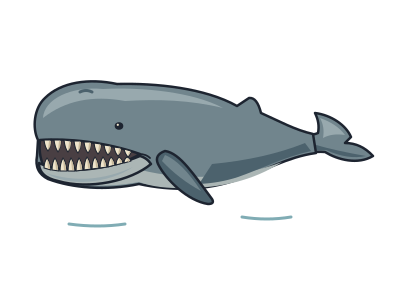
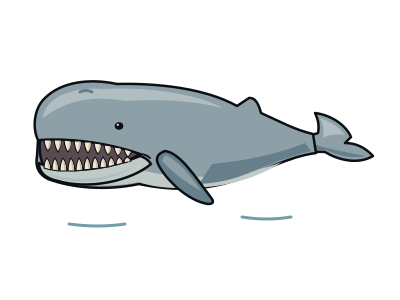
- LivyatanA sperm whale relative with teeth up to 36 centimetres long including roots; anatomy suggests it hunted other whales.
- VaquitaThe world’s smallest and rarest porpoise, with only a handful left in Mexico’s Gulf of California.
- Amazon river dolphinA pink freshwater dolphin with a flexible neck that swims among flooded forest trees.
- Cuvier’s beaked whaleHolds the mammal records for deepest and longest dives, nearly 3 km down and over 3 hours.