A group of living things
Baleen whales
Mysticeti
Giant mouths with built-in food sieves
This branch is shown at about 25 million years ago; its age is a rough estimate.
You and baleen whales meet in the Placental mammals branch, shown at about 95 million years ago (on 23 December, in a calendar from life's shared ancestor to today).
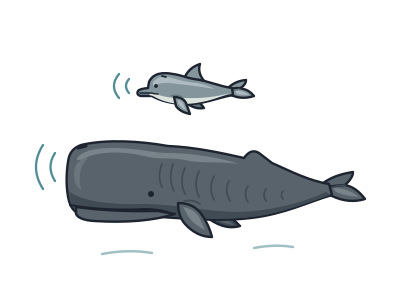
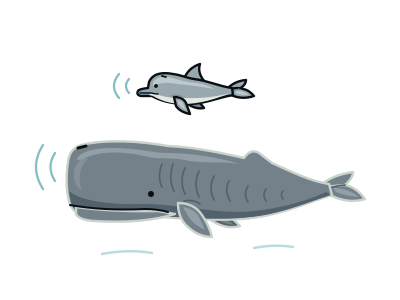
Baleen whales are giant filter-feeders that sieve small animals from seawater through plates hanging from the upper jaw, instead of using teeth. These plates, called baleen, are made of the same material as your hair and fingernails, not bone. Their sister group is the toothed whales, which includes dolphins and porpoises.
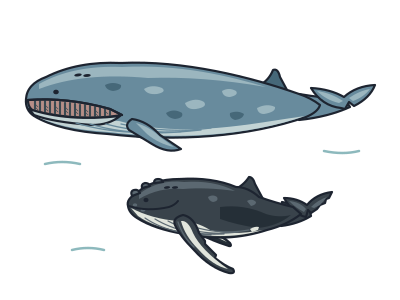
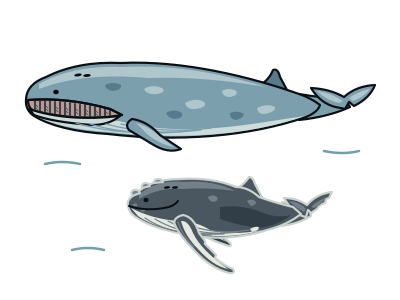
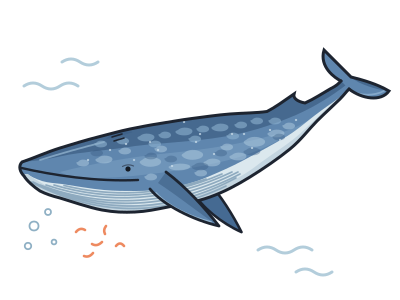
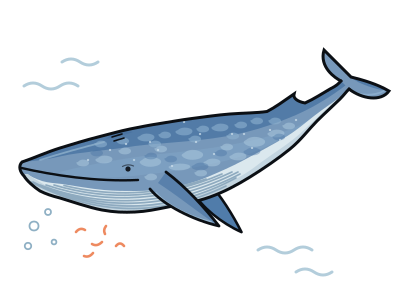
The blue whale is the largest animal alive today, yet it eats almost entirely tiny, shrimp-like animals called krill. During a feeding gulp, its pleated throat expands. Its tongue then pushes water out through the plates, leaving food inside. Humpbacks eat krill and small fish. Some work together to surround fish with curtains of bubbles, then rise through the gathered fish with their mouths open.
Not every member feeds this way. Bowhead whales can swim with their mouths open, steadily filtering food rather than taking separate gulps. Despite their watery lives, these animals are mammals like us: they breathe air, and mothers feed their young with milk.
Two breathing openings
Baleen whales have two blowholes on top of the head. Toothed whales have one.
A tail like a fingerprint
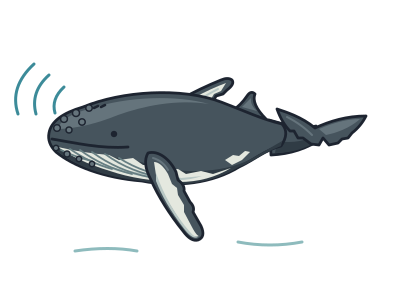
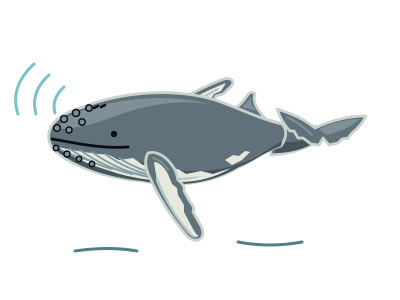
A humpback’s tail shape and black-and-white markings can help identify that individual.
Teeth before birth
Unborn baleen whales begin developing teeth, but these are absorbed before birth—a clue to their toothed ancestry.
Inside baleen whales
- Blue whaleThe largest animal that has ever lived, fed almost entirely on tiny krill.
- Humpback whaleMales sing long songs that spread from population to population.
- Bowhead whaleAn Arctic whale that breaks ice with its head and can live for more than 200 years.
- Grey whaleScoops mud from the seafloor to sieve out food, on one of the longest mammal migrations.
- North Atlantic right whaleA slow, rare whale with rough skin patches on its head, now down to a few hundred.
- Fin whaleThe second-largest animal alive, a fast swimmer whose face is dark on one side and pale on the other.