A species
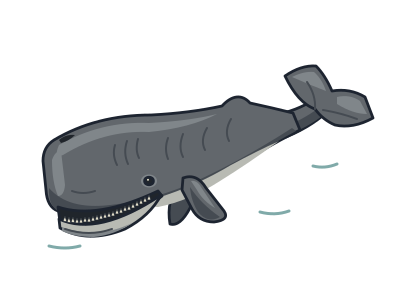
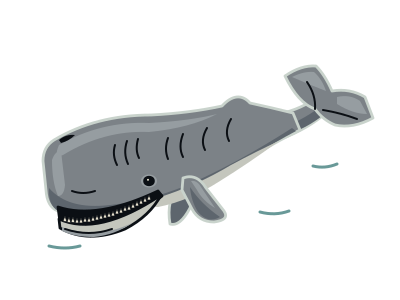
Sperm whale
Physeter macrocephalus
The biggest brain, hunting squid in the deep
You and the sperm whale meet in the Placental mammals branch, shown at about 95 million years ago (on 23 December, in a calendar from life's shared ancestor to today).
The sperm whale has the largest brain of any living animal, and dives over a kilometre below the surface to find squid. It is the largest living toothed whale. That puts this enormous deep-sea hunter on the same branch of the family tree as dolphins, belugas and narwhals.
In the darkness, it finds food by making clicks and listening for the echoes that bounce back. This is called echolocation: a way of finding things with sound rather than sight. It can stay underwater for about 90 minutes, though not every dive lasts that long or goes so deep.
Sperm whales live in deep ocean waters around the world. Females and young generally favour warmer seas, while males travel farther towards the poles. Young males often live in groups, but older males tend to spend more time alone.
A head that takes up a third
Its huge, roughly square head makes up about one-third of its body length.
An off-centre blowhole
Its single blowhole sits towards the front left of its head, producing a distinctive angled blow.
Safety together
When threatened by predators, sperm whales can gather into defensive formations.
Next to it on the tree
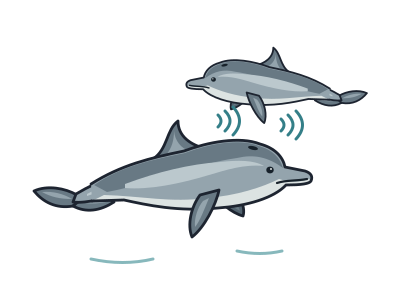
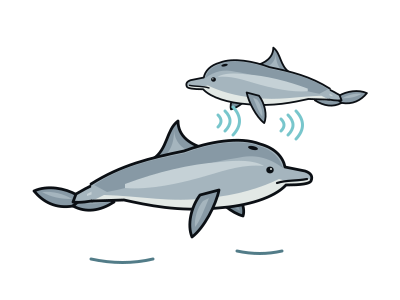
- Bottlenose dolphinUses distinctive signature whistles to address companions, rather like names; this does not establish human-like language.
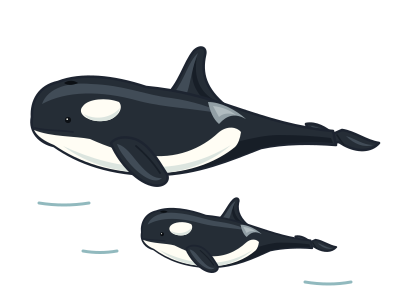
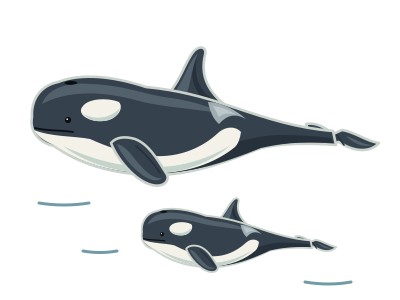
- OrcaThe largest dolphin, with family pods that keep their own hunting traditions.
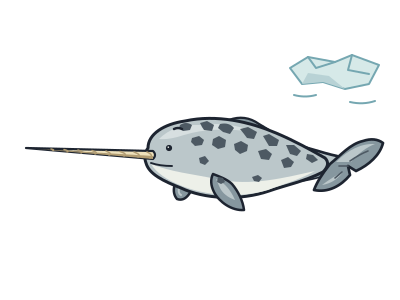
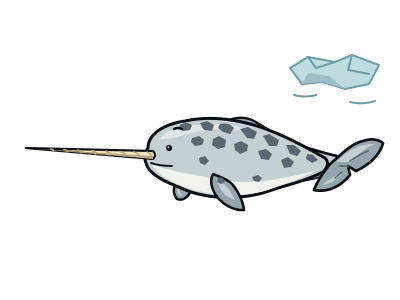
- NarwhalIts "unicorn horn" is a single tooth that can grow three metres long.
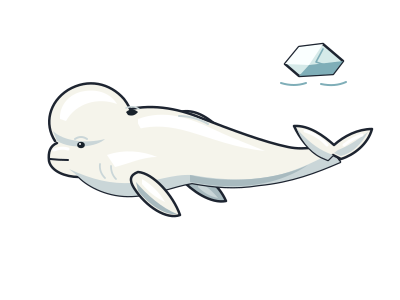
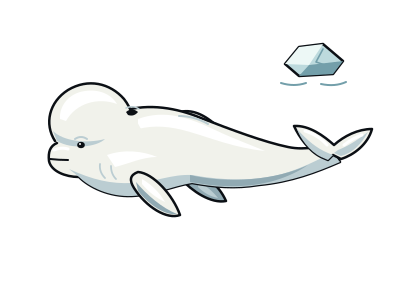
- BelugaThe white "sea canary" that can change the shape of its forehead.
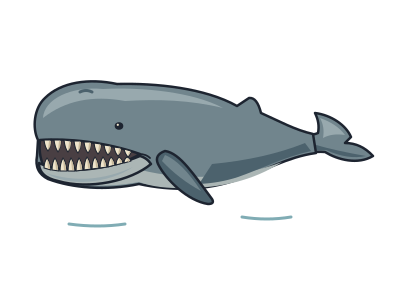
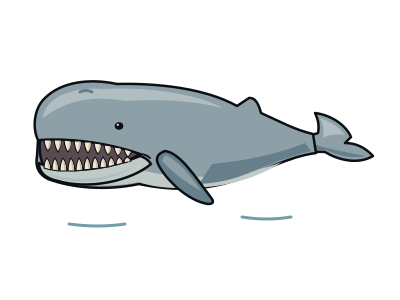
- LivyatanA sperm whale relative with teeth up to 36 centimetres long including roots; anatomy suggests it hunted other whales.
- VaquitaThe world’s smallest and rarest porpoise, with only a handful left in Mexico’s Gulf of California.
- Amazon river dolphinA pink freshwater dolphin with a flexible neck that swims among flooded forest trees.
- Cuvier’s beaked whaleHolds the mammal records for deepest and longest dives, nearly 3 km down and over 3 hours.