A species
Common sunburst lichen
Xanthoria parietina
An orange splash on seaside walls, with a fungus at its heart.
You and the common sunburst lichen meet in the Fungi and animals branch, shown at about 1.3 billion years ago (on 10 September, in a calendar from life's shared ancestor to today).
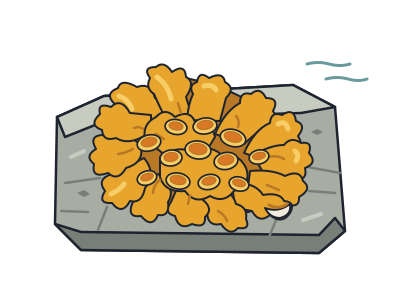
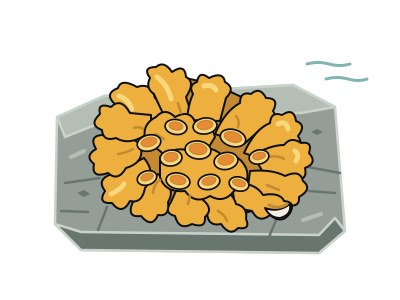
The bright orange crust on walls, roofs and branches near the sea may be common sunburst lichen. Look closely and the crust becomes a patch of broad, overlapping flaps, slightly wrinkled like tiny ruffled petals. It is a leafy lichen, not a flat crust. Orange dishes with paler rims often crowd its centre.
Its place in the family tree follows its fungal partner, not the tiny green algae living inside it. The fungus builds the main body, while the algae use light to make food. So this colourful patch belongs among fungi, rather than mosses or flowering plants. Being a lichen is a way of living found across several branches of the fungal family tree.
The seaside is only part of its story. It also grows inland, in towns and countryside, on rocks, walls and trees. Its golden colour comes from a colouring substance called parietin in the outer fungal layer.
Grey in the shade
Shaded patches can be grey rather than bright orange.
White underneath
The underside is white, unlike the colourful upper surface.
Bird-fed surfaces
It favours surfaces enriched with nutrients, including places fertilised by bird droppings.
Next to it on the tree
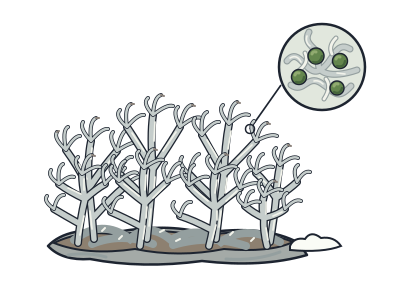
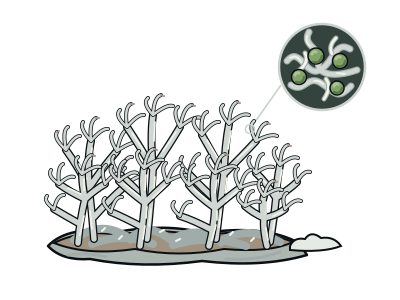
- Reindeer lichenA fungus farming algae inside itself; together they form a spongy mat that feeds reindeer in winter.
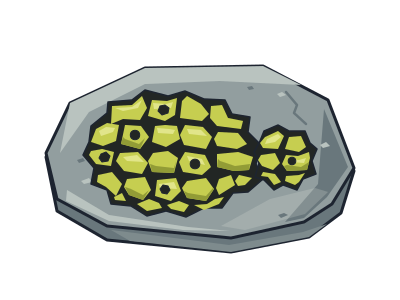
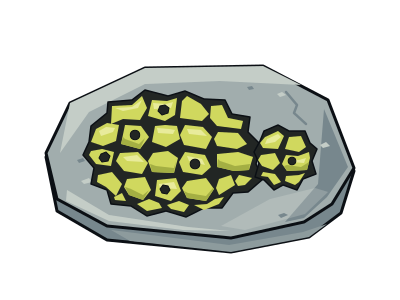
- Map lichenYellow-green patches like maps on rocks, growing so slowly that scientists use them to date stones.
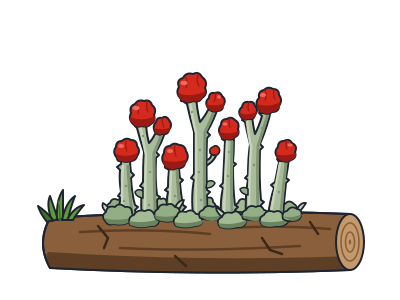
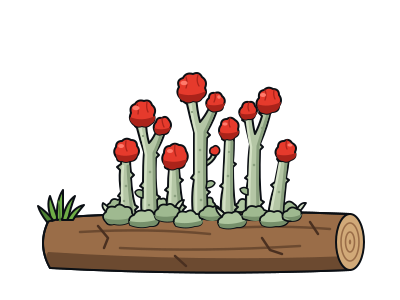
- British soldiers lichenTiny grey-green stalks with bright red caps, like little soldiers in red coats on old logs.
- Tree lungwortA leafy lichen like green lung tissue; it grows only in old forests with clean air.
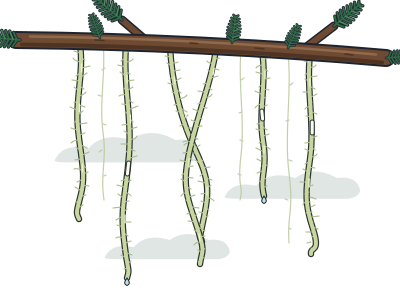
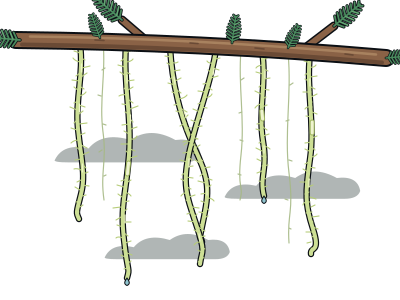
- Methuselah's beard lichenHangs from branches in pale green strands that can reach several metres, one of the longest lichens.