A species
Map lichen
Rhizocarpon geographicum
Tiny maps on rocks, with clues to the passing years.
You and the map lichen meet in the Fungi and animals branch, shown at about 1.3 billion years ago (on 10 September, in a calendar from life's shared ancestor to today).
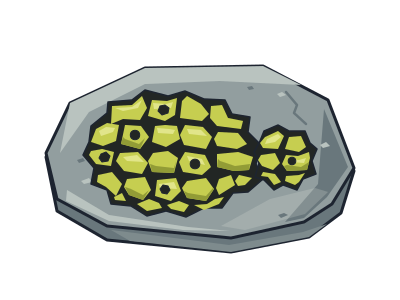
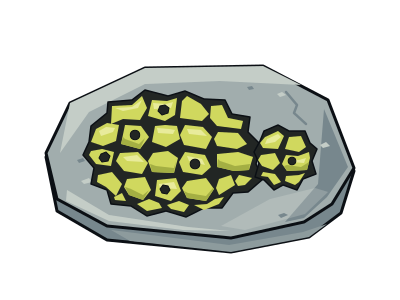
Yellow-green patches divided by black lines make map lichen look like tiny maps drawn on stone. These patches grow so slowly that scientists use them to help date exposed rock surfaces. But this colourful rock-dweller belongs among fungi, not plants: its place in the family tree follows the fungus in a living partnership.
Inside are microscopic green algae. The fungus builds the main structure, while the algae use light to make sugars. The name belongs to the fungal partner, rather than to the whole partnership. This way of living has evolved in several different branches of fungi, so two lichens are not necessarily close relatives just because both are lichens.
Scientists compare patch sizes with local growth information to estimate how long a surface has been exposed. This method, called lichenometry, has helped researchers study stones left behind by retreating glaciers. It does not tell us when the rock itself formed. Nor is each patch a perfectly steady clock: growth depends on local conditions, and lichens may arrive long after a surface becomes exposed.
Miniature islands
The individual yellow-green islands are usually less than about 2 millimetres wide.
Dark dots
Small black discs scattered across the surface can be round or angular and reach about 1.5 millimetres across.
Not just mountain rocks
It grows on sunny rocks, walls, roof tiles and monuments, from seashores to mountain summits.
Next to it on the tree
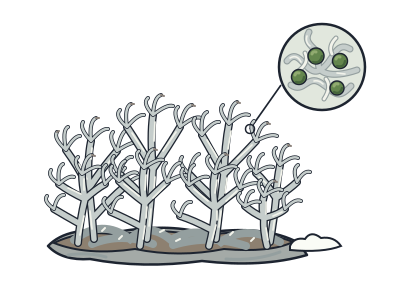
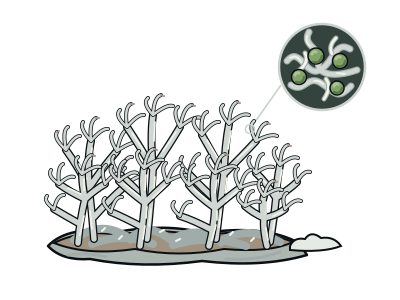
- Reindeer lichenA fungus farming algae inside itself; together they form a spongy mat that feeds reindeer in winter.
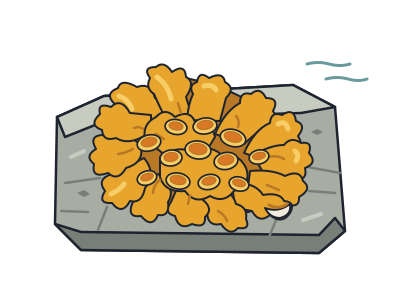
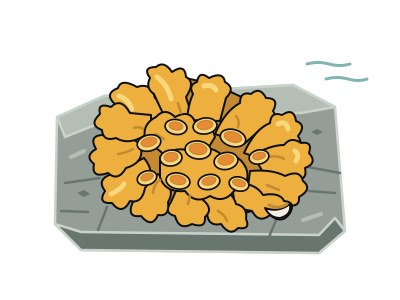
- Common sunburst lichenThe bright orange crust on walls, roofs and branches near the sea.
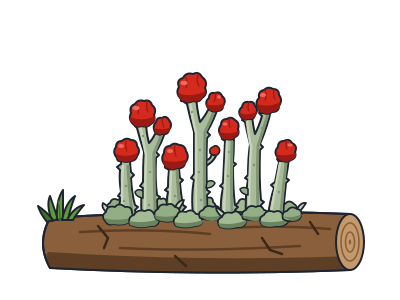
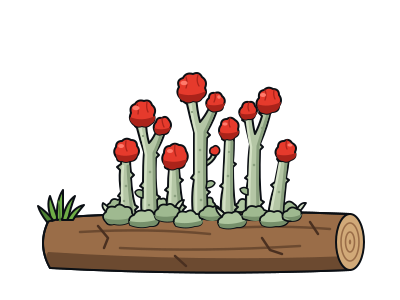
- British soldiers lichenTiny grey-green stalks with bright red caps, like little soldiers in red coats on old logs.
- Tree lungwortA leafy lichen like green lung tissue; it grows only in old forests with clean air.
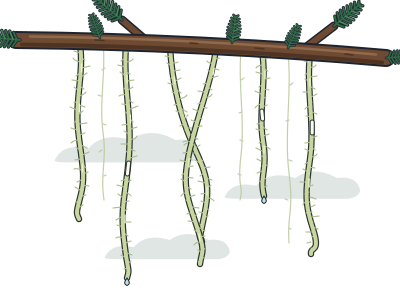
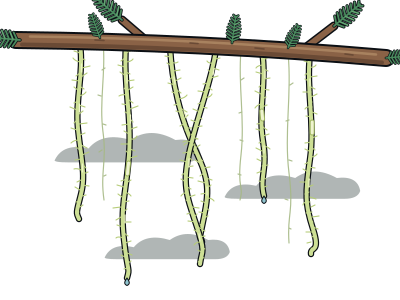
- Methuselah's beard lichenHangs from branches in pale green strands that can reach several metres, one of the longest lichens.