A species
British soldiers lichen
Cladonia cristatella
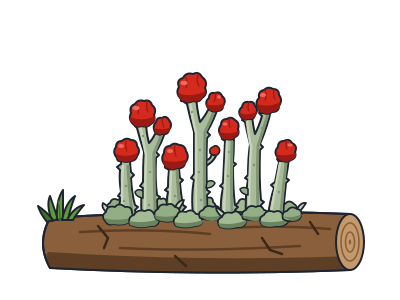
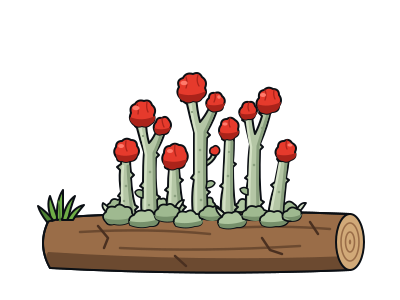
Tiny grey-green stalks with bright red caps, like little soldiers in red coats on old logs.
You and the british soldiers lichen meet in the Fungi and animals branch, shown at about 1.3 billion years ago (on 10 September, in a calendar from life's shared ancestor to today).
Look closely at an old rotting log and you might spot a tiny crowd of grey-green stalks, each topped with a bright red blob. They look like little soldiers. The name comes from the red coats that British soldiers wore during the American Revolution. Each stalk is usually under 2.5 centimetres tall, shorter than a paperclip.
Surprisingly, this is not a plant or a moss. A lichen is two living things working as a team. Here, a fungus partners with a green alga. The alga makes food from sunlight and shares it. The fungus builds the body, holds water and shades the alga from bright sun. The fungus is the main partner, so on the tree of life this lichen sits with the fungi. One close relative is reindeer lichen. Both belong to a large group of lichens called Cladonia.
The red tops are not flowers or berries. They are where the fungus makes its spores. The lichen can also spread when broken-off pieces carrying both partners grow into new lichens.
It grows slowly, low to the ground in sheltered spots. It is common across eastern North America and also grows on the northwest coast of the USA and Canada.
Described in 1858
The American botanist Edward Tuckerman gave this lichen its scientific description in 1858.
Rebuilt in a lab
In 1966 the scientist Vernon Ahmadjian reported putting this lichen back together in the laboratory from its separated fungus and alga. He found that keeping nutrients low and letting the partners go through wet and dry spells helped them join up.
Quick to vanish
Lichens shaped like this one are among the first to disappear when a natural habitat is disturbed. Lichens of all kinds are estimated to cover about 7 percent of Earth's surface.
Next to it on the tree
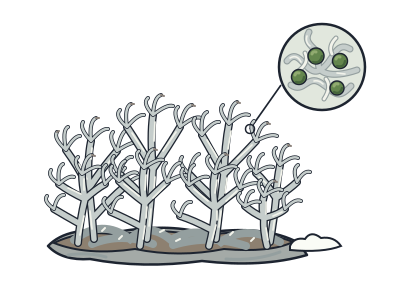
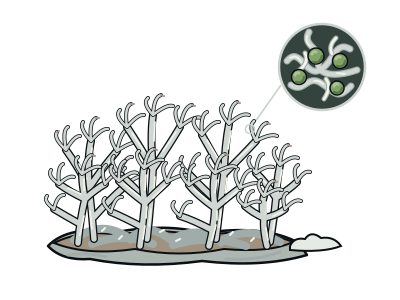
- Reindeer lichenA fungus farming algae inside itself; together they form a spongy mat that feeds reindeer in winter.
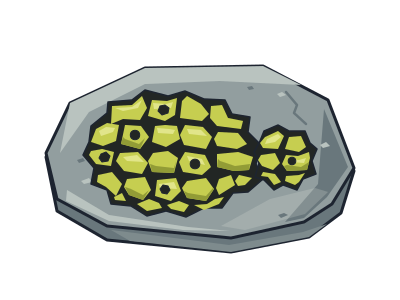
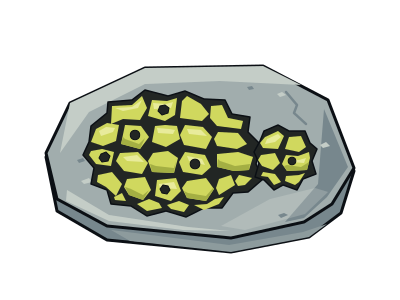
- Map lichenYellow-green patches like maps on rocks, growing so slowly that scientists use them to date stones.
- Common sunburst lichenThe bright orange crust on walls, roofs and branches near the sea.
- Tree lungwortA leafy lichen like green lung tissue; it grows only in old forests with clean air.
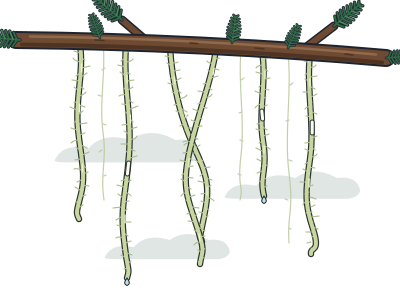
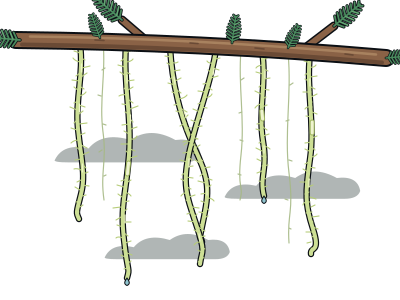
- Methuselah's beard lichenHangs from branches in pale green strands that can reach several metres, one of the longest lichens.