A species
Yogurt starter coccus
Streptococcus thermophilus
The bead-shaped half of yogurt's two-microbe team
You and the yogurt starter coccus meet in the All life branch, shown at about 4.2 billion years ago (on 1 January, in a calendar from life's shared ancestor to today).
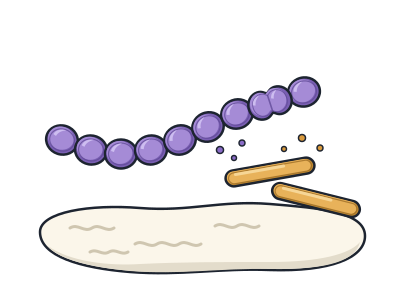
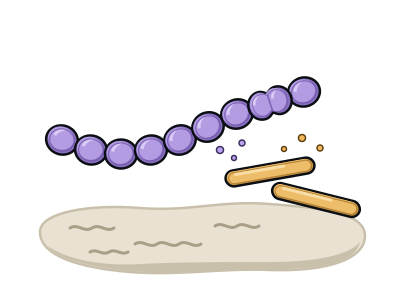
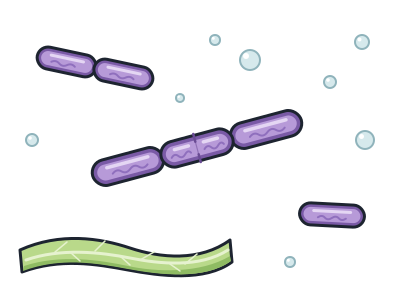
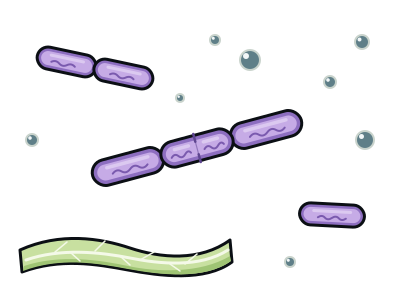
Yogurt is a team effort. This tiny ball-shaped bacterium works in a duo with a rod-shaped partner, the yogurt rod. When the two grow together in warm milk, each grows faster and reaches bigger numbers than either does alone. Scientists call this kind of partnership protocooperation.
The coccus gets things started. It grows quickly and turns lactose, the sugar in milk, into lactic acid, making the milk more sour. It also makes formic acid, which the rod needs to multiply. In return, the rod breaks milk protein into small pieces that help the coccus grow. As the acid builds up, the milk sets into a thick, tangy gel.
Here is the surprise: it is a relative of the strep throat bacterium. But this dairy species has lost or broken most of the genes that make those relatives harmful. Food-safety experts in the USA and Europe rate it as safe to eat, which is very unusual for a streptococcus.
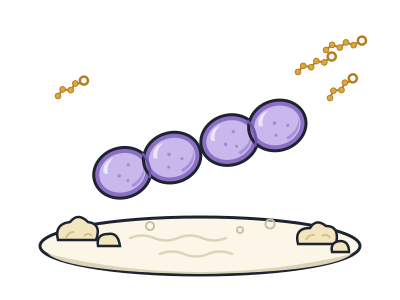
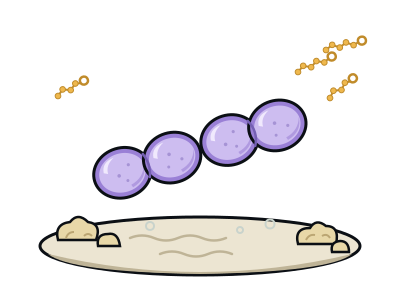
Under a microscope, its cells look like strings of beads, often 10 to 20 in a chain. Each bead is so small that more than 1,000 would fit side by side across a millimetre.
A gene-editing breakthrough
In 2007, scientists at a Danish food company studied how this bacterium fights off viruses. They showed that CRISPR works like an immune system with a memory. That work helped lead to CRISPR-Cas9, a tool now used to edit genes in plants, animals and human cells.
Pizza helper too
It is not just for yogurt. It is also a major starter for cheeses such as mozzarella and feta.
A generous neighbour
It makes an enzyme that breaks down urea in milk and releases ammonia. This costs it energy but helps both partners make lactic acid, so researchers call it an 'altruistic' trait.
Next to it on the tree
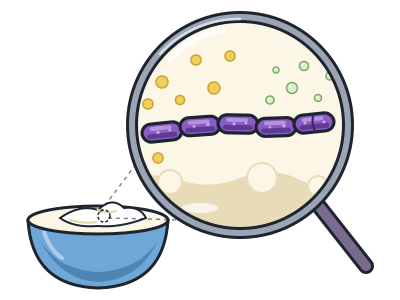
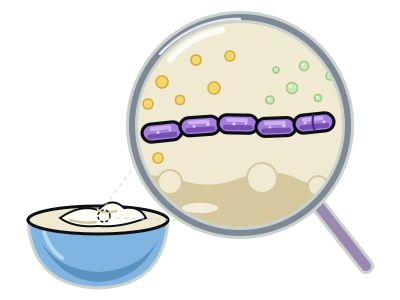
- Yogurt bacteriumTurns milk sugar into tangy acid; every pot of yogurt holds billions of these living rods.
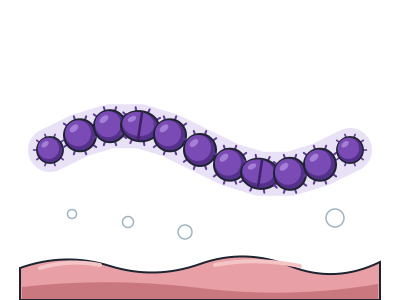
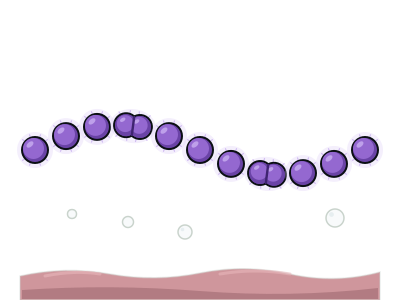
- Strep throat bacteriumGrows in bead-like chains; it causes strep throat, which a short course of antibiotics clears.
- Cheese starter bacteriumTurns milk into cheddar and gouda, and makes a natural preservative that keeps food fresh.
- Sauerkraut bacteriumSours cabbage into sauerkraut and kimchi, and lives on plants, pickles and olives worldwide.
- Sourdough bacteriumNamed after San Francisco's famous bread, it gives sourdough its tang while sharing the dough with yeast.