A species
Strep throat bacterium
Streptococcus pyogenes
A string of tiny beads behind strep throat, and a cousin of the yogurt-makers
You and the strep throat bacterium meet in the All life branch, shown at about 4.2 billion years ago (on 1 January, in a calendar from life's shared ancestor to today).
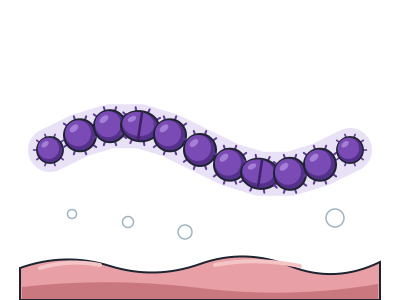
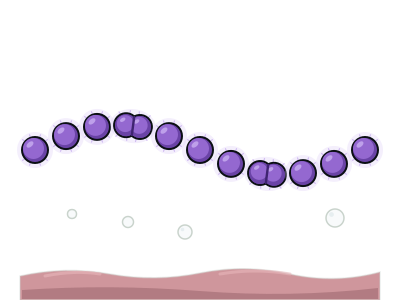
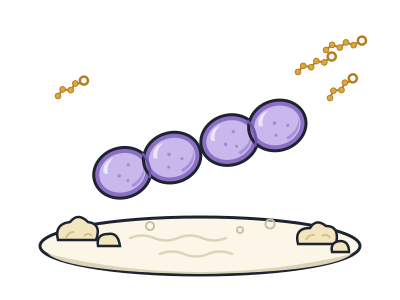
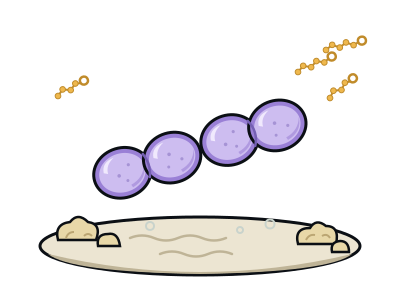
Under a microscope, this bacterium looks like a tiny string of beads. Each bead is a round cell up to about a thousandth of a millimetre across. When a cell divides, it splits in only one direction, and the new cells stay stuck end to end. The result is a wavy, twisting chain. The first part of its scientific name comes from Greek words meaning 'twisted' and 'grain'.
It is the germ behind strep throat, which usually brings a fever, a sore throat and red, swollen tonsils. Strep throat is most common in children aged 5 to 15, and it spreads through close contact, such as at school. Most sore throats are caused by viruses, not strep, so a doctor needs a swab test to tell the difference. Strep throat is treated with penicillin or amoxicillin, usually for about 10 days. Treatment matters, because strep throat that is left untreated can lead to rheumatic fever, which can damage the heart.
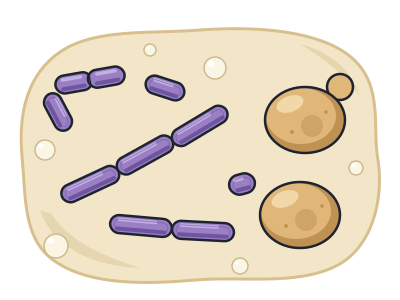
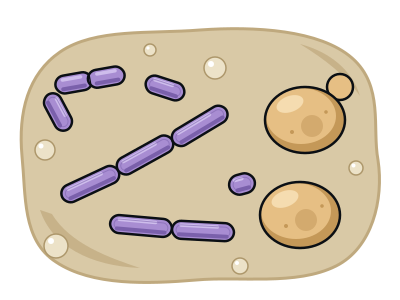
Its family is the surprise. It belongs to the same broad group as the bacteria that turn milk into yogurt. A close relative helps make yogurt and Swiss cheese. Golden staph sits nearby on the tree and has a similar name, but it grows in grape-like clusters, not chains.
People only
Humans are its only natural home. Infections in animals such as cats, dogs and cattle have been reported only rarely.
Penicillin still works
According to the CDC, no sample from a patient has ever been reported to resist penicillin. Some strains do resist other antibiotics.
A disguise made of 'us'
Each cell is wrapped in a slimy coat made of the same substance found in human tissues. This helps it hide from the body's defences.
Next to it on the tree
- Yogurt bacteriumTurns milk sugar into tangy acid; every pot of yogurt holds billions of these living rods.
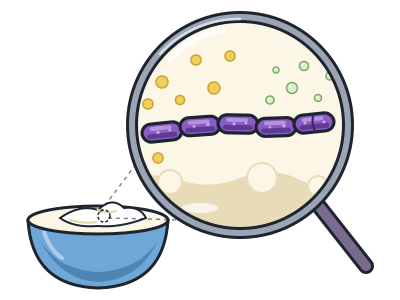
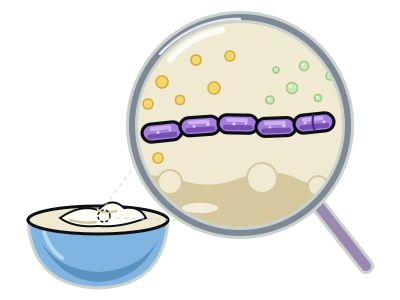
- Yogurt starter coccusWorks in a duo with the yogurt rod: together they thicken and sour milk faster than either alone.
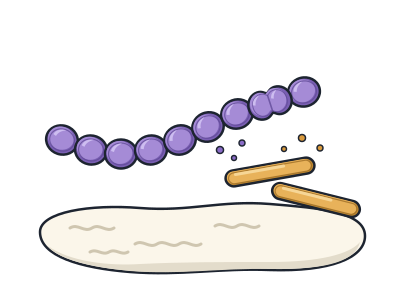
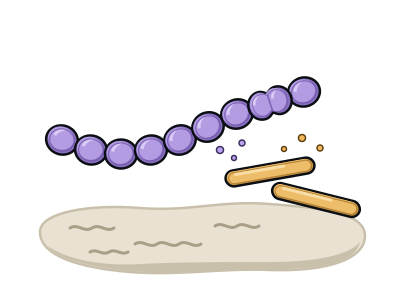
- Cheese starter bacteriumTurns milk into cheddar and gouda, and makes a natural preservative that keeps food fresh.
- Sauerkraut bacteriumSours cabbage into sauerkraut and kimchi, and lives on plants, pickles and olives worldwide.
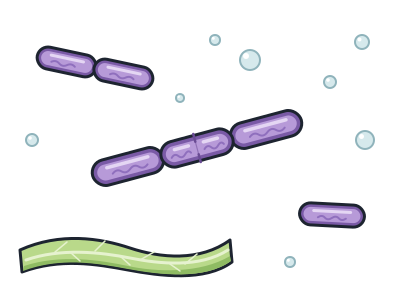
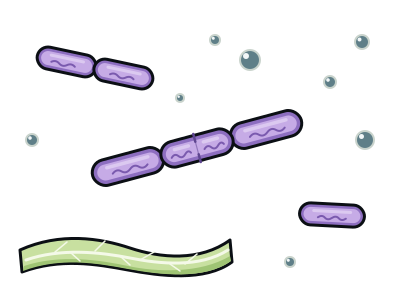
- Sourdough bacteriumNamed after San Francisco's famous bread, it gives sourdough its tang while sharing the dough with yeast.