A group of living things
Rays and skates
Batoidea
Shark relatives with fins like wings
This branch is shown at about 220 million years ago; its age is a rough estimate.
You and rays and skates meet in the Jawed vertebrates branch, shown at about 465 million years ago (on 21 November, in a calendar from life's shared ancestor to today).
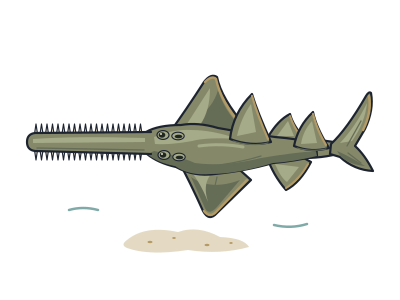
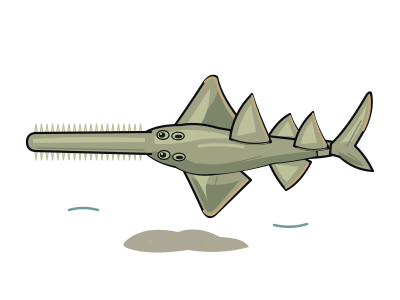
Rays and skates belong on the branch beside living sharks, but most have a very different shape: flattened bodies and broad fins like wings. They are the sister group to living sharks, meaning two neighbouring branches of the same family. Their side fins join the head and body, making that familiar wing-like outline. Their gill openings sit underneath—even in shark-shaped members such as sawfish.
Like sharks, they have skeletons made of cartilage rather than bone. This is the tough, flexible material in your ears. Many rays swim by flapping their broad fins or sending ripples along the edges. Sawfish and guitarfish mainly move their bodies and tails from side to side instead.
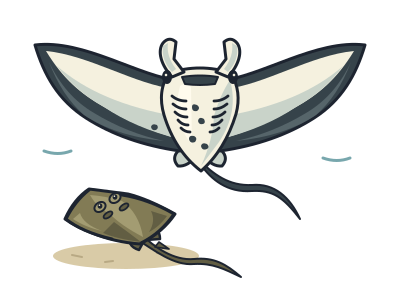
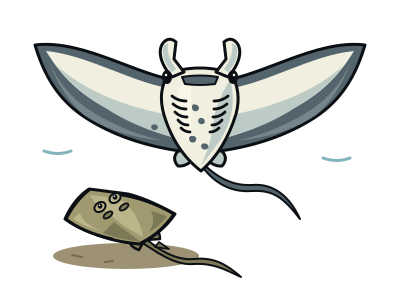
Picture a manta beside a stingray: the same family has different ways of finding dinner. Most rays and skates eat animals such as crabs, shrimps and shellfish near the seabed. Mantas filter tiny drifting animals from the water. Most members have mouths underneath their heads, but a manta’s mouth faces forwards.
Breathing under sand
Bottom-dwelling rays can draw breathing water through openings behind their eyes. This lets them breathe while partly buried in sand.
Mermaid’s purses
Skates lay eggs in tough cases often called mermaid’s purses. Other living ray groups give birth to live young.
An electric sense
Like sharks, rays and skates detect weak electric fields. Bottom-feeding species use this sense to help find prey hidden in sand or mud.
Inside rays and skates
- Largetooth sawfishA ray with a toothed, saw-like snout that senses fish and slashes through schools.
- Marbled electric rayStuns prey with electric shocks from organs in its wings; ancient doctors used it for headaches.
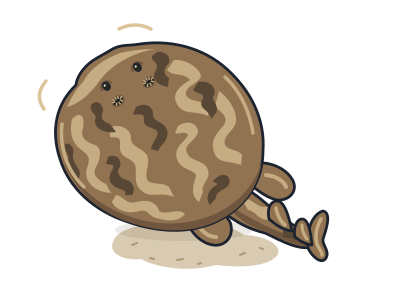
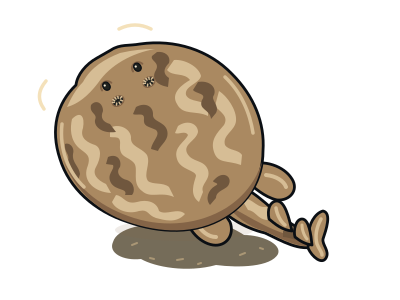
- Stingrays and eagle raysRays that swim by rippling or flapping their wing-like fins, from sand-buried stingrays to soaring mantas.
- Common skateDespite its name, this big European skate has been fished so hard that it is now critically endangered.
- Bowmouth guitarfishHalf shark, half ray to look at, with rows of thorny ridges over its head and back.
Next to it on the tree
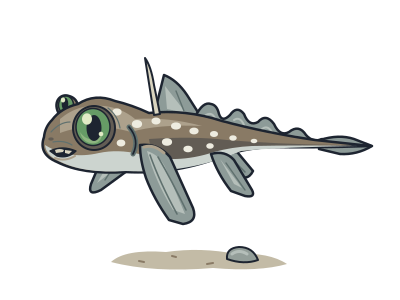
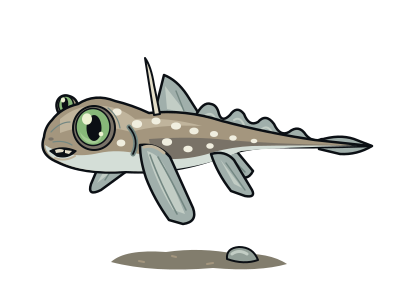
- Spotted ratfishA ghostly chimaera with rabbit-like teeth, huge green eyes and a venomous spine.
- HelicoprionIts teeth grew in a spiral like a buzz saw, a puzzle that took a century to solve.
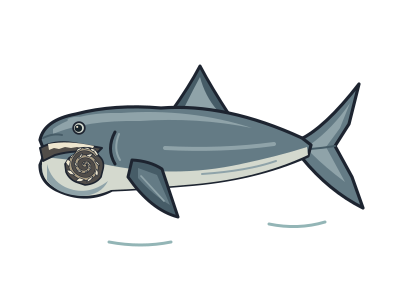
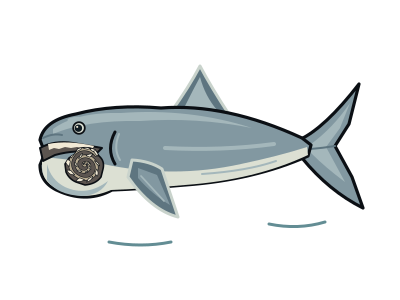
- CladoselacheA shark-shaped Devonian fish whose fossils preserve muscle fibres and meal traces; possible kidneys are known at genus level.
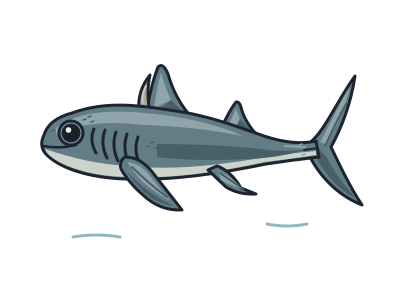
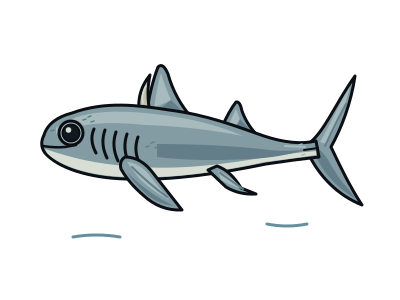
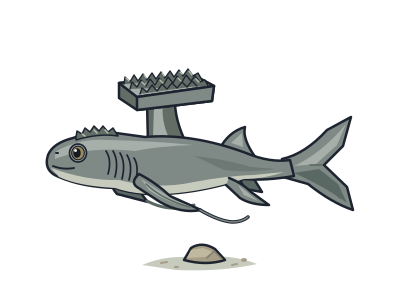
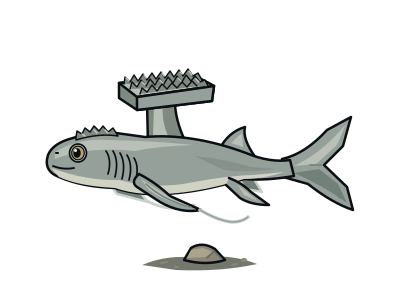
- StethacanthusAn ancient shark with a spiny, anvil-shaped crest on its back, like an ironing board.
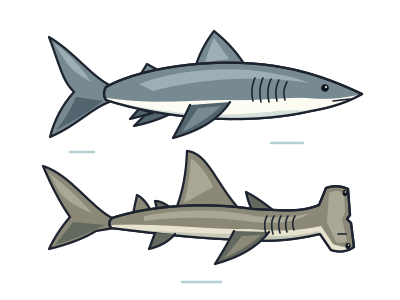
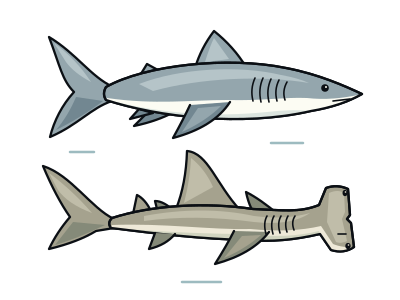
- SharksOver 500 living species, from hand-sized lanternsharks to the biggest fish in the sea.
- Elephant sharkA chimaera with a hoe-shaped snout whose genome has changed more slowly than any other known vertebrate.
- HybodusA Jurassic shark with spines before both back fins; one fossil holds hundreds of swallowed squid-like shells.