An extinct group
Stethacanthus †
Stethacanthus
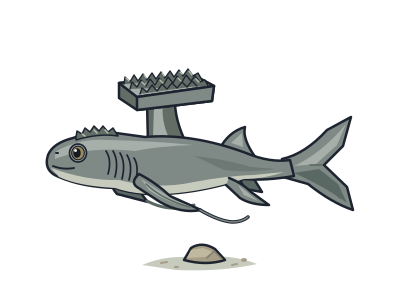
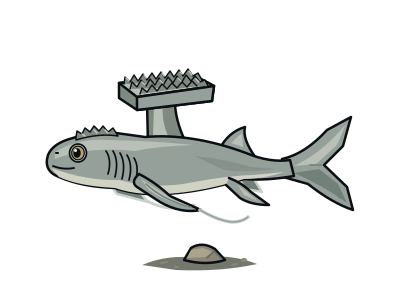
An ancient shark-like fish with an ironing-board crest
Lived about 370–330 million years ago.
You and stethacanthus meet in the Jawed vertebrates branch, shown at about 465 million years ago (on 21 November, in a calendar from life's shared ancestor to today).
A crest like an ironing board made this ancient shark-like fish stand out. Some fossils showed a raised, anvil-shaped structure with a broad top covered in tooth-like spikes. Odd as it looked, it belonged to the same broad group of fishes as today's sharks, rays, skates and ratfish.
It lived in ancient seas, with early records from about 370 to 330 million years ago. Fossils included more than loose teeth: a nearly complete male from Montana preserved parts of its skeleton together. Other remains came from marine rocks, including a tooth found in Georgia.
Its wider group had relatively short heads, large eyes and mouths near the front of the head. Their forked tails looked fairly even above and below, rather than having one obviously much longer lobe.
Spikes on its head
A separate patch of tooth-like spikes grew on top of its head.
Trailing fin whips
Its front pair of fins had long, jointed extensions trailing behind them. Researchers described these as whips.
A five-pointed tooth
The Georgia tooth measured about 15 millimetres across. It had five points, with the middle point much taller than the others.
Next to it on the tree
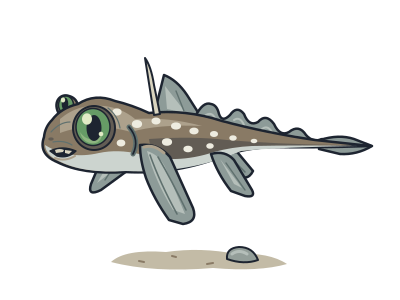
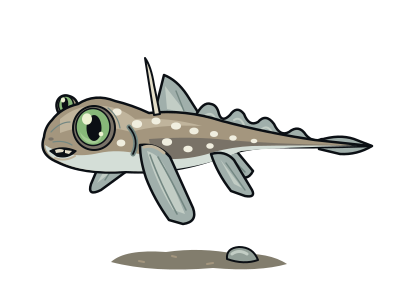
- Spotted ratfishA ghostly chimaera with rabbit-like teeth, huge green eyes and a venomous spine.
- HelicoprionIts teeth grew in a spiral like a buzz saw, a puzzle that took a century to solve.
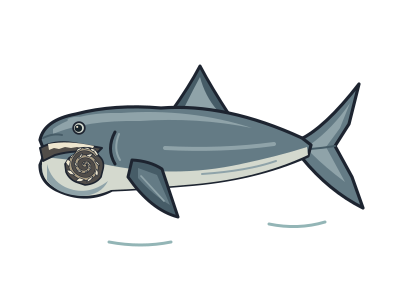
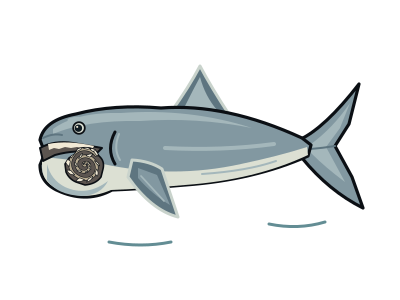
- CladoselacheA shark-shaped Devonian fish whose fossils preserve muscle fibres and meal traces; possible kidneys are known at genus level.
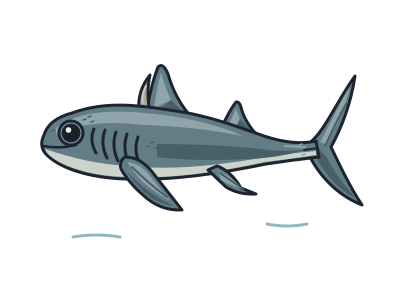
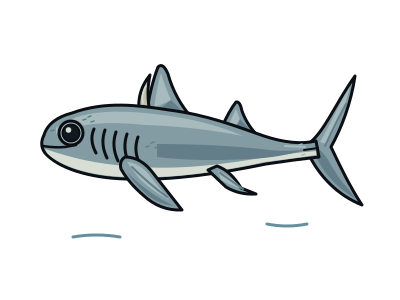
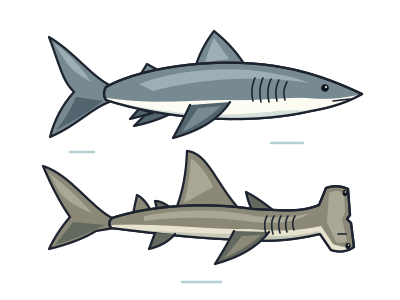
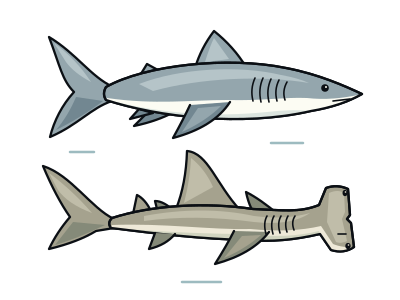
- SharksOver 500 living species, from hand-sized lanternsharks to the biggest fish in the sea.
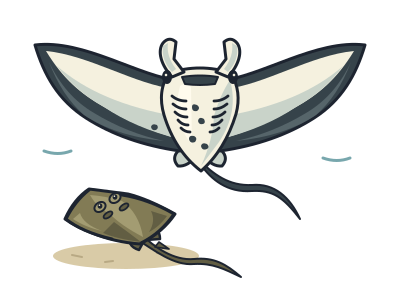
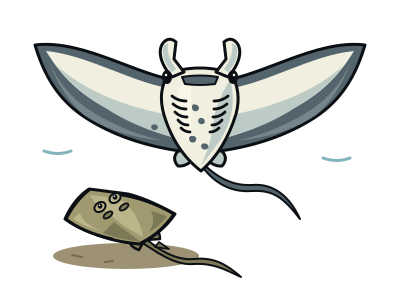
- Rays and skatesShark relatives that flattened out, with gills underneath and fins that became wings.
- Elephant sharkA chimaera with a hoe-shaped snout whose genome has changed more slowly than any other known vertebrate.
- HybodusA Jurassic shark with spines before both back fins; one fossil holds hundreds of swallowed squid-like shells.