A species
Spotted ratfish
Hydrolagus colliei
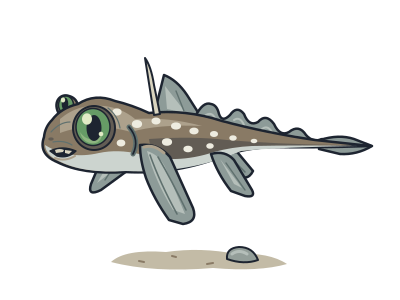
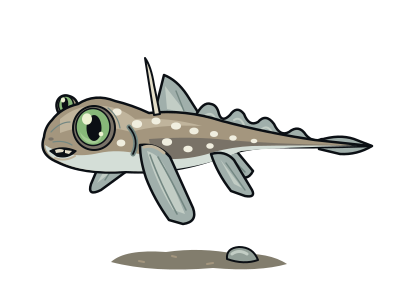
A rabbit-like face and green eyes on a surprising shark relative.
You and the spotted ratfish meet in the Jawed vertebrates branch, shown at about 465 million years ago (on 21 November, in a calendar from life's shared ancestor to today).
With a rabbit-like face, huge green eyes and a venomous spine, the spotted ratfish has a ghostly look. It belongs to a group called chimaeras, rather than being a shark. This is the sister group to sharks, rays and skates together: these two branches are each other's closest living relatives.
Its teeth form six grinding plates, with four in the upper jaw and two below. Its meals include clams, crabs, shrimp, worms, sea stars and small fish. The long venomous spine stands immediately in front of its first back fin—not at the end of its rat-like tail.
This fish lives near muddy or rocky seabeds in cool northeastern Pacific waters. It cruises just above the bottom, flapping its large side fins like wings. Despite those enormous eyes, it finds food mainly through smell and by sensing weak electrical signals. It is a very different-looking relative of the familiar sharks and rays.
Almost half is tail
Its thin, tapering tail makes up almost half its total length.
Leaf-like egg cases
Females usually lay two eggs at a time. Each has its own yellowish-brown case, about 13 centimetres long and shaped like a dead leaf.
A forehead hook
Adult males have a small spiny forehead hook used to hold a female's side fin during mating.
Next to it on the tree
- HelicoprionIts teeth grew in a spiral like a buzz saw, a puzzle that took a century to solve.
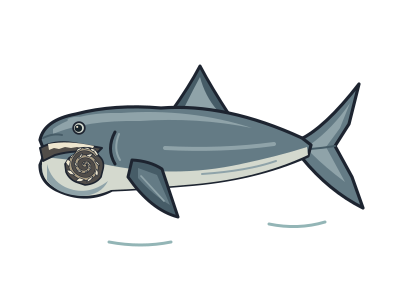
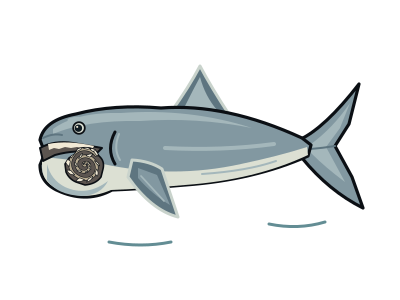
- CladoselacheA shark-shaped Devonian fish whose fossils preserve muscle fibres and meal traces; possible kidneys are known at genus level.
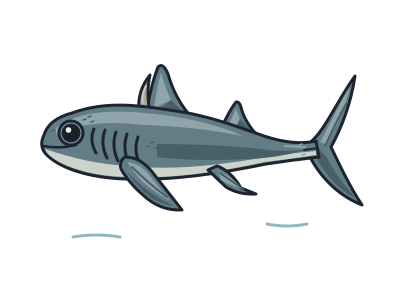
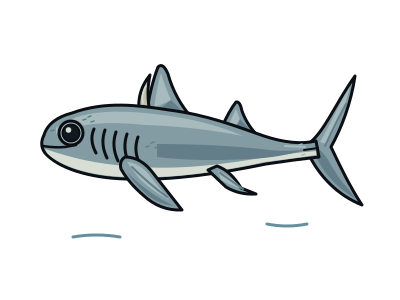
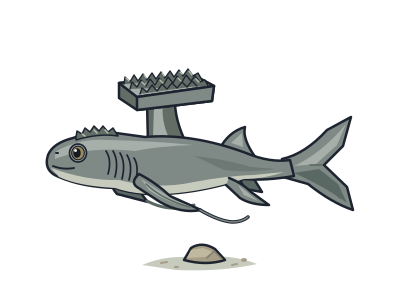
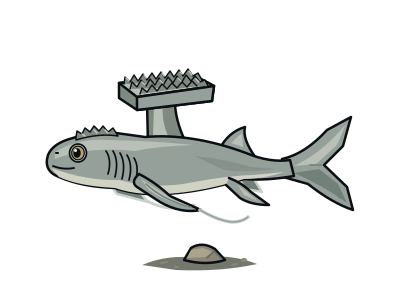
- StethacanthusAn ancient shark with a spiny, anvil-shaped crest on its back, like an ironing board.
- SharksOver 500 living species, from hand-sized lanternsharks to the biggest fish in the sea.
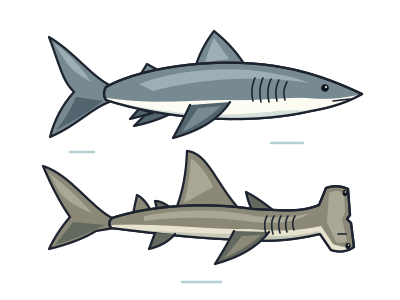
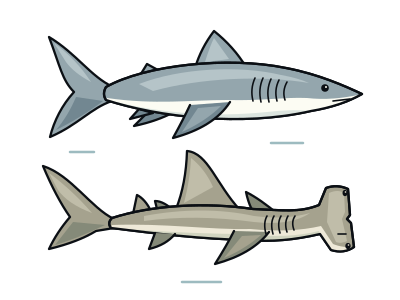
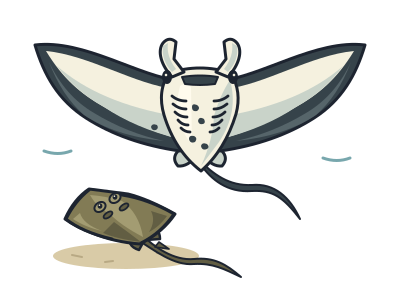
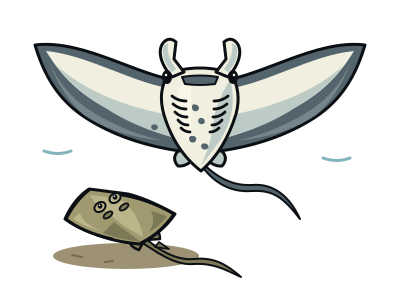
- Rays and skatesShark relatives that flattened out, with gills underneath and fins that became wings.
- Elephant sharkA chimaera with a hoe-shaped snout whose genome has changed more slowly than any other known vertebrate.
- HybodusA Jurassic shark with spines before both back fins; one fossil holds hundreds of swallowed squid-like shells.