An extinct species
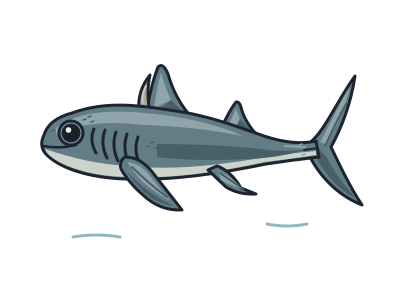
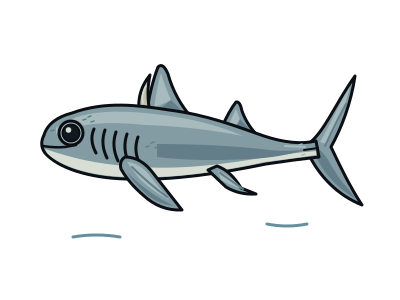
Cladoselache †
Cladoselache fyleri
A shark-shaped fish with an extraordinary fossil record
Lived about 370–359 million years ago.
You and the cladoselache meet in the Jawed vertebrates branch, shown at about 465 million years ago (on 21 November, in a calendar from life's shared ancestor to today).
This sleek, shark-shaped fish belonged to the wider group that included sharks, rays and chimaeras. Fossils assigned to its genus preserved muscle fibres, traces of meals and even structures interpreted as kidneys. These were fossil remains and impressions, not unchanged organs or food.
It lived during the Devonian period, within the broad span of about 370 to 359 million years ago. Its fossils came from ancient seas covering what is now northeastern Ohio, USA. Its streamlined body, forked tail and back fins gave it a familiar shark-like shape. Scientists interpreted that shape as evidence of an active hunter.
One fossil assigned to this species preserved tiny crosswise stripes in its muscle fibres, visible under magnification. Another preserved small fish scales inside its body—direct evidence of a meal. Such finds offered unusually detailed glimpses inside an ancient fish, although they did not settle exactly where it belonged among its living relatives.
A forward-facing mouth
Its mouth opened at the front of its head, rather than beneath an overhanging snout as in many living sharks.
Slower tooth replacement
Its fossil teeth suggested that it replaced them during life, but more slowly than many modern sharks.
Rock-wrapped fossils
Many fossils assigned to its genus, some almost complete, were preserved inside rounded lumps of iron-rich rock in the Cleveland Shale.
Next to it on the tree
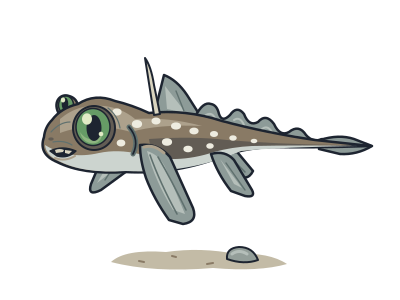
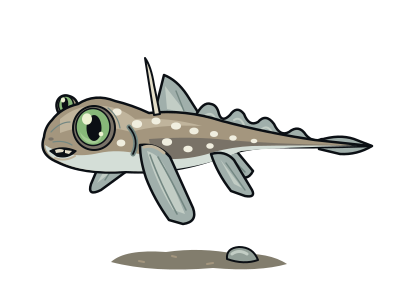
- Spotted ratfishA ghostly chimaera with rabbit-like teeth, huge green eyes and a venomous spine.
- HelicoprionIts teeth grew in a spiral like a buzz saw, a puzzle that took a century to solve.
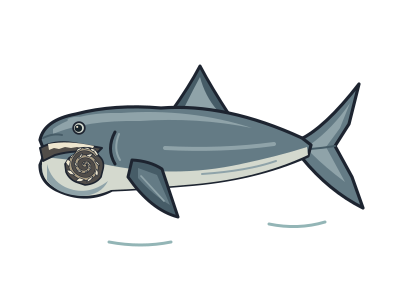
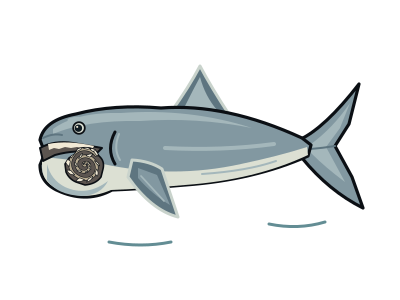
- StethacanthusAn ancient shark with a spiny, anvil-shaped crest on its back, like an ironing board.
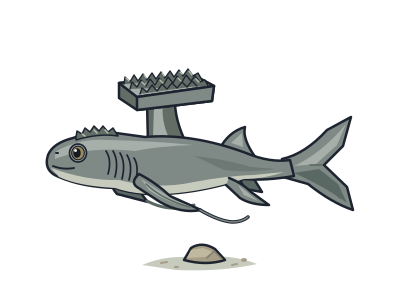
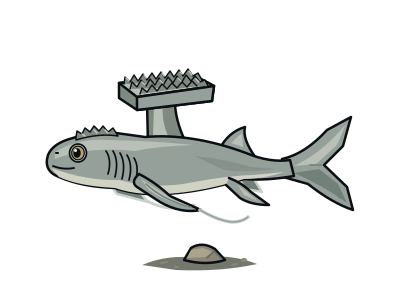
- SharksOver 500 living species, from hand-sized lanternsharks to the biggest fish in the sea.
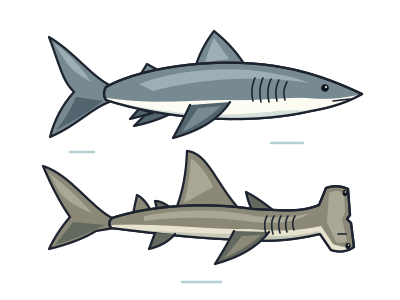
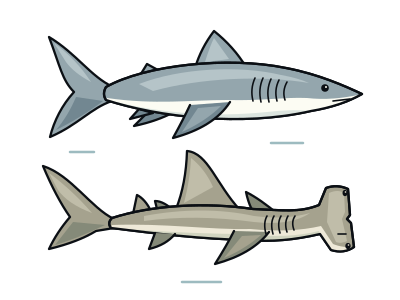
- Rays and skatesShark relatives that flattened out, with gills underneath and fins that became wings.
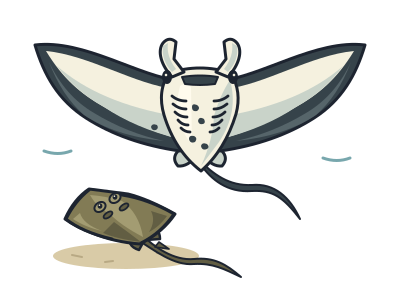
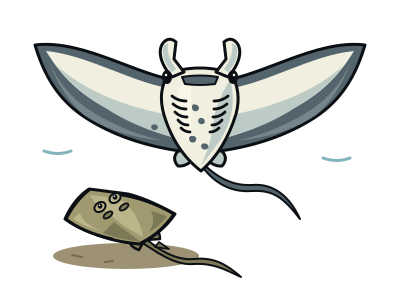
- Elephant sharkA chimaera with a hoe-shaped snout whose genome has changed more slowly than any other known vertebrate.
- HybodusA Jurassic shark with spines before both back fins; one fossil holds hundreds of swallowed squid-like shells.