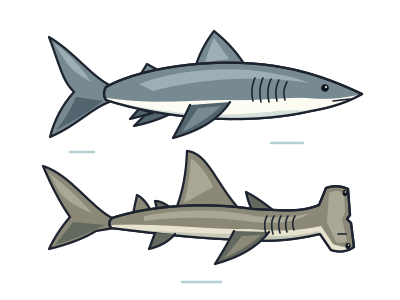
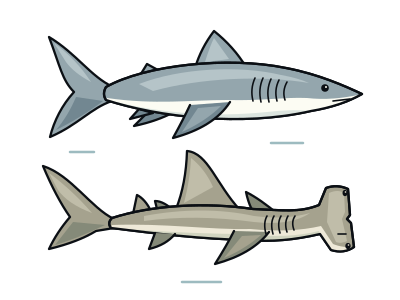
A group of living things
Sharks
Selachii
From hand-sized swimmers to bus-sized giants
This branch is shown at about 275 million years ago; its age is a rough estimate.
You and sharks meet in the Jawed vertebrates branch, shown at about 465 million years ago (on 21 November, in a calendar from life's shared ancestor to today).
With over 500 living species, sharks range from hand-sized lanternsharks to the biggest fish in the sea. They belong to the same larger group of fishes as rays and skates. Their supporting skeletons are made of cartilage rather than bone: the flexible material also found in your ears and nose.
Being a shark does not mean being huge. About half of shark species stay under one metre long. At the other end of the scale, whale sharks can exceed 12 metres, roughly the length of a bus. Yet these giants feed largely on plankton: organisms that drift with currents, many of them tiny. Basking sharks and megamouth sharks feed this way too, rather than hunting large animals.
Nor does every shark need to swim constantly. Nurse sharks and wobbegongs can rest on the seabed while pumping water over their gills. The familiar image of a large shark always on the move is only one part of this varied group.
An electrical sense
Small pores around a shark’s head help it detect weak electrical signals from nearby animals.
Replacement teeth
Sharks keep replacing their teeth. New teeth move forwards as older ones wear out or fall away.
Different beginnings
Some shark species lay eggs. Others give birth to live young.
Inside sharks
Next to it on the tree
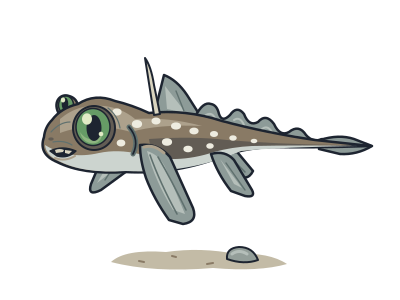
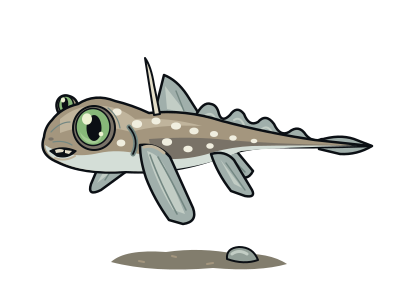
- Spotted ratfishA ghostly chimaera with rabbit-like teeth, huge green eyes and a venomous spine.
- HelicoprionIts teeth grew in a spiral like a buzz saw, a puzzle that took a century to solve.
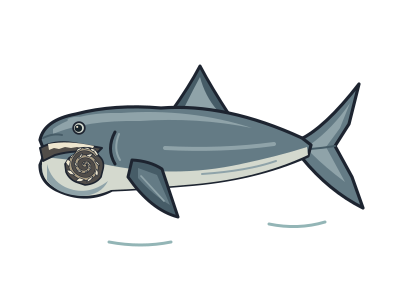
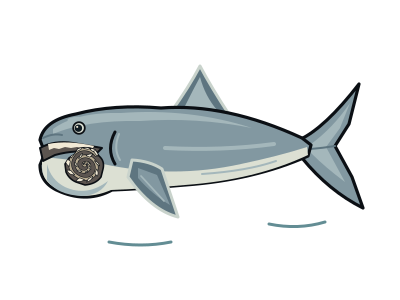
- CladoselacheA shark-shaped Devonian fish whose fossils preserve muscle fibres and meal traces; possible kidneys are known at genus level.
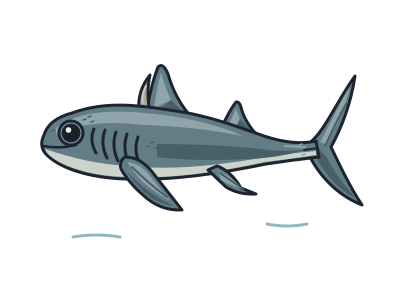
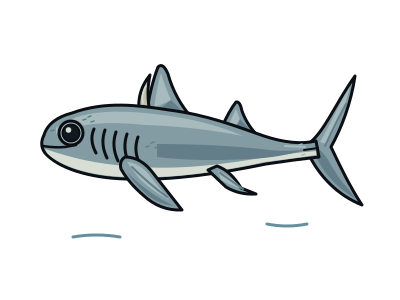
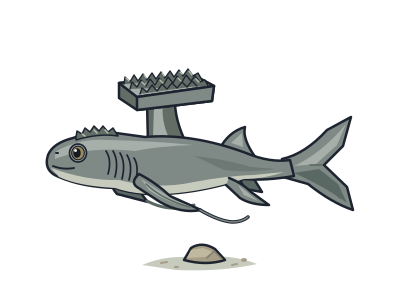
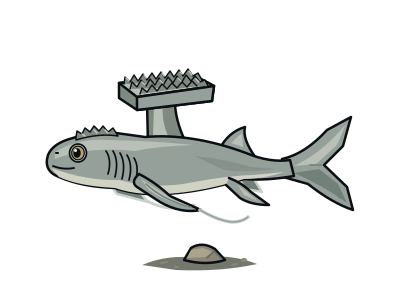
- StethacanthusAn ancient shark with a spiny, anvil-shaped crest on its back, like an ironing board.
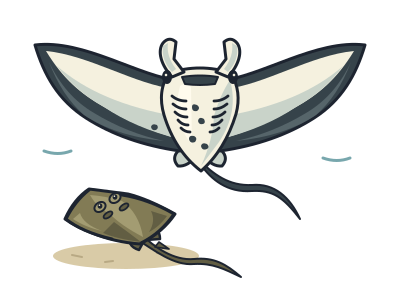
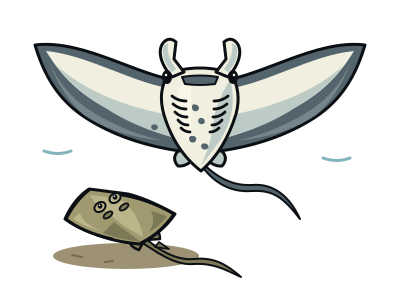
- Rays and skatesShark relatives that flattened out, with gills underneath and fins that became wings.
- Elephant sharkA chimaera with a hoe-shaped snout whose genome has changed more slowly than any other known vertebrate.
- HybodusA Jurassic shark with spines before both back fins; one fossil holds hundreds of swallowed squid-like shells.