An extinct group
Helicoprion †
Helicoprion
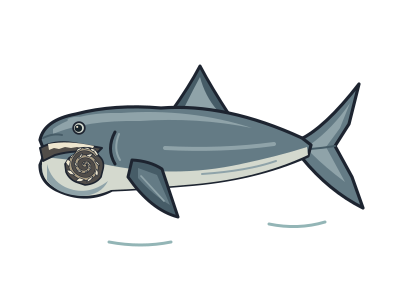
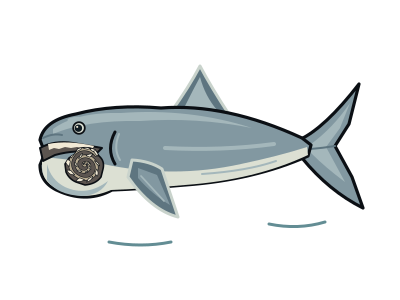
A buzz-saw smile that puzzled scientists for a century.
Lived about 299–254 million years ago.
You and helicoprion meet in the Jawed vertebrates branch, shown at about 465 million years ago (on 21 November, in a calendar from life's shared ancestor to today).
Its teeth grew in a spiral like a buzz saw. Working out where that spiral fitted took scientists more than a century. Although often pictured as a shark, this fish belonged nearer the ratfish branch of the family tree than living sharks and rays.
It lived in ancient seas, with fossils from Idaho dated to about 270 million years ago. Instead of shedding its older teeth, it kept them as new teeth joined the growing spiral. Detailed X-ray scans published in 2013 showed where that spiral fitted: inside the lower jaw, not hanging from its nose or another body part.
The mystery lasted so long because almost all fossils were tooth spirals, rather than whole animals. Its skeleton was made of cartilage, a flexible material that preserved poorly. Rare preserved jaw material helped researchers place the teeth. The discovery explained the strange jaw, but it did not reveal every detail of the animal’s appearance or life.
One shared root
The teeth shared one continuous root, with smaller teeth towards the spiral’s centre and larger teeth outside.
A different upper jaw
The upper jaw carried small, plate-like teeth rather than a matching spiral.
Fossils far apart
Its fossils were found in the Americas, Australia, Asia and Europe, showing that it had a very wide marine range.
Next to it on the tree
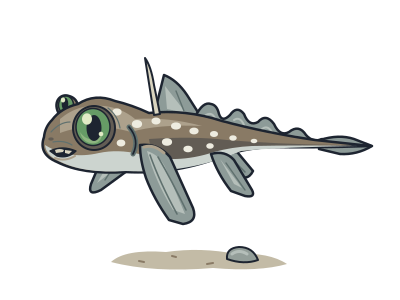
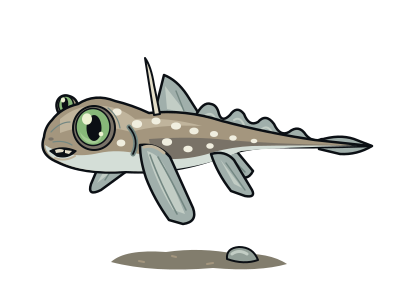
- Spotted ratfishA ghostly chimaera with rabbit-like teeth, huge green eyes and a venomous spine.
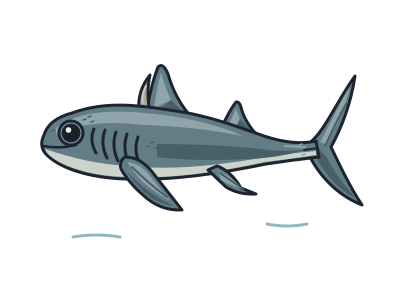
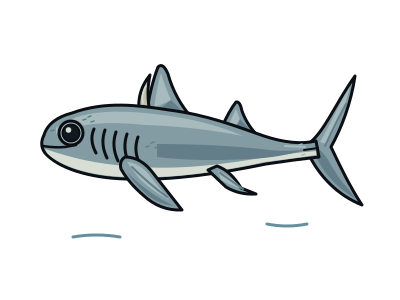
- CladoselacheA shark-shaped Devonian fish whose fossils preserve muscle fibres and meal traces; possible kidneys are known at genus level.
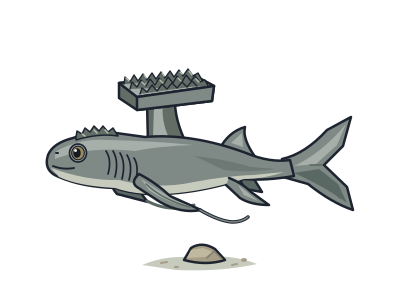
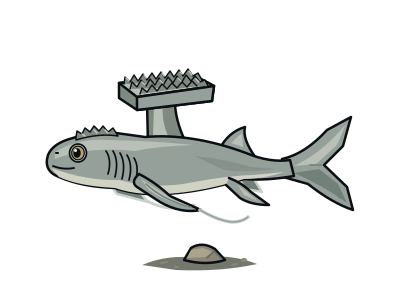
- StethacanthusAn ancient shark with a spiny, anvil-shaped crest on its back, like an ironing board.
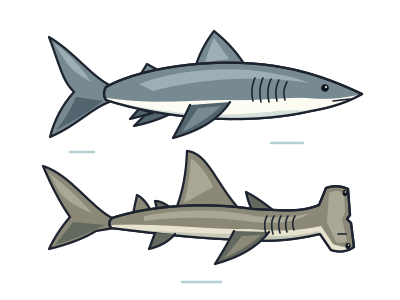
- SharksOver 500 living species, from hand-sized lanternsharks to the biggest fish in the sea.
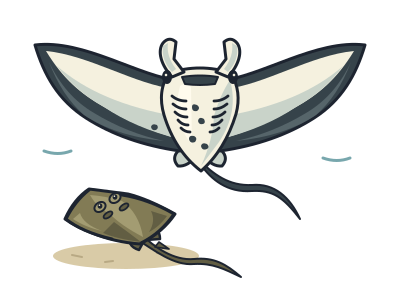
- Rays and skatesShark relatives that flattened out, with gills underneath and fins that became wings.
- Elephant sharkA chimaera with a hoe-shaped snout whose genome has changed more slowly than any other known vertebrate.
- HybodusA Jurassic shark with spines before both back fins; one fossil holds hundreds of swallowed squid-like shells.