
A species
Marbled electric ray
Torpedo marmorata
A ray with a built-in electric surprise
You and the marbled electric ray meet in the Jawed vertebrates branch, shown at about 465 million years ago (on 21 November, in a calendar from life's shared ancestor to today).
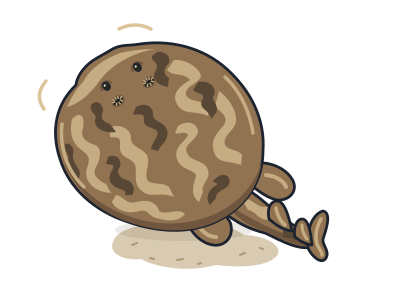
The marbled electric ray stuns prey with electric organs inside its broad, wing-like fins, beside its head. It belongs to the wider ray group alongside manta rays, stingrays and sawfishes. Not every ray is a stingray: this one has a thick, rounded body and a short tail, unlike the long, whip-like tails of many stingrays.
When hunting, it can wrap its fins around a fish while delivering shocks. Its electricity also helps deter predators. During the day, it often lies buried in sand or mud; at night, it swims in search of food. Its pale and dark brown marbling gives its upper surface a patchwork appearance.
People noticed the numbing effects of electric rays long ago. Ancient Greek and Roman doctors used them for headaches and other pains. Those accounts do not establish that they used this exact species, and historical use is not proof of a safe or effective treatment today.
Born with a working shock
Newborn marbled electric rays already have working electric organs and can use shocks to capture prey.
A surprisingly wide mouth
Its jaws can spread open, allowing it to swallow surprisingly large prey.
Caught by accident
Fishing nets dragged along the seabed can catch these rays accidentally. They are often thrown back.
Next to it on the tree
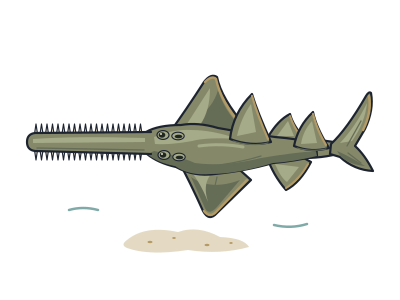
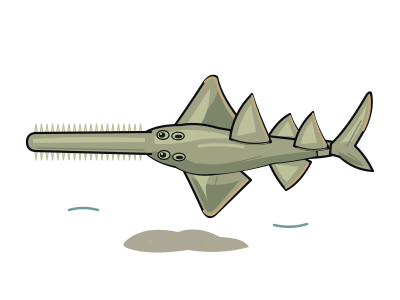
- Largetooth sawfishA ray with a toothed, saw-like snout that senses fish and slashes through schools.
- Stingrays and eagle raysRays that swim by rippling or flapping their wing-like fins, from sand-buried stingrays to soaring mantas.
- Common skateDespite its name, this big European skate has been fished so hard that it is now critically endangered.
- Bowmouth guitarfishHalf shark, half ray to look at, with rows of thorny ridges over its head and back.