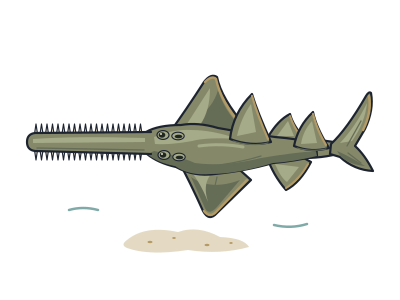
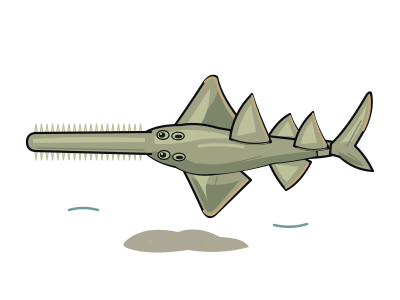
A species
Largetooth sawfish
Pristis pristis
A ray with a fish-finding saw
You and the largetooth sawfish meet in the Jawed vertebrates branch, shown at about 465 million years ago (on 21 November, in a calendar from life's shared ancestor to today).
The largetooth sawfish is a ray with a toothed snout that senses fish and swings sideways through their schools. Its long body looks shark-like, but its place on this tree is alongside manta rays, stingrays and electric rays.
Its saw is both a detector and a hunting tool. It senses the weak electrical signals made by nearby animals, helping the sawfish find prey. A sideways swing can stun or catch fish. Research shows that it can detect and attack prey higher in the water, rather than hunting only along the bottom. It also eats crabs, prawns and molluscs.
This fish uses both fresh and salt water. Young sawfish favour rivers and freshwater lakes as places to grow, while larger animals use more coastal habitat. Its home includes warm rivers, river mouths and coastal seas across tropical northern Australia.
A protected start
At birth, a protective covering surrounds the young sawfish’s flexible saw, helping protect its mother.
Far upriver
In Australian rivers, largetooth sawfish can travel about 400 kilometres inland.
Small sawfish have predators
Bull sharks and crocodiles can prey on pups and small young sawfish.
Next to it on the tree
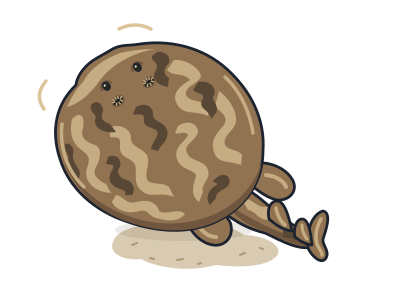
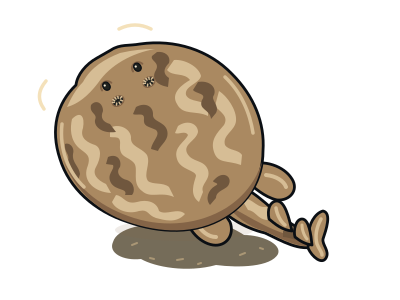
- Marbled electric rayStuns prey with electric shocks from organs in its wings; ancient doctors used it for headaches.
- Stingrays and eagle raysRays that swim by rippling or flapping their wing-like fins, from sand-buried stingrays to soaring mantas.
- Common skateDespite its name, this big European skate has been fished so hard that it is now critically endangered.
- Bowmouth guitarfishHalf shark, half ray to look at, with rows of thorny ridges over its head and back.