A species
Prickly pear
Opuntia ficus-indica
A cactus made of flat green paddles, with a sweet fruit and pads you can eat.
You and the prickly pear meet in the Eukaryotes branch, shown at about 1.8 billion years ago (on 28 July, in a calendar from life's shared ancestor to today).
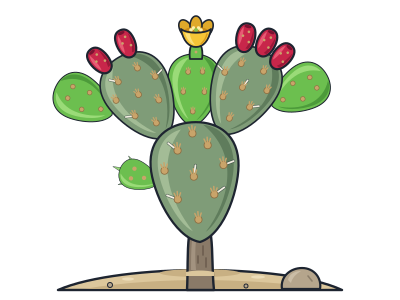
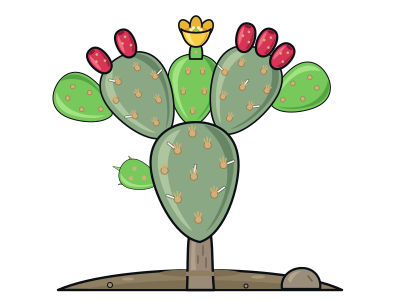
Picture a cactus made of flat green paddles stacked end to end. Those paddles look like leaves, but they are really flattened stems. In Mexico the tender young pads are cooked as a vegetable called nopalitos. People say they taste a bit like green beans. The ripe fruit is sweet, a little like watermelon, and depending on the type it can be red, orange, yellow or purple.
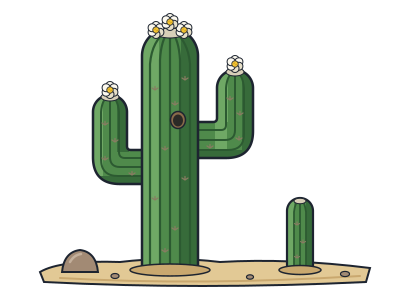
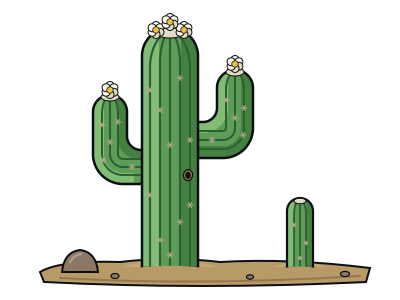
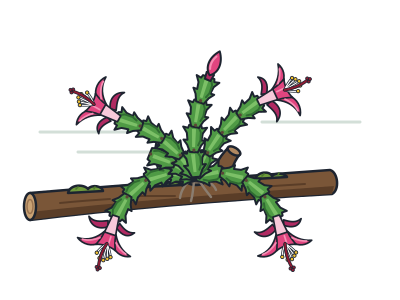
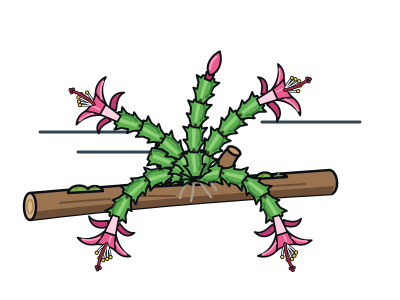
On the tree, the prickly pear sits beside the giant saguaro and the holiday cactus that people keep indoors. Here is the surprise: it belongs to a different branch of the cactus family from both of them. Its branch grows in jointed pads or segments, and it carries tiny barbed bristles called glochids. These must be carefully removed before the pads or fruit are eaten.
A prickly pear can grow to about 5 metres, roughly as tall as a giraffe. It survives long droughts by storing water in its fleshy pads. It also opens the tiny pores on its pads mainly at night, when less water escapes. Along with maize and agave, it is one of the oldest farmed plants in Mexico, and it was important to farming in the Aztec empire.
A home for red dye
The plant is home to a small insect called cochineal, which is made into a red dye still used in food colouring and make-up. For much of Mexico's history, this dye was its second most valuable export after silver.
Drought food for cattle
Farmers feed spineless kinds to cattle during droughts, because the pads hold so much water.
Gone global
From Mexico it has spread around the Mediterranean and to other warm places without frost all over the world.