A species
Peregrine falcon
Falco peregrinus
The fastest animal alive—with parrots among its closer relatives.
You and the peregrine falcon meet in the Amniotes branch, shown at about 320 million years ago (on 4 December, in a calendar from life's shared ancestor to today).
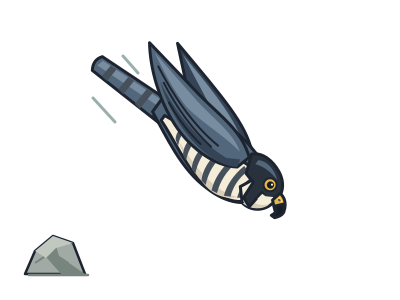
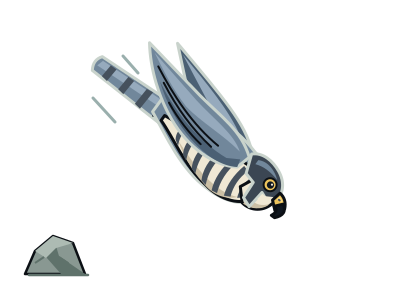
The peregrine falcon is the fastest animal alive: it can exceed 300 km/h in a steep dive. Yet this hunter is more closely related to parrots and songbirds than to hawks and eagles. That headline speed is not its everyday pace. Ordinary travelling flight averages about 40–55 km/h.
Most of its food is other birds, including pigeons, ducks and songbirds. During a steep hunting dive, called a stoop, its long, pointed wings fold close to its body. But not every hunt involves a dive. Peregrines also chase birds in level flight, and they sometimes eat bats.
Peregrines live on every continent except Antarctica. They can make a home in cities as well as wild places, with tall buildings offering ledges much like cliffs. Rather than building a nest, they usually scrape a shallow hollow for their eggs. Some also use abandoned nests built by other birds.
Shared parenting
Both parents help keep the eggs warm and bring food for their chicks.
A wandering name
The word ‘peregrine’ means ‘wanderer’ or ‘pilgrim’.
Growing up
Eggs hatch after about a month. The chicks then spend about five to six weeks at the nest.