An extinct group
Mosasaurs †
Mosasauridae
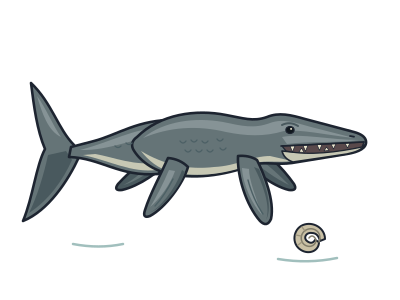
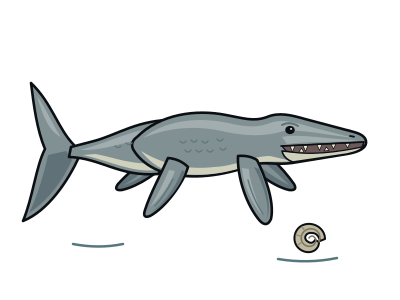
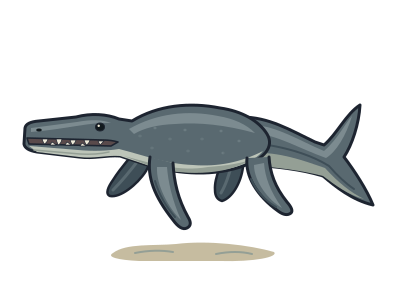
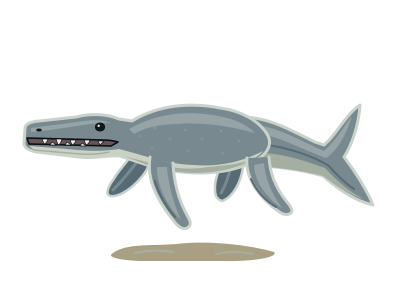
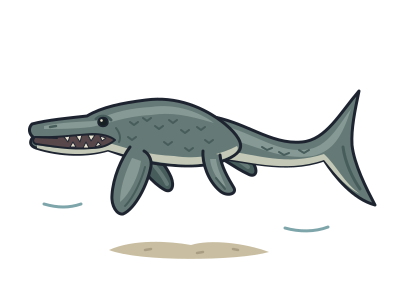
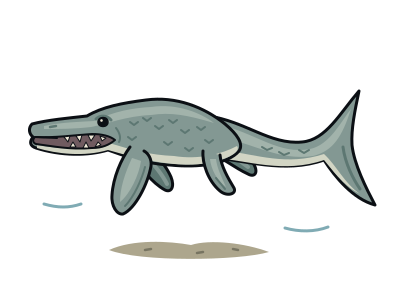
Giant sea lizards with flippers and shark-like tails
This branch is shown at about 98 million years ago; its age is a rough estimate.
Lived about 98–66 million years ago.
You and mosasaurs meet in the Amniotes branch, shown at about 320 million years ago (on 4 December, in a calendar from life's shared ancestor to today).
These sea lizards included giants with flippers and a shark-like tail fin. Yet they belonged to the same broad family tree as living lizards and snakes, not dinosaurs. They lived about 98 to 66 million years ago. Not every member was a giant.
Their ancestors lived on land. As mosasaurs adapted to swimming, their bodies became streamlined and their legs became flippers. Fossil bones inside those paddles still showed the arrangement of limbs and fingers. These were transformed legs, not fish fins: a familiar land-animal skeleton reshaped for moving through water.
An exceptional fossil from Jordan preserved the outlines of flippers and a tail fin with two lobes. This directly confirmed a fin rather than just a tapering tail. A similar fin on the pictured animal was a reconstruction based on related fossils and its bones, not a preserved outline of that species.
Extra teeth
Mosasaurs had teeth on the roof of the mouth as well as along their jaws.
Scales, not armour
Preserved skin showed small, diamond-shaped scales with central ridges, rather than heavy crocodile-like armour.
Found worldwide
Their fossils were found on every continent, including Antarctica.
Inside mosasaurs
Next to it on the tree
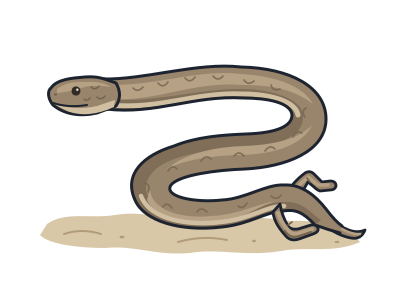
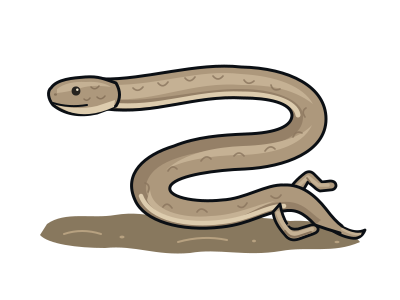
- NajashAn early snake that still had small back legs, named after the legged serpent of Genesis.
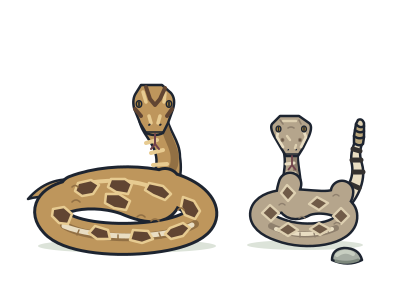
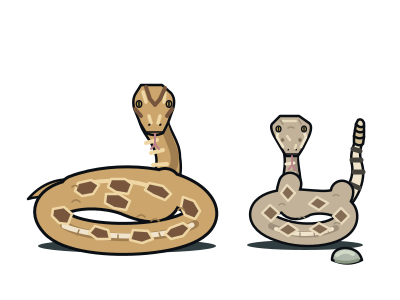
- SnakesLimbless hunters that can swallow prey wider than their own heads.
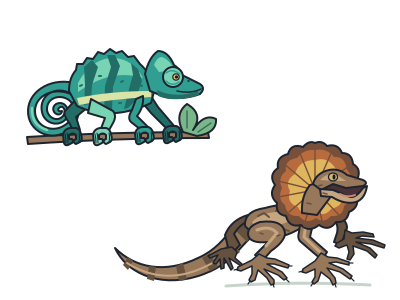
- Iguanas and chameleonsSit-and-wait lizards, from colour-changing chameleons to sea-swimming iguanas.
- Monitors and kinIncludes the biggest lizards ever, venomous lizards and lizards with no legs.